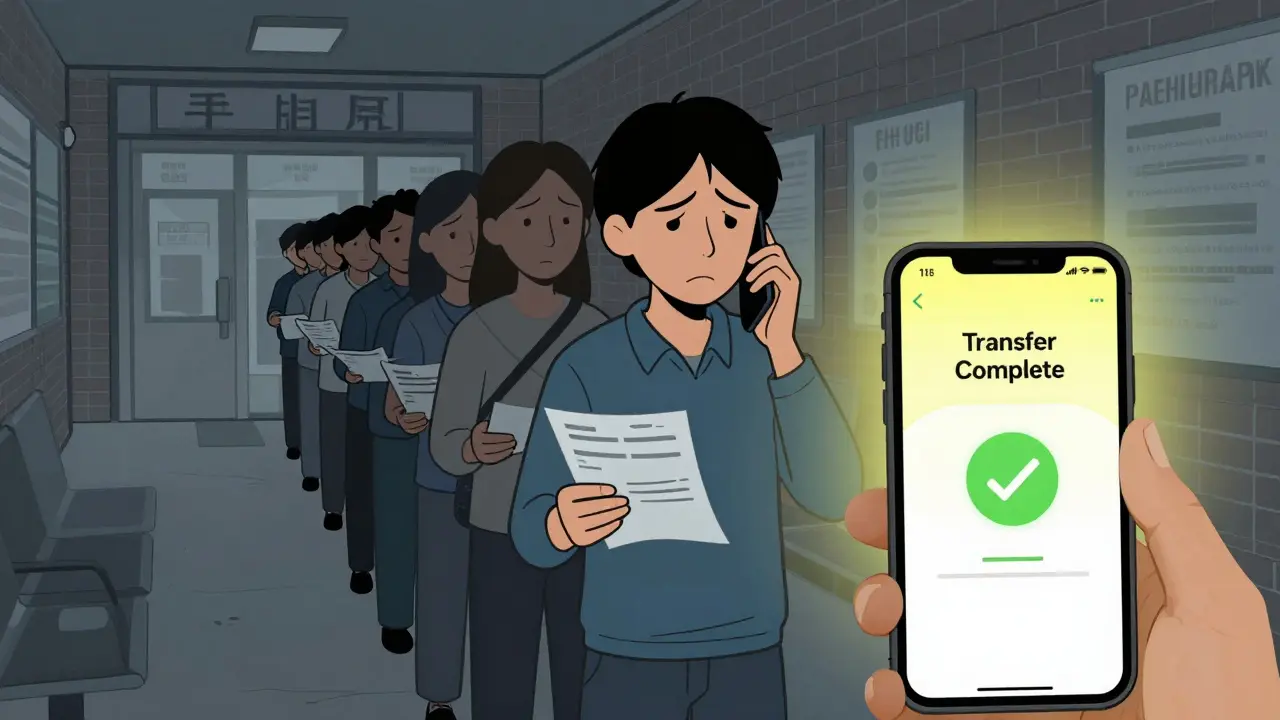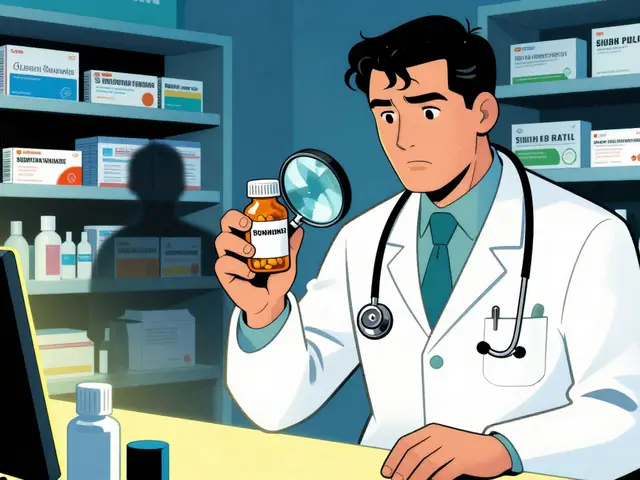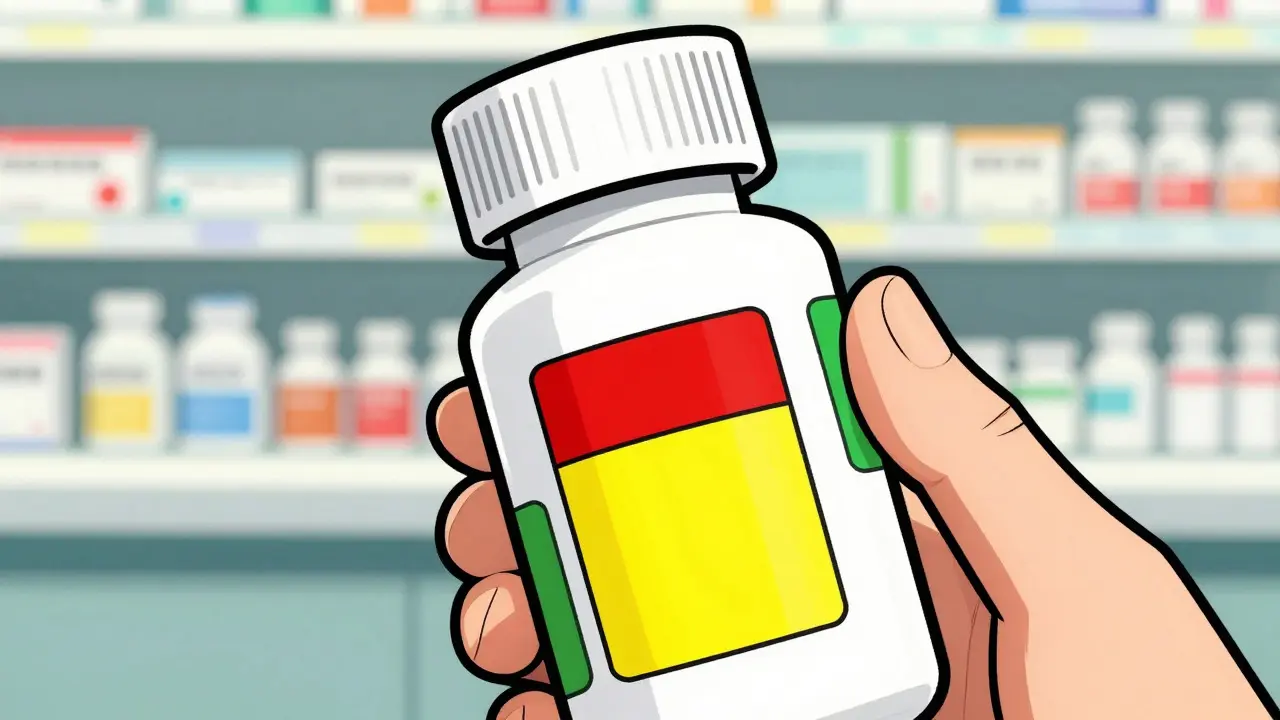
Have you ever picked up a new prescription and noticed those small, colorful stickers slapped onto the side of the bottle? You know the ones. They are often red, yellow, or green, and they carry short commands like "Take with Food" or "May Cause Drowsiness." These are not random decorations. They are pharmacy auxiliary labels, and they play a surprisingly critical role in your health.
We tend to focus entirely on the big white label printed by the pharmacy machine-the one with our name, the drug dosage, and the refill date. But that primary label rarely tells the whole story. It doesn't warn you that a specific antibiotic might make birth control less effective, nor does it remind you to refrigerate a biologic medication. That is where these supplemental stickers step in. According to data from the Institute for Safe Medication Practices, half of all patients forget verbal instructions given by pharmacists within just two days. These stickers act as a permanent, visual memory aid right at the point of use.
The Hidden Language of Colors
If you look closely, you will notice a pattern in the colors used. This isn't an accident; it is a standardized psychological cue designed to grab your attention instantly. While federal regulations do not strictly mandate specific colors for every scenario, industry conventions have settled into a clear hierarchy based on urgency.
| Color | Usage Frequency | Typical Message Type | Example Warnings |
|---|---|---|---|
| Red | 37% | Critical Safety Warnings | "May Be Habit-Forming," "Do Not Take with Alcohol" |
| Yellow | 28% | Cautionary Information | "May Cause Drowsiness," "Avoid Sunlight" |
| Green | 22% | General Instructions | "Take with Food," "Shake Well" |
| Blue | 13% | Storage Requirements | "Keep Refrigerated," "Protect from Freezing" |
A study from the University of Florida College of Pharmacy found that red labels dominate warning categories because 87% of patients instinctively associate the color red with danger or immediate action. When you see a bright red sticker saying "Do Not Operate Heavy Machinery," your brain registers it as a hard stop. Yellow serves as a softer brake, signaling caution rather than prohibition. Green is generally safe, offering helpful tips that improve efficacy, while blue is almost exclusively reserved for logistics, ensuring expensive medications like insulin don't spoil in your glovebox.
Why Placement Matters More Than You Think
You might think that if a label is on the bottle, you will see it. The reality is far more complex. Research published in the Journal of the American Pharmacists Association revealed a startling gap in effectiveness based on where the pharmacist places the sticker. Vertical placement-slapping the label straight down the side of the bottle-is still the most common method, appearing on 82% of prescriptions.
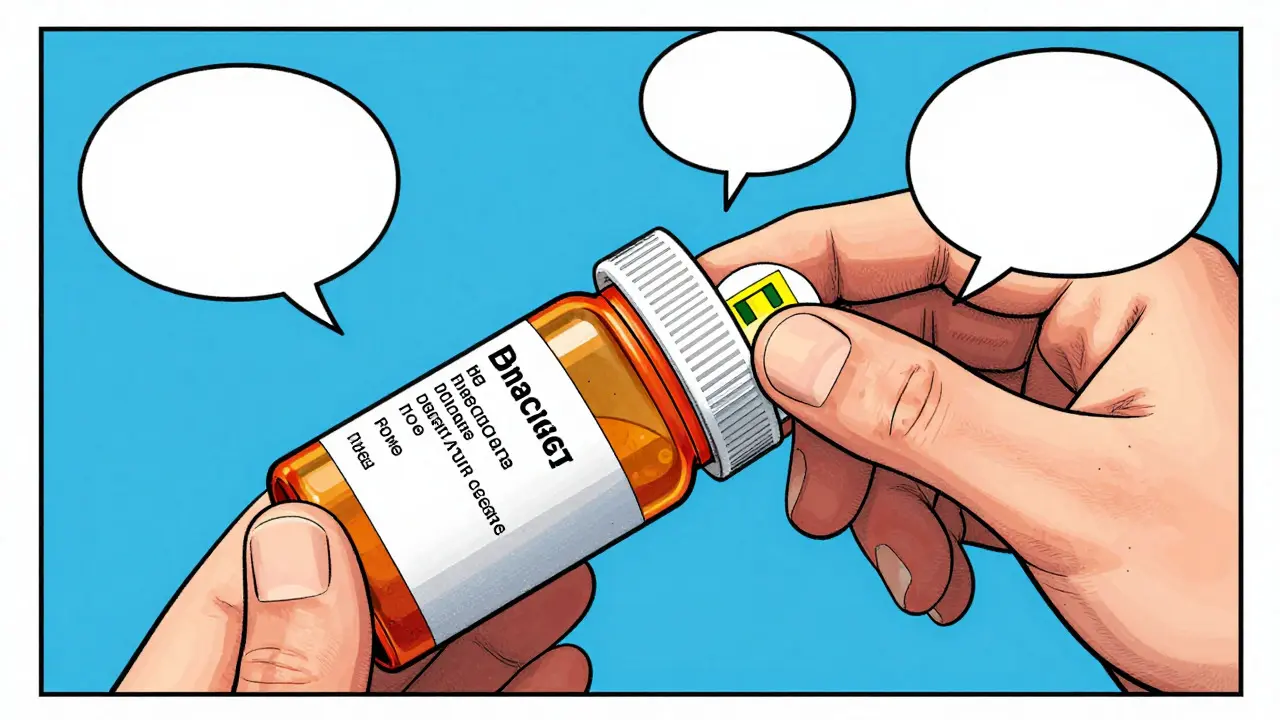
However, this traditional approach is flawed. When you hold a bottle upright to read the main label, vertical auxiliary labels often blend into the background or get obscured by your thumb. A more effective strategy is interactive placement. This involves positioning the label so that you must rotate the bottle or lift the cap to see it clearly. Studies show this simple change increases label noticeability by 63%. If a pharmacy uses horizontal placement, patient comprehension jumps by another 31%. Next time you pick up a med, try twisting the bottle. If the warning disappears behind your hand, the placement failed its job.
Common Types of Auxiliary Labels Explained
These stickers cover a wide range of needs, from preventing side effects to ensuring the drug actually works. Understanding what each type means can help you take your medication more safely.
- Safety Warnings: These are the most critical. For example, "Do Not Take with Alcohol" appears on about 27% of antibiotic prescriptions. Mixing alcohol with certain antibiotics can cause severe nausea, rapid heartbeat, or reduced drug efficacy.
- Usage Instructions: "Take with Food" is incredibly common, appearing on 41% of NSAID (non-steroidal anti-inflammatory drug) prescriptions. This isn't just about comfort; taking drugs like ibuprofen or naproxen on an empty stomach significantly increases the risk of gastric ulcers.
- Adherence Reminders: Antibiotics require a full course to prevent resistance. Labels like "Take Until Finished" are applied to 68% of antibiotic courses to combat the tendency to stop taking meds once symptoms vanish.
- Storage Requirements: With the rise of biologic medications, storage has become vital. About 18% of biologics require refrigeration. A blue "Keep Refrigerated" label prevents costly mistakes where patients leave temperature-sensitive drugs in their car trunks.
It is also important to distinguish between patient-facing labels and internal hospital labels. In retail pharmacies, 92% of auxiliary labels are meant for you. In hospitals, however, about 8% of these labels are for staff only, such as "Dosage Changed, Refer to Chart," which helps nurses avoid confusion during shift changes.
The Problem with Clutter and Confusion
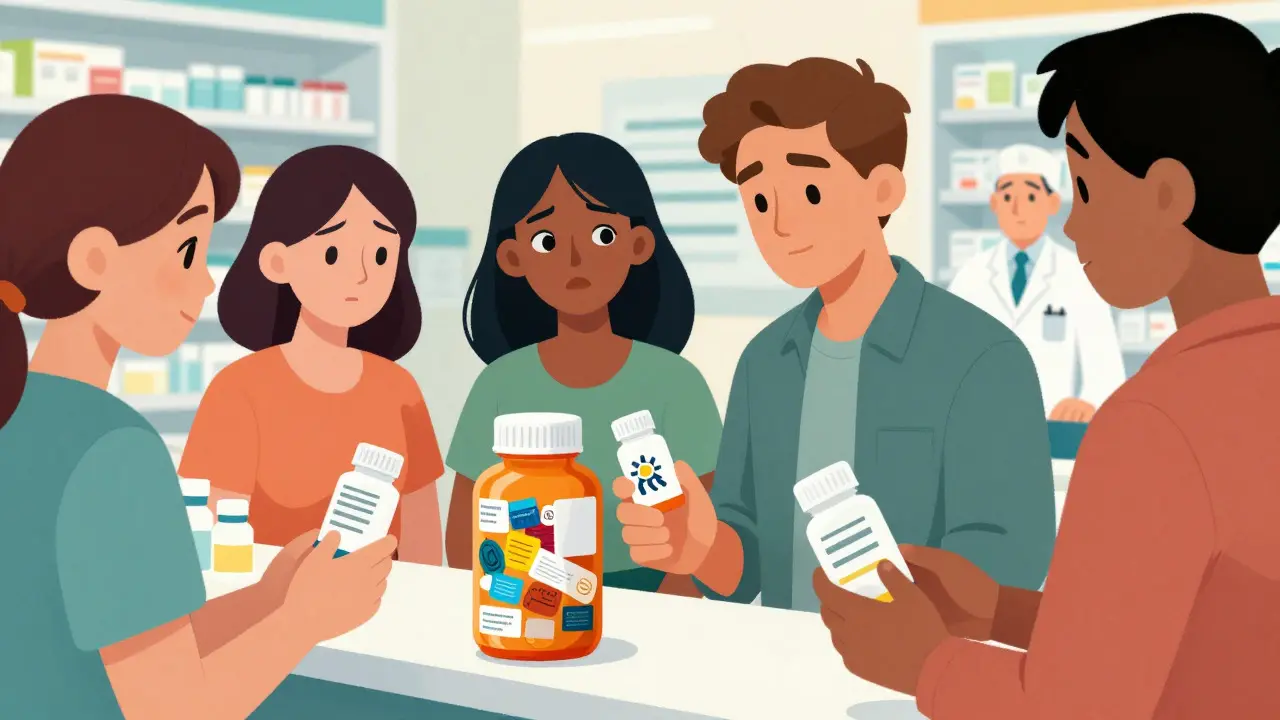
More is not always better. One of the biggest challenges in pharmacy practice today is label clutter. A 2021 analysis found that 31% of prescriptions had so many stickers that they covered each other or made the bottle look chaotic. When a patient sees five different warnings, they tend to scan them quickly and miss the most critical one.
The Institute for Safe Medication Practices recommends limiting containers to just one to three auxiliary labels. This forces pharmacists to prioritize the most life-saving information. Despite this guideline, inconsistency remains a major issue. A study from the University of Illinois found that 15-25% of prescriptions at retail pharmacies lacked necessary auxiliary labels entirely, while another 8-12% contained contradictory messaging.
Confusion also arises from ambiguous language. A Johns Hopkins University study documented that 22% of patients misinterpreted standard labels. For instance, "Take with Food" is intended to reduce gastrointestinal upset, but some patients interpret this as "Take after Meals," which can delay absorption and reduce the drug's effectiveness for conditions requiring immediate relief. Clear, specific language is essential, yet generic templates are still widely used.
Accessibility and the Future of Labels
For millions of Americans, English is not their first language. Yet, only 22% of U.S. pharmacies consistently provide auxiliary labels in their patients' primary languages. Given that over 25% of the population speaks a language other than English at home, this is a significant safety gap. Pictorial representations offer a partial solution. An Annals of Pharmacotherapy study showed that adding simple icons to text increased comprehension by 47% among low-literacy patients. A picture of a sun with a slash through it is universally understood as "avoid sunlight," regardless of language barriers.
Technology is also changing the landscape. By 2025, 62% of major pharmacy chains are expected to implement electronic auxiliary information. This includes QR codes that link to video instructions or detailed digital leaflets. Some hospital pharmacies are even piloting smart labels with temperature-sensitive ink that changes color if a biologic medication has been exposed to heat. However, physical labels remain mandatory for critical safety info due to CMS requirements, ensuring that everyone, regardless of smartphone access, receives vital warnings.
How to Use These Labels Effectively
To get the most out of your prescription, treat auxiliary labels as part of the doctor's orders, not optional advice. Here is a quick checklist for when you pick up your meds:
- Check the color first. If you see red, pause and read carefully. This is a high-priority warning.
- Look for food interactions. "Take with Food" protects your stomach. "Take on an Empty Stomach" ensures maximum absorption. Know the difference.
- Verify storage. Before leaving the pharmacy counter, confirm if the bottle needs to go in the fridge immediately.
- Ask if unclear. If a label says "Avoid Grapefruit Juice" and you drink grapefruit juice daily, ask the pharmacist for alternatives. Don't guess.
- Remove old labels. When refilling, ask the pharmacist to remove outdated auxiliary labels from previous fills to prevent clutter and confusion.
These small stickers represent billions of dollars in prevented healthcare costs annually. By saving roughly 127,000 emergency department visits each year, they prove that good design saves lives. Pay attention to them, and you pay attention to your health.
Are pharmacy auxiliary labels required by law?
Federal law does not strictly require specific auxiliary labels, but 48 state pharmacy boards strongly recommend them. Additionally, 39 states have incorporated specific labeling requirements into their pharmacy practice acts. For example, California's AB-1352 requires specific auxiliary labels for high-risk medications.
What does a red pharmacy sticker mean?
A red auxiliary label signifies a critical safety warning. Common messages include "May Be Habit-Forming," "Do Not Take with Alcohol," or "May Cause Drowsiness." Red is used because studies show 87% of patients associate it with immediate danger or action.
Why do some bottles say "Take with Food"?
This instruction is primarily used to reduce gastrointestinal side effects, such as stomach pain or ulcers, especially with NSAIDs like ibuprofen. It appears on 41% of NSAID prescriptions. Note that this differs from "Take on an Empty Stomach," which is used to ensure faster or better absorption for certain antibiotics.
How much do pharmacy auxiliary labels cost?
For pharmacies, pre-printed rolls of 500 labels typically cost between $8.99 and $14.99. Custom labels can range from $19.99 to $34.99 per roll. These costs are absorbed by the pharmacy as part of the dispensing fee, so patients do not pay extra for them directly.
Can I remove auxiliary labels from my bottle?
You can physically peel them off, but it is not recommended unless advised by a pharmacist. Removing a warning label like "Keep Refrigerated" could lead to medication spoilage. However, you should ask the pharmacist to remove outdated labels from previous refills to reduce clutter and confusion.