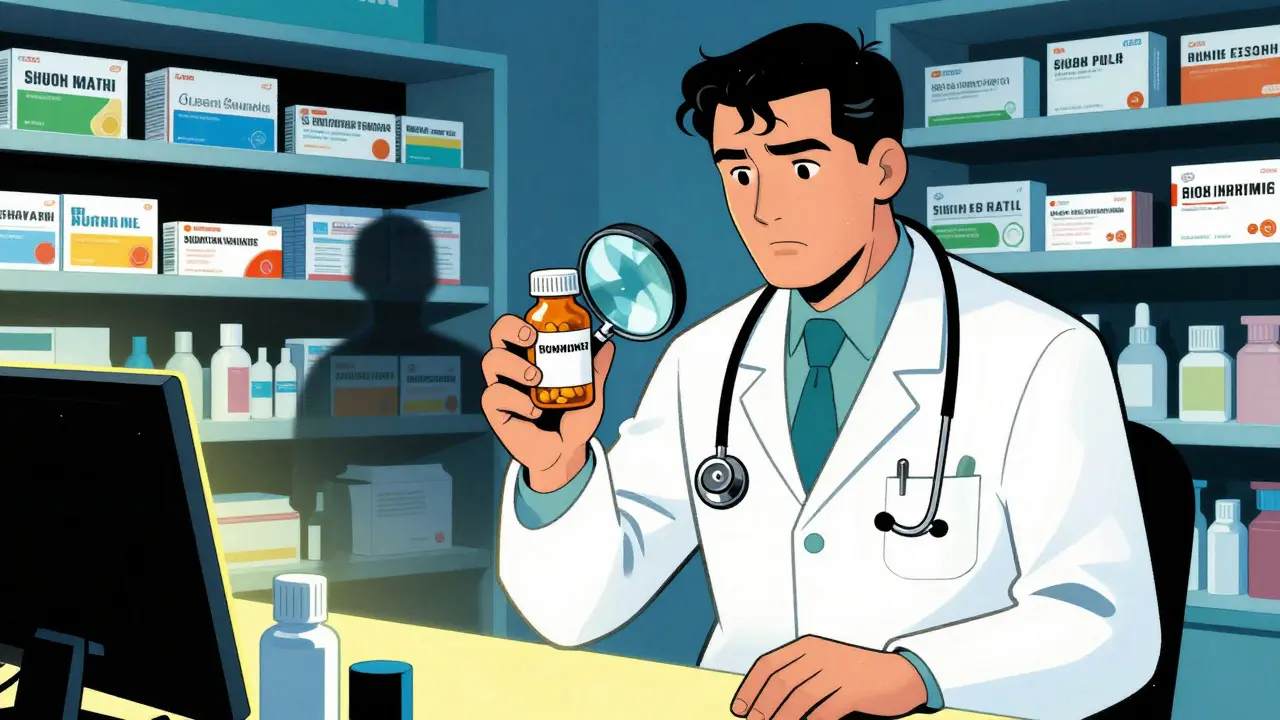
Fake pills aren't just a movie plot anymore. They are sitting on shelves, hidden in online orders, and sometimes, they end up in patients' hands. For pharmacists, spotting these dangerous fakes is no longer optional; it is a critical part of the job. The global landscape has shifted dramatically. In 2024 alone, law enforcement agencies uncovered over 6,400 incidents of pharmaceutical counterfeiting across 136 countries. That is not a small number. It means the threat is everywhere, from high-street pharmacies to remote clinics.
So, how do you train to fight this? It isn't just about looking at a pill bottle. Modern pharmacist education on counterfeit detection combines strict regulatory knowledge with cutting-edge technology. Whether you are a student in West Africa or a community pharmacist in the UK, the skills required are evolving fast. This guide breaks down what that training looks like today, why it matters, and how you can stay ahead of the criminals.
The Global Scale of the Threat
To understand the training, you first have to understand the enemy. The problem of substandard and falsified (SF) medical products is massive. According to the Pharmaceutical Security Institute, 2024 saw 6,424 distinct incidents involving illegal diversion, theft, and counterfeiting. These weren't minor infractions. They involved 2,428 different medicines, hitting every therapeutic area imaginable, including oncology and biologics.
Why does this matter for your daily work? Because criminals are getting smarter. They don't just sell fake aspirin anymore. They target high-value drugs used for cancer treatment and rare diseases. Interpol’s Operation Pangea XVI in 2025 showed just how coordinated these groups are. Police, customs, and health authorities from 90 countries worked together to arrest 769 people and shut down roughly 13,000 illegal online platforms. They seized over 50 million counterfeit doses. If international police forces need to band together to stop them, you definitely need more than just good eyesight to spot the fakes.
Core Curriculum: What You Actually Learn
Training programs have moved away from generic lectures. Today's education focuses on specific, actionable skills. One of the biggest leaps forward came from a collaboration between the International Pharmaceutical Federation (FIP) and the World Health Organization (WHO). Funded by the European Union, they developed a bilingual competency-based curriculum available in English and French.
This wasn't just theory. The curriculum was piloted with 355 pharmacy students across Cameroon, Senegal, and Tanzania. The results were clear: students showed measurable improvement in their ability to identify SF medical products. As of late 2024, the WHO finalized an updated toolkit to expand this pilot globally. This new toolkit places a heavy emphasis on the online aspect of selling fake drugs, which has become a primary vector for distribution since 2021.
In the United States, the framework is driven by the Drug Supply Chain Security Act (DSCSA). Passed in 2013, this law set a 10-year plan to build systems that track prescription drugs through the entire supply chain. Pharmacists here are trained to verify product identifiers and understand the licensing standards for wholesale distributors. The goal is simple: traceability. If you can't trace where a box came from, you shouldn't trust it.
Technology as a Verification Tool
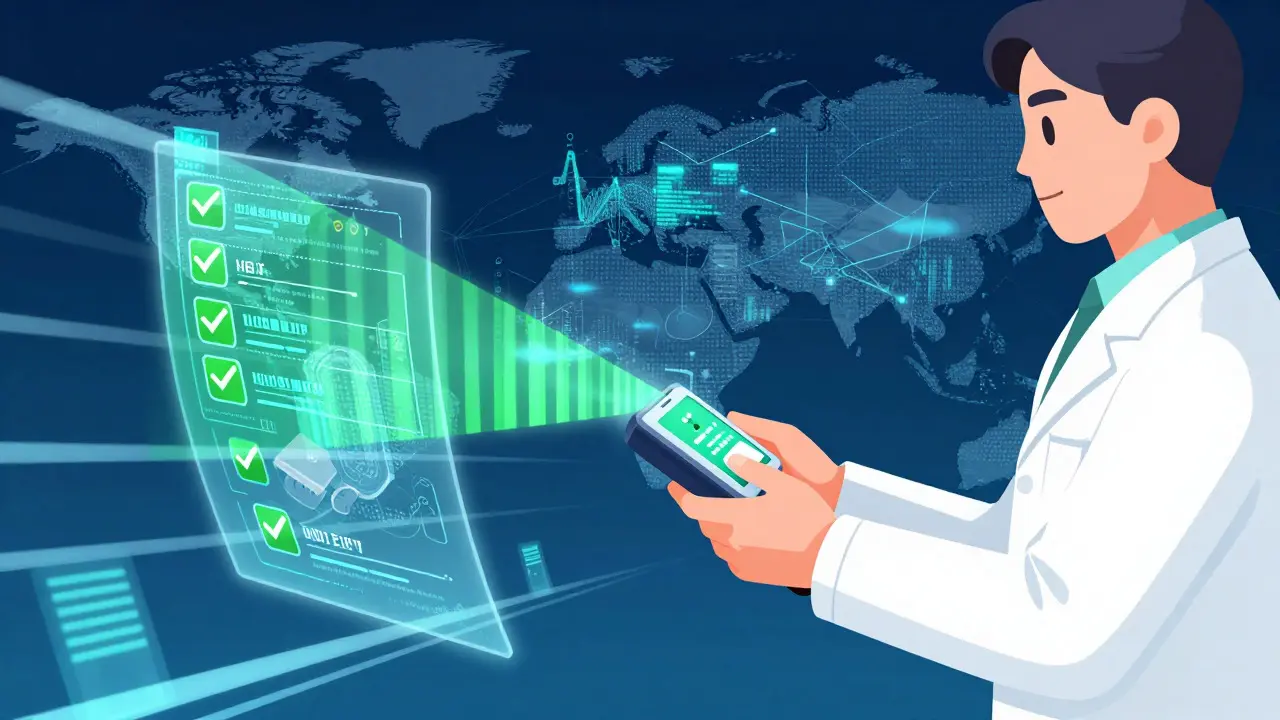
You can teach someone to look for misspellings on a label, but modern counterfeits often look perfect. That is where technology steps in. Advanced training now includes using handheld devices equipped with spectral analysis and AI-powered algorithms. Companies like RxAll provide tools that can verify medication authenticity in seconds. Instead of calling a manufacturer or squinting at a hologram, a pharmacist scans the package. The device compares the chemical signature against a database of genuine products.
This shift changes the role of the pharmacist from a passive receiver to an active verifier. Traditional methods relied on examining physical papers and making phone calls. Those methods are slow and prone to human error. With AI-driven verification, the margin for error shrinks significantly. Training programs increasingly include hands-on practice with these devices, ensuring pharmacists are comfortable using them in high-pressure environments.
Regulatory Compliance and Continuing Education
Beyond technical skills, there is the legal side. In many jurisdictions, staying compliant is mandatory. In the U.S., for example, the Centers for Medicare & Medicaid Services (CMS) mandates Fraud, Waste, and Abuse (FWA) training. While CMS no longer requires a specific course provider after 2019, pharmacists must still complete this training within 90 days of hire. Platforms like TrainingNow.com offer mobile-friendly, 45-minute courses that cover these requirements while providing CEU credits.
For certified pharmacy technicians, the PTCB-Recognized Controlled Substances Diversion Prevention Education program is another key component. Candidates need an active certification before enrolling, highlighting the specialized nature of this training. These courses ensure that everyone handling medications understands the legal repercussions of allowing diverted or fake drugs into the system.
| Training Type | Primary Focus | Key Benefit | Limitation |
|---|---|---|---|
| Academic Curriculum (FIP/WHO) | Foundational knowledge of SF products | Measurable improvement in student awareness | Requires academic integration; slower rollout |
| Technology-Integrated (e.g., RxAll) | Point-of-care verification | Instant accuracy via AI/spectral analysis | Cost of hardware; learning curve for devices |
| Compliance Courses (e.g., FWA) | Legal and regulatory adherence | Mandatory for employment; quick completion | Focuses on rules rather than detection skills |
Practical Heuristics for Daily Practice
Even with the best tech, your intuition is your first line of defense. The Partnership for Safe Medicines emphasizes specific lessons that every pharmacist should internalize. First, maintain skepticism toward prices that seem too good to be true. If a medication is offered drastically below the wholesale acquisition cost, something is wrong. Criminals use low prices to lure buyers, especially online.
Second, verify authorized distributors. Specialty drugs, such as those used for oncology, typically distribute through limited, authorized channels. If a supplier claims to be authorized but doesn't appear on the manufacturer's official website, treat it as a red flag. Always check the source. Pfizer’s Anti-Counterfeiting Program has prevented over 302 million counterfeit doses from reaching patients since 2004 largely by educating stakeholders on these exact protocols.
Third, recognize the signs of online fraud. Europol issued warnings about fake vaccines being sold online starting in March 2020. Since then, the volume of illicit online pharmacies has skyrocketed. Training now includes identifying secure websites, recognizing fake review sites, and understanding that legitimate pharmacies always require a valid prescription for controlled substances.
Collaboration Across Borders
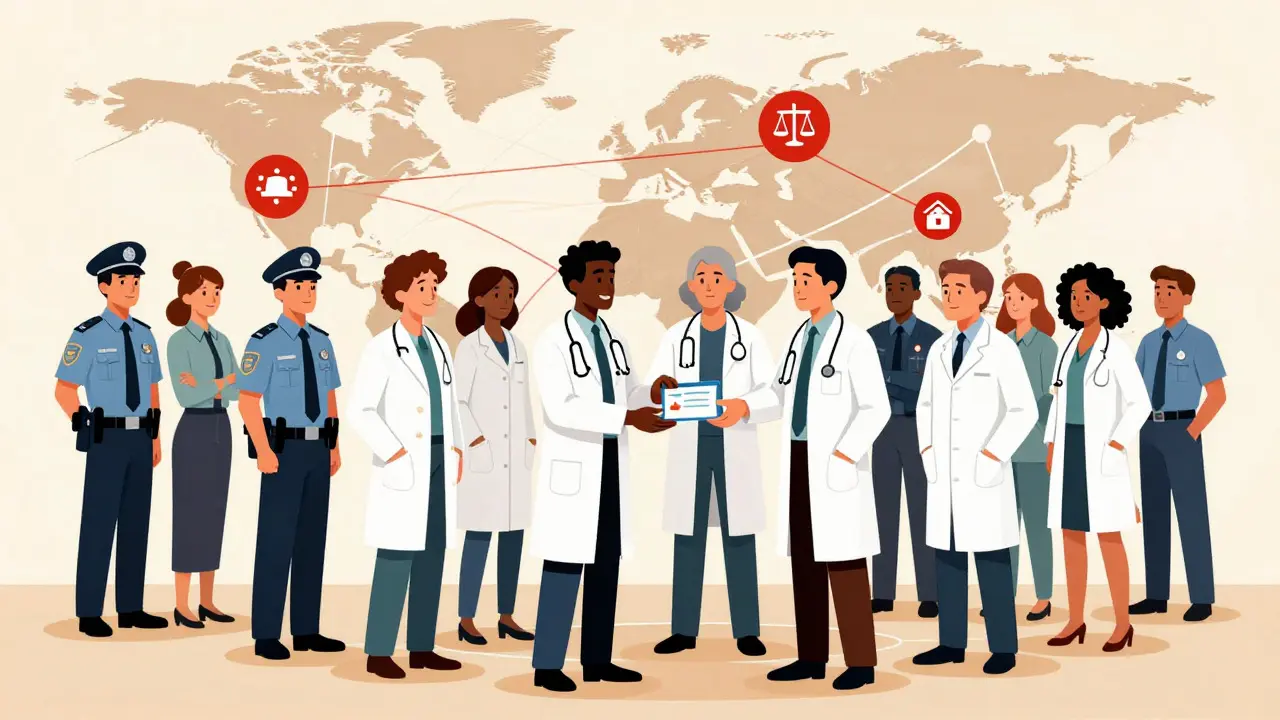
No single pharmacist can stop this crisis alone. Effective detection relies on a network. Nakul Pasricha, President of the Authentication Solution Providers' Association (ASPA), noted that immersive awareness programs are crucial so healthcare workers can be vigilant and informed of protocols when they encounter suspicious products. This means sharing information with wholesalers, customs offices, and law enforcement.
In the UK and Europe, this collaboration is formalized through shared databases and reporting mechanisms. When a pharmacist spots a potential fake, reporting it triggers a wider investigation. Pfizer’s Global Security team trains law enforcement across 183 countries, recognizing that the link between community pharmacists and border control is essential. Your report might be the piece of evidence that helps dismantle a criminal group like those targeted in Operation Pangea.
Future Trends in Detection Training
What comes next? The focus is shifting toward emerging threats. Biologics and complex generics are becoming targets because they are harder to replicate perfectly but highly profitable. Future training modules will likely include deeper dives into these areas. Additionally, patient education is becoming a core part of pharmacist responsibilities. Tools like RxAll’s platform allow pharmacists to help patients understand the risks of buying drugs online and how to protect themselves.
AI will also play a larger role. Algorithms are getting better at detecting subtle differences in packaging materials and ink composition that the human eye misses. By 2026, we expect most major pharmacy chains to integrate real-time verification software directly into their dispensing systems. Staying updated on these technological shifts will be just as important as knowing the regulations.
What is the most effective way for a pharmacist to detect counterfeit drugs?
The most effective approach combines technology and vigilance. Use handheld spectral analysis devices for instant verification of high-risk medications. Simultaneously, apply practical heuristics: question unusually low prices, verify distributor authorization on manufacturer websites, and remain skeptical of online sources that do not require valid prescriptions.
Is counterfeit drug detection training mandatory for all pharmacists?
Requirements vary by region. In the U.S., Fraud, Waste, and Abuse (FWA) training is mandated by CMS within 90 days of hire. Globally, while not always legally mandatory, organizations like the WHO and FIP strongly recommend competency-based curricula. Many employers now require continuing education units (CEUs) focused on supply chain security to maintain licensure or employment.
How has the WHO toolkit evolved since 2021?
The original WHO/FIP curriculum piloted in sub-Saharan Africa focused on foundational knowledge of substandard and falsified products. The updated toolkit, finalized in late 2024, expands this training globally and specifically addresses the online sale of fake medicines. It incorporates lessons learned from the surge in e-commerce fraud during the pandemic and provides resources for both students and practicing professionals.
What role does technology play in modern pharmacist education?
Technology has shifted verification from manual inspection to data-driven analysis. Training now includes using AI-powered algorithms and spectral analysis devices that can confirm a drug's chemical signature in seconds. This reduces reliance on visual checks, which can be fooled by high-quality counterfeits, and speeds up the dispensing process while increasing safety.
How can pharmacists contribute to global efforts against drug counterfeiting?
Pharmacists act as the last line of defense. By reporting suspicious products to local authorities and participating in networks like those supported by Pfizer or the Partnership for Safe Medicines, they provide critical intelligence. This data helps law enforcement agencies, such as Interpol and Europol, track criminal networks and seize large quantities of fake medicines before they reach more patients.