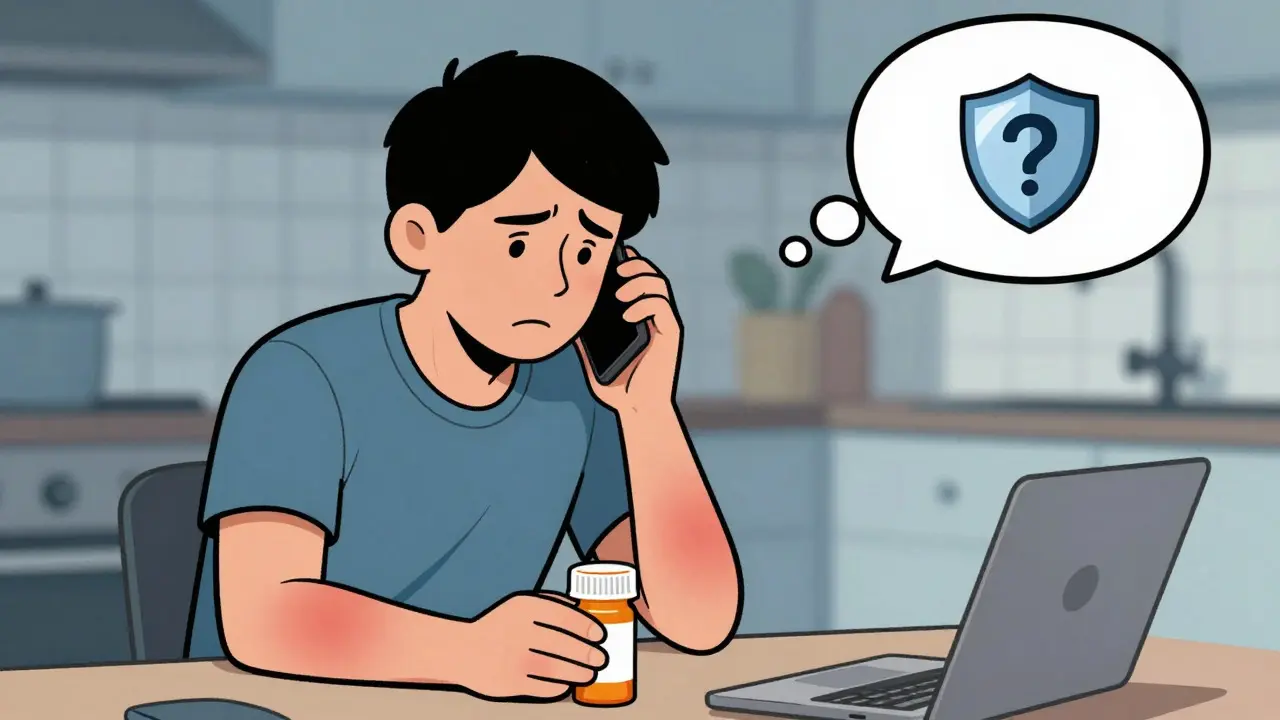
Imagine this: you start a new medication for high blood pressure. Within two weeks, you develop a persistent rash and feel unusually dizzy. You call your doctor, who says it might just be a mild reaction and tells you to monitor it. But something feels off. You wonder if others have experienced the same issue. This is exactly where FDA MedWatch comes in.
MedWatch is the U.S. Food and Drug Administration's official system for collecting reports about medical product problems. It’s not just for doctors or big pharmaceutical companies-it’s designed for everyday people like you. When you report an adverse event, you’re helping the FDA spot safety signals that might have been missed during clinical trials. In fact, the FDA receives approximately 1.3 million reports annually through this system, making it one of the most critical tools for post-marketing safety surveillance.
Why Your Report Matters More Than You Think
Clinical trials test drugs on thousands of people, but they can’t catch every possible side effect. Rare reactions, long-term issues, or interactions with other medications often only surface once millions of people are using a drug in real life. That’s where voluntary reporting becomes essential.
The data from MedWatch has directly influenced major regulatory decisions. For example, in 2022, the FDA updated black box warnings for sodium-glucose cotransporter-2 (SGLT2) inhibitors after analyzing over 1,200 MedWatch reports linking these diabetes medications to Fournier’s gangrene-a rare but serious infection. Without those individual reports, that connection might have remained hidden for years.
Dr. Janet Woodcock, former Director of the Center for Drug Evaluation and Research (CDER), has stated that voluntary reports represent “a vital source of information” that complements clinical trial data. She emphasized that these reports help ensure the continued safety of FDA-regulated products by capturing real-world experiences that controlled studies simply cannot replicate.
Who Can Report and What Should You Report?
Anyone can submit a report to MedWatch. Whether you’re a healthcare professional, a pharmacist, or a patient who experienced an unexpected reaction, your voice matters. The system accepts reports on prescription drugs, over-the-counter medicines, medical devices, biologics, and even certain food additives and cosmetics.
You don’t need to prove that the drug caused the problem. The FDA explicitly states that you should report any “unintended, unfavorable medical occurrence” associated with a medical product, even if causality isn’t certain. If you suspect a link between a medication and a new symptom, that’s enough to warrant a report.
Keep in mind that vaccines have their own separate reporting system called VAERS (Vaccine Adverse Event Reporting System), and animal drug issues go to the Center for Veterinary Medicine. MedWatch focuses primarily on human-use products, with prescription drugs accounting for 92% of all submissions.
Choosing the Right Form for Your Situation
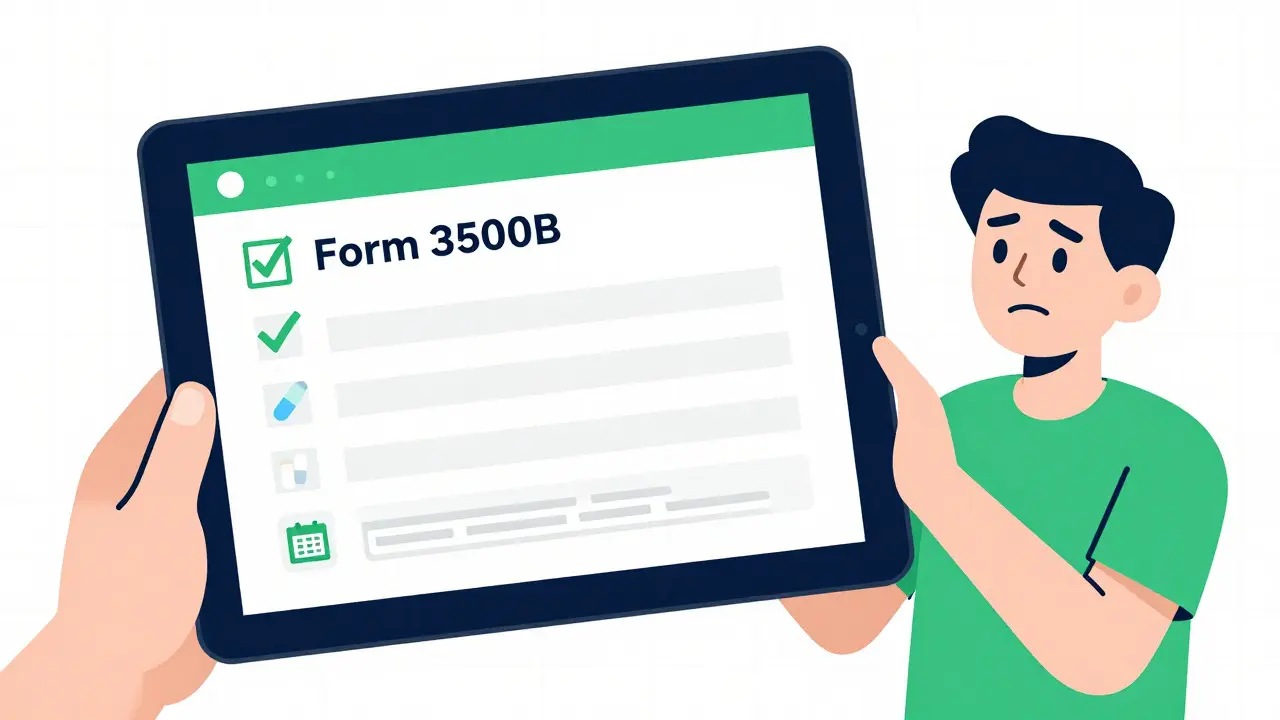
The type of form you use depends on your role. Healthcare professionals typically use Form 3500, which contains 45 detailed data fields covering patient demographics, drug information, event description, and outcome. Consumers and patients use the simplified Form 3500B, which has only 30 fields and uses plain language instead of medical jargon.
Manufacturers and importers must use Form 3500A for mandatory reporting within 10 days of becoming aware of a serious adverse event. This form requires additional details like lot numbers and device model specifications. For most individuals reading this guide, Form 3500B is the correct choice.
| Form Type | Intended User | Number of Fields | Complexity Level |
|---|---|---|---|
| Form 3500 | Healthcare Professionals | 45 | High - Requires medical terminology |
| Form 3500B | Consumers/Patients | 30 | Low - Plain language interface |
| Form 3500A | Manufacturers/Importers | 54+ | Very High - Mandatory compliance |
Gathering Information Before You Start
Before filling out the form, gather as much detail as possible. The more complete your report, the more useful it becomes for safety analysis. Here’s what you’ll need:
- Patient identifier: Use initials or a medical record number. Never include your full Social Security Number unless absolutely necessary.
- Suspected drug name: Include both brand and generic names if known, along with dosage strength and frequency.
- Detailed event description: Describe exactly what happened, when it started, how severe it was, and whether it improved, worsened, or resolved.
- Timeline: Note when you started taking the medication, when symptoms began, and when they ended or are still ongoing.
- Other medications: List any other drugs, supplements, or herbal products you were taking at the time.
- Medical history: Include relevant conditions like allergies, chronic illnesses, or previous similar reactions.
- Contact information: Provide your name, address, phone number, or email so the FDA can follow up if needed.
If you stopped the medication and symptoms improved, note that. If you restarted it and symptoms returned, mention that too. These details help establish potential causal relationships.
Submitting Your Report Online
The easiest way to file a report is through the online portal at FDA.gov/MedWatch. The system guides you step-by-step through each section, and you can save your progress if you need to pause. Most users complete the form in 15-20 minutes.
Start by selecting “Voluntary Reporting” and choosing Form 3500B. Enter your contact information first, then move to patient details. Be honest and thorough-even if you’re unsure about something, write down what you remember. The FDA values completeness over perfection.
When describing the adverse event, avoid vague terms like “felt sick.” Instead, specify “developed nausea and vomiting three times daily starting two days after beginning the medication.” Concrete descriptions make it easier for analysts to identify patterns across multiple reports.
After submission, you’ll receive an acknowledgment email within 21 days confirming receipt. Keep this confirmation for your records. Unfortunately, the current system doesn’t allow attaching supporting documents like lab results or photos directly to the submission, though the FDA encourages you to keep those files handy in case they request them later.
Alternative Submission Methods
If you prefer not to use the online system, several alternatives exist. You can download Form 3500B as a PDF, print it, fill it out by hand, and mail it to:
Food and Drug Administration
White Oak Building 51, Room 6200
10903 New Hampshire Avenue
Silver Spring, MD 20993-0002
You can also fax completed forms to 1-800-FDA-0178. Both methods take longer to process than electronic submissions, but they’re perfectly valid options if technology isn’t your strong suit.
For immediate assistance, call the MedWatch toll-free number at 1-800-FDA-1088. According to 2023 metrics, 95% of calls are answered within 30 seconds. Representatives can walk you through the form, answer questions about what qualifies as a reportable event, and help troubleshoot technical issues.
Common Challenges and How to Overcome Them
One of the biggest barriers to reporting is uncertainty. Many people hesitate because they’re not sure if their experience counts as an adverse event. Remember: if you suspect a medication contributed to an unwanted effect, it’s worth reporting. You don’t need diagnostic certainty.
Another challenge is time. Healthcare professionals often cite busy schedules as the primary reason for underreporting. The American Medical Association found that 78% of physicians consider time constraints the main obstacle. To speed things up, some hospitals have integrated MedWatch into their electronic health record systems, reducing reporting time from 25 minutes to just 8 minutes per case.
Consumer feedback reveals frustration with medical jargon in earlier versions of Form 3500B. While the FDA has worked to simplify language since 2023, some fields still require technical understanding. If you encounter confusing terminology, don’t skip the field-write your best guess and add a note explaining your interpretation.
Underreporting remains a significant issue. Experts estimate that only 1-10% of actual adverse events are reported to MedWatch. This means many safety signals go undetected until they become widespread. By submitting your report, you’re helping close that gap.
What Happens After You Submit?
Your report enters the FDA Adverse Event Reporting System (FAERS) database, where it joins millions of other submissions. Analysts use standardized coding systems like MedDRA (Medical Dictionary for Regulatory Activities) to categorize events consistently. Version 26.1 of MedDRA, released in 2023, ensures uniform classification across international databases.
The FDA doesn’t investigate every single report individually. Instead, they look for patterns-clusters of similar events involving the same drug, demographic group, or timeframe. When enough signals emerge, regulators may initiate formal reviews, update labeling requirements, issue public safety communications, or in rare cases, withdraw products from the market.
In 2021, MedWatch data contributed to 47% of all drug safety label changes approved by the FDA. That statistic underscores the tangible impact of individual reports. Your story could be part of the evidence base that protects future patients.
Tips for Effective Reporting
To maximize the usefulness of your submission, follow these practical guidelines:
- Report promptly: While there’s no deadline for voluntary reports, submitting within 15 days of recognizing the event helps preserve accurate memories and clinical context.
- Be specific: Avoid generalizations. Instead of saying “had bad side effects,” describe exact symptoms, onset timing, severity, and duration.
- Include all medications: Drug-drug interactions are common causes of adverse events. List everything you took around the time of the reaction.
- Note outcomes: Did the symptom resolve? Was hospitalization required? Did changing the dose help? Outcome data strengthens signal detection.
- Follow up if asked: If the FDA contacts you for clarification, respond quickly. Additional details can tip the scales in safety assessments.
Don’t worry about making mistakes. The FDA welcomes imperfect reports because incomplete data is better than no data at all. Their team is trained to extract meaningful insights even from brief or unclear submissions.
Staying Informed About Safety Updates
Once you’ve submitted a report, stay engaged with drug safety news. The FDA publishes regular updates on its website, including Drug Safety Communications, Dear Healthcare Provider Letters, and Public Health Advisories. Subscribing to these alerts keeps you informed about emerging risks related to medications you or your family members might be taking.
You can also check the DailyMed database for the latest prescribing information, which incorporates label changes driven by MedWatch findings. Understanding how your report fits into the broader safety landscape reinforces the value of participation.
Do I need a doctor’s permission to report an adverse event?
No, you do not need permission from your physician or anyone else. Patients can independently submit reports using Form 3500B. While consulting your doctor is always wise for personal health decisions, reporting to the FDA is a separate action that empowers you to contribute to public safety without requiring approval.
Will my identity be kept confidential?
Yes, your personal information is protected under federal privacy laws. The FDA does not share identifiable patient data with manufacturers or the public without consent. Reports are de-identified before being included in aggregate analyses or shared internationally through WHO databases.
Can I report an interaction between two over-the-counter medications?
Absolutely. MedWatch accepts reports on any FDA-regulated product, including combinations of OTC drugs, supplements, and prescription medications. Interaction-related adverse events are particularly valuable because they reveal risks that aren’t apparent when drugs are studied individually.
How long does it take for the FDA to review my report?
Individual reports aren’t reviewed immediately. They enter a large database where algorithms scan for emerging patterns. Significant trends may trigger investigations within months, while minor signals accumulate over years. There’s no guaranteed timeline for action, but consistent reporting builds the evidence base needed for regulatory responses.
What if I already told my doctor about the side effect?
Tell your doctor AND report to MedWatch. Physicians rarely submit formal reports due to time pressures and workflow challenges. Your direct submission fills a critical gap in the surveillance system. Dual reporting ensures the event reaches both your care team and national safety monitors.
Is there a penalty for filing a false report?
There are no penalties for good-faith reports, even if subsequent investigation shows no causal link. The FDA encourages broad reporting precisely because laypeople can’t determine causality themselves. Only intentional fraud would face consequences, which is extremely rare in practice.
Can I report an adverse event that happened years ago?
Yes, retrospective reports are accepted. While timely submissions provide fresher details, historical accounts still contribute to long-term safety profiles. Just document the dates as accurately as possible and explain any memory limitations in the narrative section.
Does reporting affect my ability to continue taking the medication?
Reporting to the FDA has no direct impact on your treatment plan. Continue or discontinue medications based solely on discussions with your healthcare provider. The act of reporting is informational-it doesn’t restrict access to drugs or alter insurance coverage.