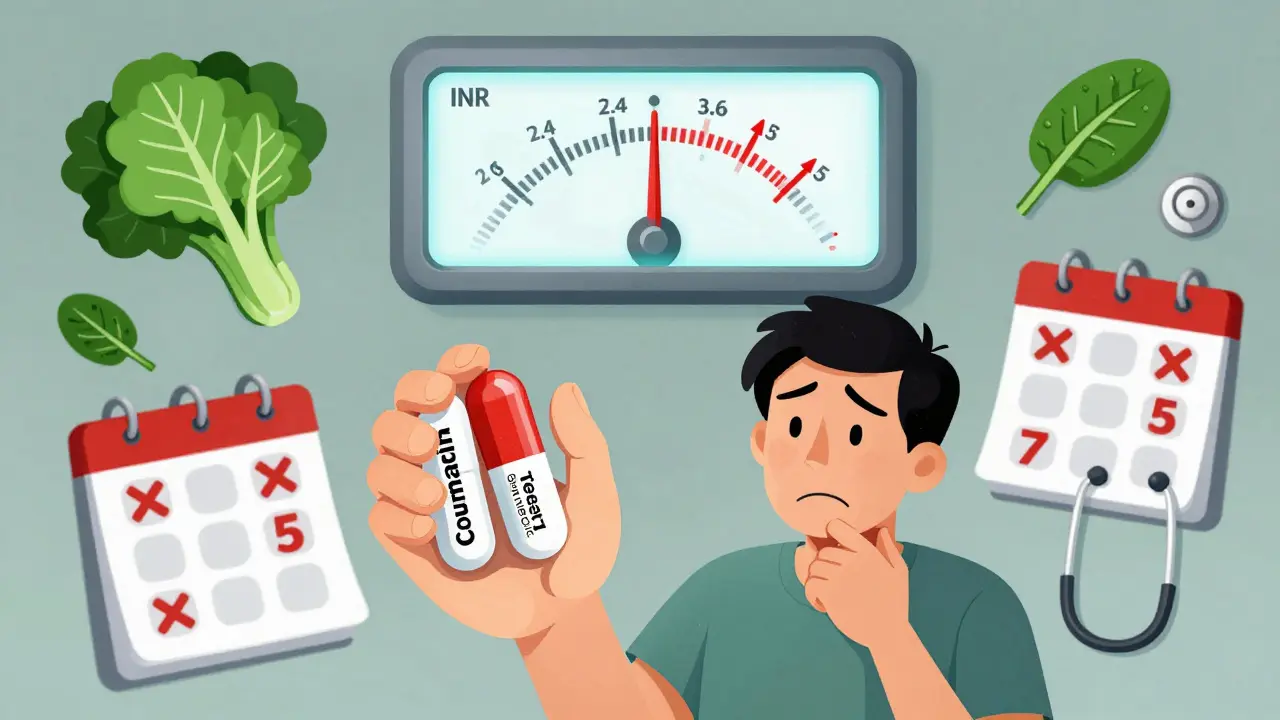
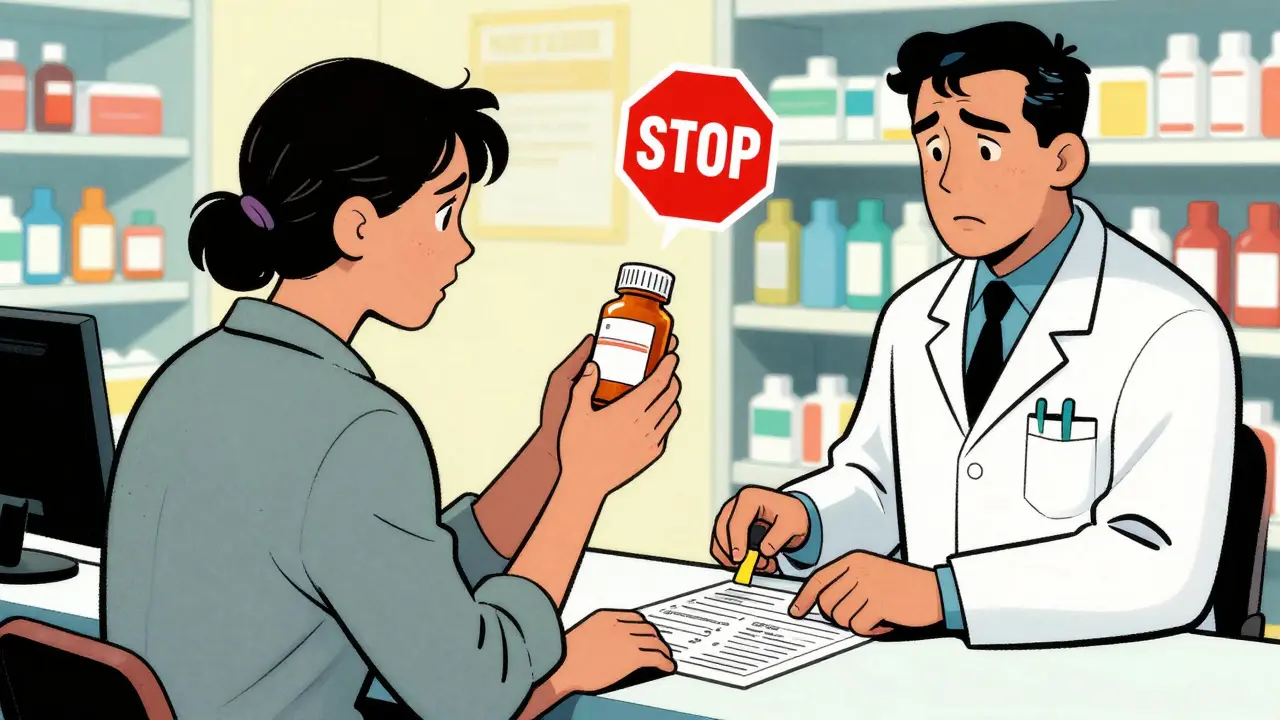
Switching from brand-name Coumadin to a generic version of warfarin sounds simple-cheaper, same active ingredient, right? But for someone on warfarin, that switch can be anything but simple. Warfarin isn’t like taking a painkiller or an antibiotic. It’s a warfarin with a razor-thin safety margin. Too little, and you risk a stroke or blood clot. Too much, and you could bleed internally without warning. That’s why every change in formulation, even if it’s labeled "therapeutically equivalent," demands attention.
Why Warfarin Is Different
Warfarin has been around since the 1950s. It works by blocking vitamin K, which your body needs to make clotting factors. That’s why it’s used for atrial fibrillation, deep vein thrombosis, and mechanical heart valves. But here’s the catch: the difference between a safe dose and a dangerous one is tiny. Your target INR (International Normalized Ratio) is usually between 2.0 and 3.0. If your INR hits 4.0 or higher, your risk of bleeding skyrockets. If it drops below 1.8, you’re not protected enough.Unlike newer anticoagulants like apixaban or rivaroxaban-which work the same way every time-warfarin’s effects change based on what you eat, what other drugs you take, even how well your liver metabolizes it. Over 300 medications can interfere with it. A single dose of an antibiotic like trimethoprim-sulfamethoxazole can spike your INR by 50% in under 72 hours. And your diet? Eating a big bowl of kale or spinach one day and none the next can throw your INR off track.
Generic Warfarin: Same Drug, Different Results?
The FDA says all approved generic warfarin products are bioequivalent to Coumadin. That means they meet the same standards for absorption: 80-125% of the brand’s concentration in your blood. Sounds fair, right? But bioequivalence doesn’t guarantee identical effects in every person.Studies show most people switch without issue. A 2002 study of 182 patients in a St. Louis HMO found no increase in bleeding or clots after switching from Coumadin to Barr’s generic warfarin. Another review of over 40,000 patients confirmed similar outcomes. But here’s what those studies don’t tell you: some people do have problems. One patient might go from a rock-solid INR of 2.4 on Coumadin to 3.6 on a Teva generic-no diet change, no new meds, just a different pill.
Why? Because warfarin’s absorption is sensitive to tiny differences in fillers, binders, and manufacturing processes. Even if two generics meet FDA standards, they aren’t identical. That’s why the American Heart Association warns: switching between different generic manufacturers-even if both are "AB-rated"-can cause INR instability.
When You Switch: The Monitoring Protocol
If you’re switching from Coumadin to a generic-or from one generic to another-don’t assume everything will stay the same. The Cleveland Clinic, American Family Physician, and other guidelines agree: you need tighter monitoring right after the switch.- Check your INR within 3-5 days after switching.
- Then check again every 2-3 days for the next 1-2 weeks.
- Only return to your usual 4-6 week schedule once your INR has been stable for two consecutive checks.
That’s more frequent than most people expect. In fact, many patients are told they can just pick up the generic and keep going-no extra tests needed. That’s risky. One nursing home study found that 1 in 6 residents on warfarin had an adverse event, and many were preventable. A simple INR check a few days after switching could have caught a dangerous rise before it led to a bleed.
Don’t wait for symptoms. Warfarin doesn’t cause dizziness or nausea when it’s too high. You might feel fine until you start bleeding internally. That’s why INR testing isn’t optional-it’s your early warning system.
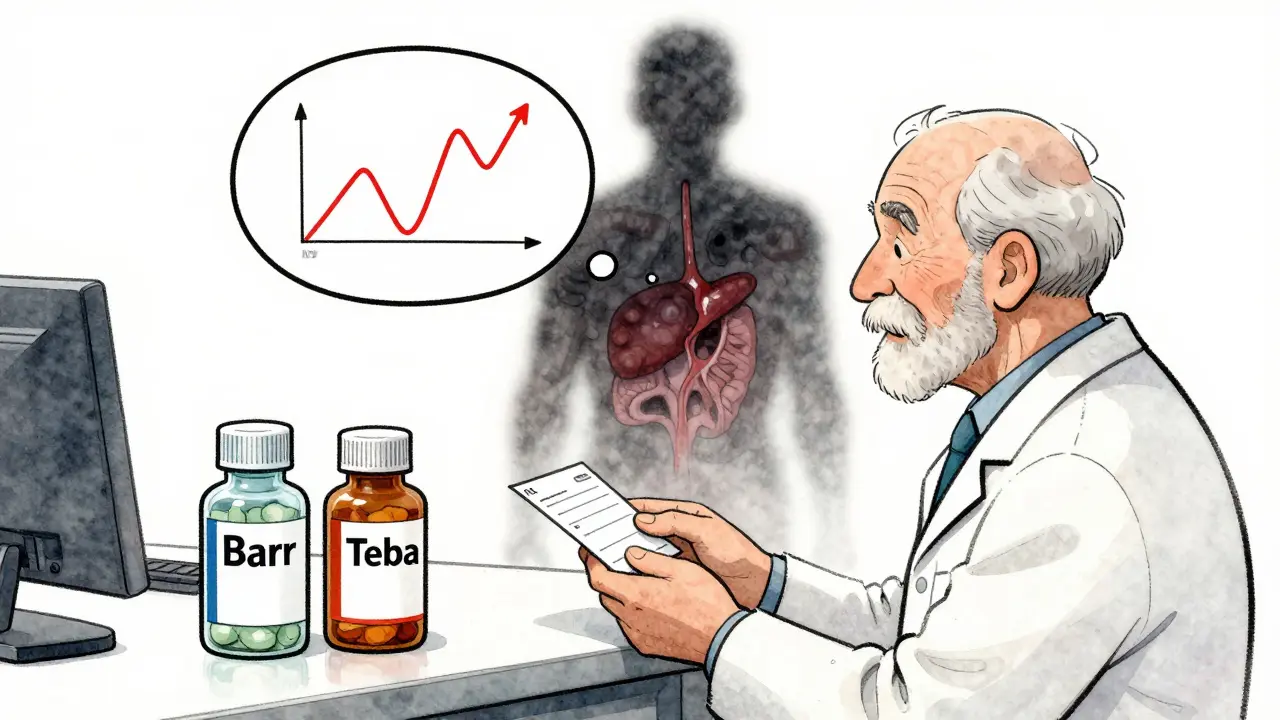
What to Watch For After the Switch
If your INR suddenly changes after a generic switch, don’t panic-but don’t ignore it either. First, rule out the obvious:- Diet: Did you eat more leafy greens? Vitamin K directly counteracts warfarin. A 100-150 mcg daily swing can shift your INR.
- Medications: Did you start a new antibiotic, antifungal, or even an OTC supplement like St. John’s wort? These can drastically alter how warfarin works.
- Adherence: Did you miss a dose? Warfarin’s half-life is 36-42 hours. Skipping even one dose can cause your INR to drop.
- Lab error: Was the blood drawn at the same lab? Different labs can give slightly different INR readings.
If none of these explain the change, the pill itself might be the culprit. In those cases, your provider may need to adjust your dose by 5-10% and retest in a week. If your INR stays unstable, switching back to your original formulation-even if it costs more-might be the safest choice.
Why Some Patients Still Need Warfarin
It’s easy to think DOACs (direct oral anticoagulants) have replaced warfarin. And yes, they’re now used for about 65% of new prescriptions. But warfarin still has critical roles:- Patients with mechanical heart valves-especially mitral valves-need warfarin. DOACs aren’t approved here.
- People with severe kidney disease can’t use many DOACs. Warfarin is cleared by the liver, not the kidneys.
- Cost matters. A month’s supply of generic warfarin costs $4-$10. DOACs? $300-$500. For Medicare beneficiaries on fixed incomes, that’s life-changing.
- Emergency reversibility. If you bleed badly, vitamin K or fresh frozen plasma can reverse warfarin quickly. DOACs require expensive, less available antidotes.
That’s why over 1.2 million Americans still take warfarin in 2025. And for many, it’s the only option that works.
What You Can Do to Stay Safe
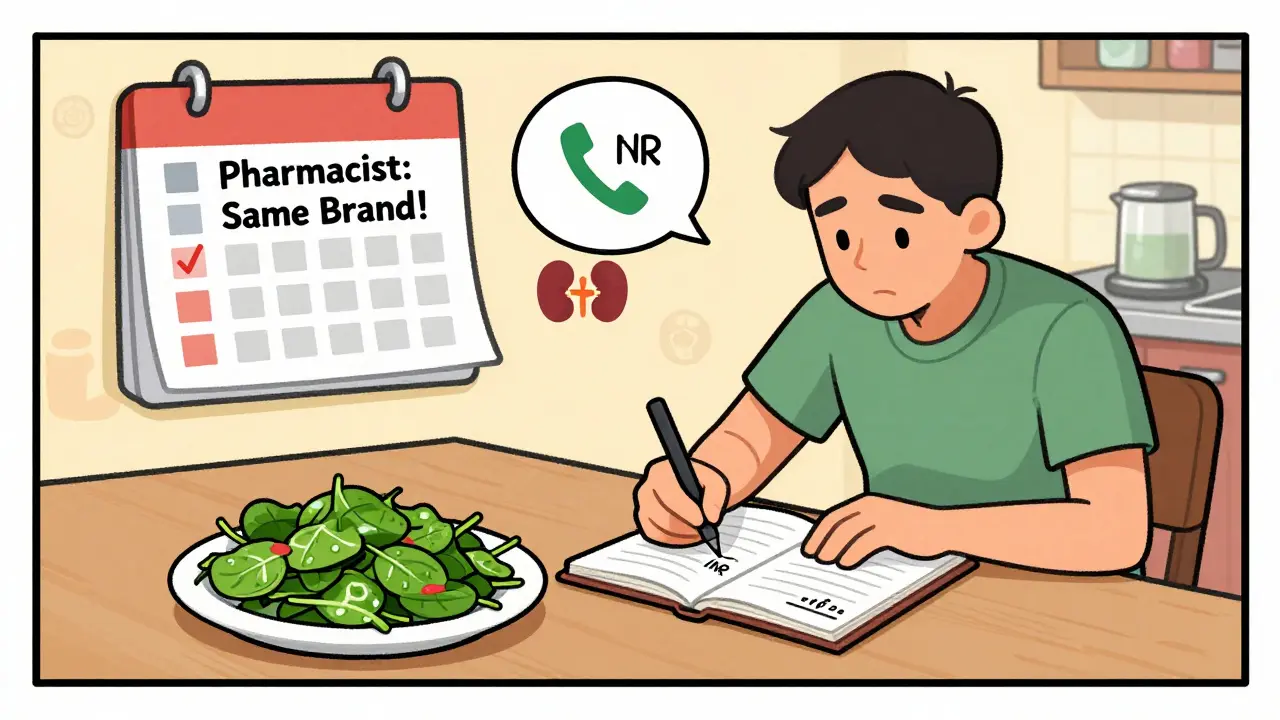
If you’re on warfarin, here’s your practical safety checklist:- Know your brand: Ask your pharmacist: "Which manufacturer makes my warfarin?" Write it down. Keep a note in your phone or wallet.
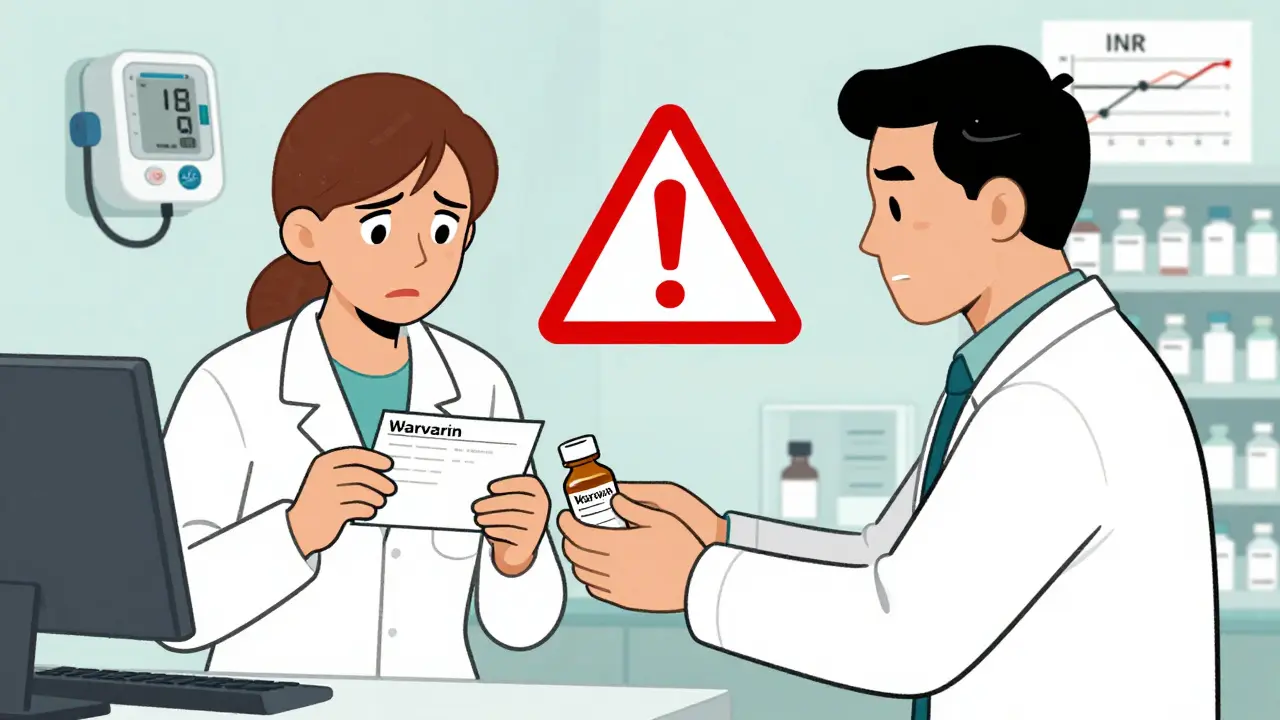
- Don’t switch without telling your provider: If your pharmacy changes your generic without asking, call them. Say, "I’m on warfarin. I need the same manufacturer." Many pharmacies will honor this request.
- Track your INR: Keep a log. Note the date, your dose, and your INR. Bring it to every appointment.
- Be consistent with diet: Eat similar amounts of vitamin K-rich foods every week. You don’t have to avoid them-just keep it steady.
- Review all meds annually: Even over-the-counter painkillers like ibuprofen can raise bleeding risk. Your doctor should review everything you take every year.
And if you’ve been stable on warfarin for years? Don’t assume you’re immune to change. A new generic batch, a new pharmacy, or even a change in your liver function can alter how your body handles the drug.
The Bottom Line
Generic warfarin is safe for most people-and it saves money. But safety isn’t just about whether the FDA says two pills are equivalent. It’s about how your body responds to the change. The data shows that with careful monitoring, switching works. But skipping monitoring? That’s where the danger lies.Warfarin isn’t outdated. It’s a tool that demands respect. If you’re switching generics, treat it like a new prescription. Check your INR early and often. Talk to your provider. Keep track. Your life depends on it-not just the pill you take, but the vigilance you bring to it.
Can I switch between different generic warfarin brands without checking my INR?
No. Even though all generic warfarin products are rated "AB" by the FDA, switching between different manufacturers can cause your INR to change. The American Heart Association recommends checking your INR within 3-5 days after switching and then every few days for the next 1-2 weeks until it’s stable. Don’t assume all generics are the same-your body might respond differently to each one.
Is generic warfarin less effective than Coumadin?
Not necessarily. Large studies involving over 40,000 patients show that generic warfarin is just as effective as Coumadin for preventing clots and bleeding when INR is properly monitored. However, some individuals experience instability after switching, which isn’t due to lower effectiveness but to small differences in how the body absorbs each formulation. The key isn’t the brand-it’s consistent monitoring after any switch.
How often should I get my INR checked if I’m on warfarin?
When you first start warfarin, check your INR every 2-3 days until it’s stable. Once stable, most people test every 4-6 weeks. But if you’ve recently switched generics, changed your diet, started a new medication, or had any illness, go back to checking every 3-7 days for 1-2 weeks. Stability doesn’t mean you’re done monitoring-it means you’ve reached a baseline that still needs regular checks.
Why does my doctor ask about my diet when I’m on warfarin?
Vitamin K counteracts warfarin. Foods like kale, spinach, broccoli, and Brussels sprouts are high in vitamin K. If you eat a lot one week and almost none the next, your INR will swing. You don’t have to stop eating these foods-just keep your intake consistent. A change of 100-150 mcg of vitamin K per day can affect your INR enough to require a dose adjustment.
Should I switch from warfarin to a DOAC?
It depends. DOACs don’t require regular INR checks and have fewer food and drug interactions. But they’re much more expensive-$300-$500 a month versus $4-$10 for generic warfarin. They’re also not approved for mechanical heart valves or severe kidney disease. If you’re stable on warfarin, cost-sensitive, or have one of these conditions, staying on it may be the best choice. Talk to your doctor about your lifestyle, finances, and health needs before switching.
What should I do if my INR suddenly becomes unstable?
Don’t change your dose on your own. Call your provider immediately. They’ll want to know if you’ve changed your diet, started a new medication, missed doses, or switched pharmacies. If no cause is found, they may test your INR again in 24-48 hours and adjust your dose by 5-10%. If instability continues, they may switch you back to your original formulation or consider a DOAC if appropriate.
Next Steps for Patients
If you’re on warfarin, here’s what to do right now:- Check your last INR result. Is it within your target range?
- Look at your prescription bottle. What manufacturer made your warfarin? Write it down.
- Call your pharmacy. Ask if they’ve switched your generic recently. If they did, ask if they can keep you on the same brand.
- Set a reminder for your next INR test-don’t wait for them to call you.
- Make a list of all your medications, including supplements and OTC drugs, and bring it to your next appointment.
Warfarin works. But it doesn’t work if you don’t pay attention. The best way to stay safe isn’t to avoid generics-it’s to monitor closely, communicate clearly, and never assume a pill is the same just because it has the same name.



anthony epps on 16 December 2025, AT 15:51 PM
I switched to generic warfarin last year and my INR went nuts. No diet changes, no new meds. Just a different pill. My doctor acted like it was no big deal until I almost bled out. Now I only take the Teva brand. Don't let them fool you.