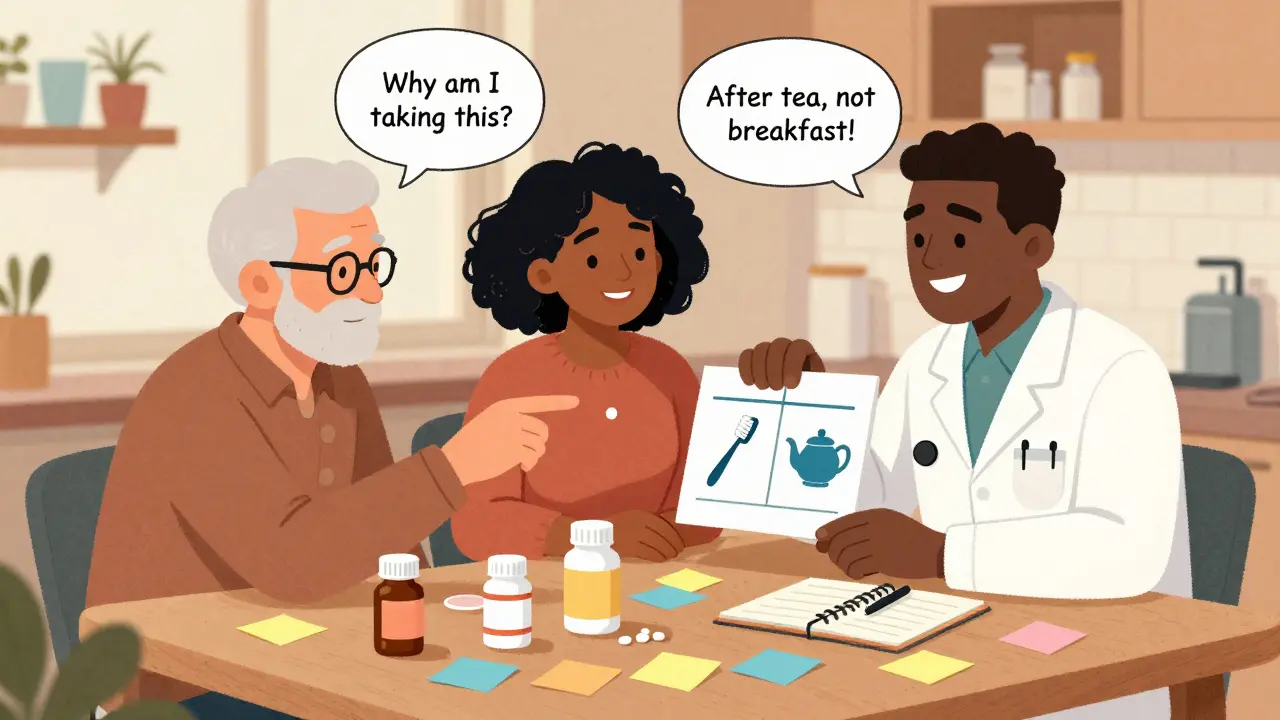
When you’re managing multiple medications, it’s easy to feel overwhelmed. One pill in the morning, another after lunch, a different one at night - and don’t forget the over-the-counter painkiller, the vitamin, and the herbal supplement your cousin swore by. If you’ve ever missed a dose, doubled up by accident, or just stared at a bottle wondering why you’re taking it, you’re not alone. A Medication Action Plan changes that. It’s not just a list of drugs. It’s your personal roadmap to taking your medications safely and effectively - created with your care team, not handed to you by a pharmacist in a stack of paperwork.
What Exactly Is a Medication Action Plan?
A Medication Action Plan (MAP) is a written, personalized guide that tells you exactly what to do with your medications, when to do it, and what to watch for. It’s built on your Personal Medication Record - a complete list of every pill, liquid, patch, or injection you take, including prescriptions, over-the-counter drugs, vitamins, and supplements. But unlike a simple list, a MAP turns that information into action. It answers questions like: What should I do if I feel dizzy after my blood pressure pill? When should I call my doctor? How do I remember to take my evening dose when I’m tired?
This isn’t new. Germany introduced a national standardized medication plan in 2016 for patients taking three or more medications. In the U.S., it’s part of Medicare Part D’s Medication Therapy Management (MTM) program, which started in 2006. Today, more than 89% of Medicare Part D plans offer MTM services, and the market for these programs has grown from $1.2 billion in 2015 to over $5.8 billion in 2023. Why? Because it works.
Why Your Care Team Needs to Be Involved
You can’t build a good action plan alone. Your doctor knows what you’re being treated for. Your pharmacist knows how the drugs interact. You know your daily life - your work schedule, your sleep habits, whether you forget things after coffee or after dinner. A strong MAP brings all three of you together.
Research shows patients who help create their own plan are 25-40% more likely to stick with their medications. That’s not a small number. For someone with diabetes, heart disease, and high blood pressure, that kind of adherence can mean the difference between staying out of the hospital and ending up there.
One 2022 study found that 43% of eligible patients never received a written action plan - even though they qualified. That’s not a failure of the patient. It’s a failure of the system. The plan needs to be offered, explained, and co-created. It’s not a form to sign. It’s a conversation.
Step 1: Gather Everything You Take
Before you meet with your care team, collect every medication you use. Don’t guess. Don’t rely on memory. Go through your cabinets, purse, and nightstand. Include:
- All prescription drugs (even ones you’re not taking anymore but still have)
- All over-the-counter medicines (ibuprofen, antacids, cold pills)
- All vitamins and supplements (fish oil, magnesium, herbal teas)
- All topical treatments (creams, patches, eye drops)
- Any medications you get from a different pharmacy or provider
Bring them all - in their original bottles if possible. If you can’t bring the bottles, write down the name, dose, frequency, and reason you take each one. This step alone clears up so many mistakes. A 2021 CMS survey found that 70% of Medicare beneficiaries said having a full list reduced their confusion about what they were taking.
Step 2: Have the Conversation
During your appointment - whether it’s with your doctor, pharmacist, or both - ask these questions:
- What is each medication for? (Not just “for your blood pressure” - why does it matter?)
- Which ones are most important? Are any I can stop?
- What side effects should I watch for? What should I do if they happen?
- Do any of these interact with food, alcohol, or other medicines?
- What’s the goal? Am I taking this to feel better, prevent a stroke, or lower my risk of hospitalization?
Don’t be afraid to say, “I don’t understand.” Or “That doesn’t fit my routine.” A good care team won’t get frustrated. They’ve heard it before. In fact, the Agency for Healthcare Research and Quality says the best plans use clear, everyday language - not medical jargon. Instead of “take with food,” say “take after breakfast.” Instead of “titrate,” say “we’ll increase it slowly.”
Step 3: Build the Action Steps
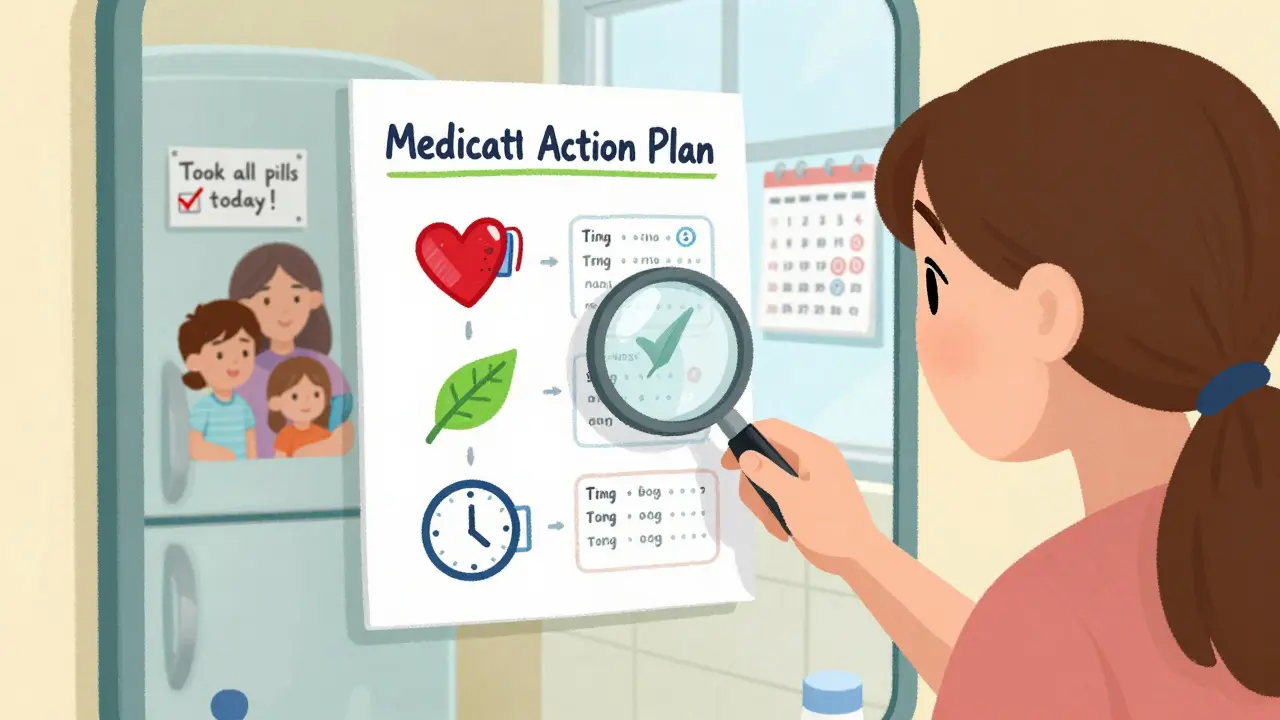
This is where the plan becomes real. It’s not just “take pill A at 8 a.m.” It’s “take pill A at 8 a.m. after brushing your teeth.” Why? Because habits stick when they’re tied to existing routines.
Here’s how a good MAP breaks it down:
- What to do: Take 10 mg of lisinopril every morning.
- When to do it: Right after you brush your teeth - that’s your trigger.
- Why: To lower your blood pressure and reduce your risk of stroke.
- What to watch for: If you feel dizzy or have a dry cough, call your doctor - don’t stop it.
- Goal: Take this dose correctly 6 out of 7 days for the next 30 days.
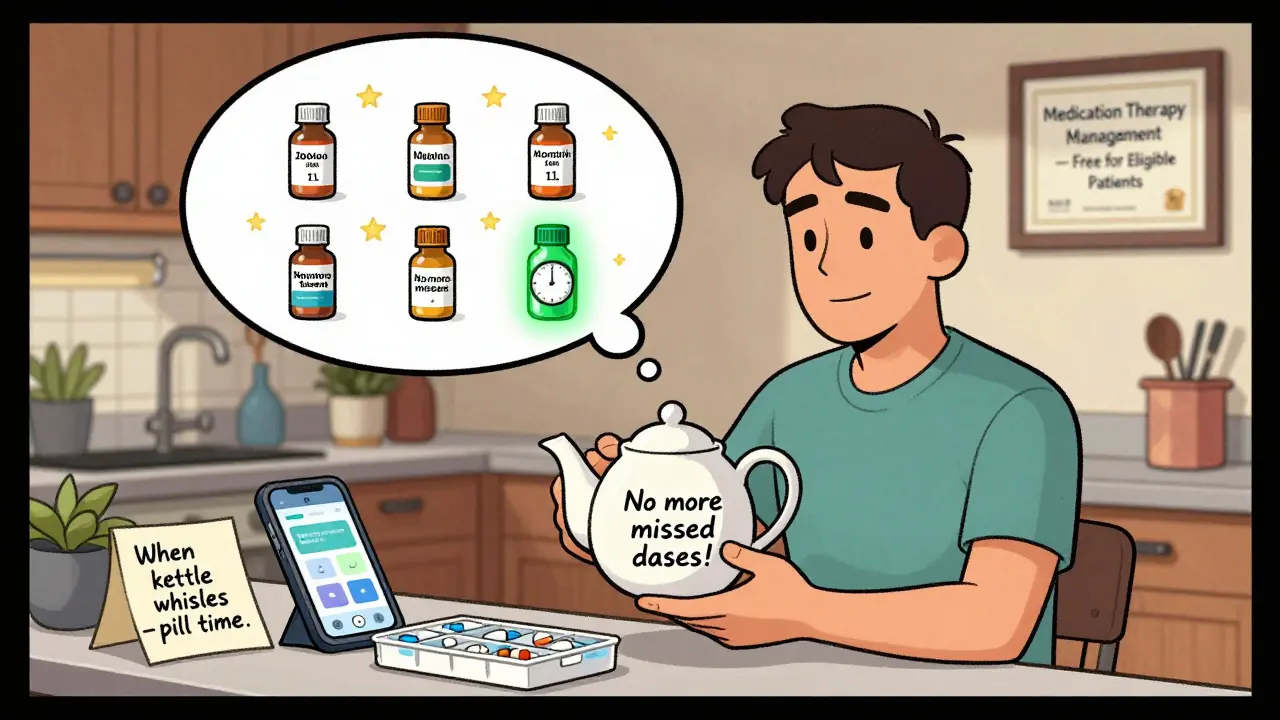
For people taking three or more medications, color-coding helps. Red for heart meds, green for diabetes, blue for pain. Some patients even use pictures - a coffee cup next to their morning pills, a bed next to their nighttime ones. One 68-year-old woman in Michigan turned her MAP into a visual chart taped to her fridge. Her adherence jumped from 65% to 95%.
Step 4: Make It Visual and Accessible
A paper plan is fine. But if it’s tucked in a drawer, it’s useless. Your plan should be where you see it every day. Tape it to the bathroom mirror. Keep a copy in your wallet. Ask your pharmacist if they offer a printed version with larger text or a simplified layout.
Many pharmacies now offer apps that sync with your MAP. These send you reminders, let you log whether you took your dose, and flag potential interactions. In 2023, 63% of major pharmacy chains offered these tools. If you’re comfortable with technology, ask for it. If not, stick with paper - but make sure it’s visible.
Step 5: Review and Update Regularly
Your body changes. Your medications change. Your life changes. A MAP isn’t a one-time thing. It’s a living document.
The American Academy of Family Physicians recommends reviewing your plan at least every three months. That means:
- After any hospital visit or ER trip
- After a new diagnosis
- When you start or stop a medicine
- Every time you refill your prescriptions
Pharmacists in Germany are legally required to update the medication plan each time they dispense a drug - even for over-the-counter items. That’s the gold standard. You don’t need to wait for a yearly checkup. Bring your plan to every appointment. Ask: “Has anything changed?”
Who Can Help You Build This Plan?
You don’t need to do this alone. Here’s who’s on your team:
- Your doctor: Decides what you need and why.
- Your pharmacist: Knows how drugs interact, catches duplicates, and helps simplify schedules.
- Your nurse or care coordinator: Can help you set up reminders or connect you with resources.
- Family members or caregivers: Especially helpful if you have memory issues or mobility challenges.
If you’re on Medicare Part D and take 8 or more chronic medications (or have a drug cost over $4,430/year), you’re eligible for a free Comprehensive Medication Review. Many private insurers now offer similar services. Ask your pharmacy or insurer: “Do you offer Medication Therapy Management?”
What If You’re Not Getting This Help?
If you’ve been told you’re eligible but never received a plan, speak up. Call your pharmacy. Ask your doctor’s office. Contact your insurance company. You have a right to this service.
And if you’re caring for someone else - a parent, a spouse, a child with a chronic condition - you can request a plan on their behalf. For children with life-threatening conditions, a Medication Action Plan is essential at school, during travel, and at home. The Parent Advocacy Coalition for Educational Rights (PAVE) says these plans save lives.
The Real Impact: Numbers Don’t Lie
Let’s get concrete:
- Patients with a personalized MAP have 32% fewer medication-related hospitalizations in a year.
- Medication errors cause about 280,000 hospital stays in the U.S. every year - many of them preventable.
- Every $1 spent on comprehensive medication management saves $12.30 in hospital and ER costs.
- One in five hospital admissions for older adults is due to medication problems.
This isn’t about being “good” at taking pills. It’s about designing a system that works for you.
Common Mistakes (And How to Avoid Them)
- Using a generic template: Pre-printed plans with no personalization don’t work. Johns Hopkins found zero improvement in adherence with these.
- Ignoring over-the-counter drugs: Taking ibuprofen daily with blood thinners? That’s dangerous. Include everything.
- Not tying actions to habits: “Take pill at 8 a.m.” is forgettable. “Take pill after brushing teeth” sticks.
- Keeping it hidden: If it’s not visible, it’s not useful. Tape it to your mirror.
- Never updating it: Your plan becomes outdated the moment your meds change. Review it every 3 months.
One man in Bristol - 74, on six medications - told his pharmacist his plan didn’t fit his routine. He didn’t eat breakfast. He didn’t have a routine. So they changed it: “Take your heart pill when you turn on the kettle for tea.” Simple. Effective. He hasn’t missed a dose in 11 months.
What’s the difference between a medication list and a Medication Action Plan?
A medication list just shows what you take - names, doses, times. A Medication Action Plan turns that into steps you can follow. It includes why you take each drug, what to do if you have side effects, how to remember doses, and measurable goals. It’s designed to change behavior, not just record information.
Can I create a Medication Action Plan on my own?
You can start one, but it won’t be as safe or effective without input from your care team. Doctors and pharmacists catch dangerous interactions, identify unnecessary meds, and clarify confusing instructions. A plan made alone might miss critical risks. The best plans are co-created - you bring your life, they bring their expertise.
Do I need to pay for a Medication Action Plan?
No, if you’re eligible for Medicare Part D’s Medication Therapy Management (MTM) program. Most plans offer it for free. Many private insurers cover it too. Even if you’re not on Medicare, ask your pharmacy - many offer free medication reviews as part of their services. You’re not paying for the plan; you’re getting a service that prevents costly hospital stays.
What if I can’t read or understand medical terms?
Ask for help. Say, “I need this in plain language.” Your pharmacist or care coordinator is trained to explain things clearly. Many plans now use pictures, color codes, and icons. You can also request a large-print version or ask someone to help you make a visual chart. Your understanding matters more than the words on the page.
How often should I update my Medication Action Plan?
At least every three months - or anytime your meds change. That includes new prescriptions, stopping a drug, starting a supplement, or even changing your daily routine. If you go to the hospital, get a new plan before you leave. The goal is to keep it current, not collect dust.
Can my family members use my Medication Action Plan?
Yes - and they should. If you’re ever unable to take your own meds - due to illness, injury, or confusion - your family or caregiver needs to know exactly what to do. Keep a copy for them. Let your pharmacist know who should have access. This isn’t just helpful - it’s lifesaving.
Is this only for older adults?
No. Anyone taking multiple medications can benefit - including children with chronic conditions, people with mental health conditions, or those managing diabetes, epilepsy, or autoimmune diseases. The American Academy of Family Physicians recommends it for anyone taking three or more medications regularly. Age doesn’t matter - complexity does.
Next Steps: Start Today
You don’t need to wait for an appointment. Grab your meds. Write down everything. Call your pharmacist. Ask: “Can we make a Medication Action Plan together?”
It’s not about being perfect. It’s about being clear. One step. One pill. One conversation. That’s how you take control.


Alex LaVey on 4 February 2026, AT 01:17 AM
Just started using a MAP with my grandma last month - she’s 79, on seven meds, and used to forget half of them. We colored each pill type, taped the plan to her fridge next to the grocery list, and now she even corrects me when I try to skip her fish oil. She says it feels like she’s finally in charge again. No more panic at the pharmacy.
Small changes, huge difference.