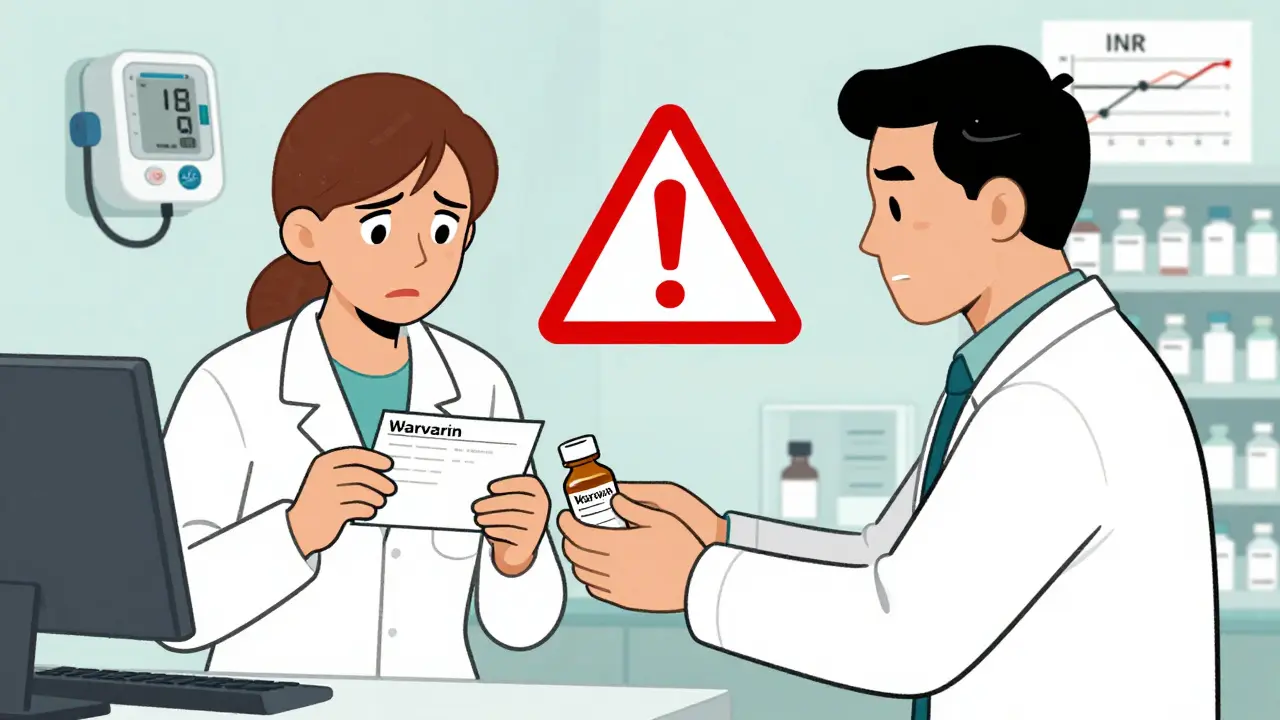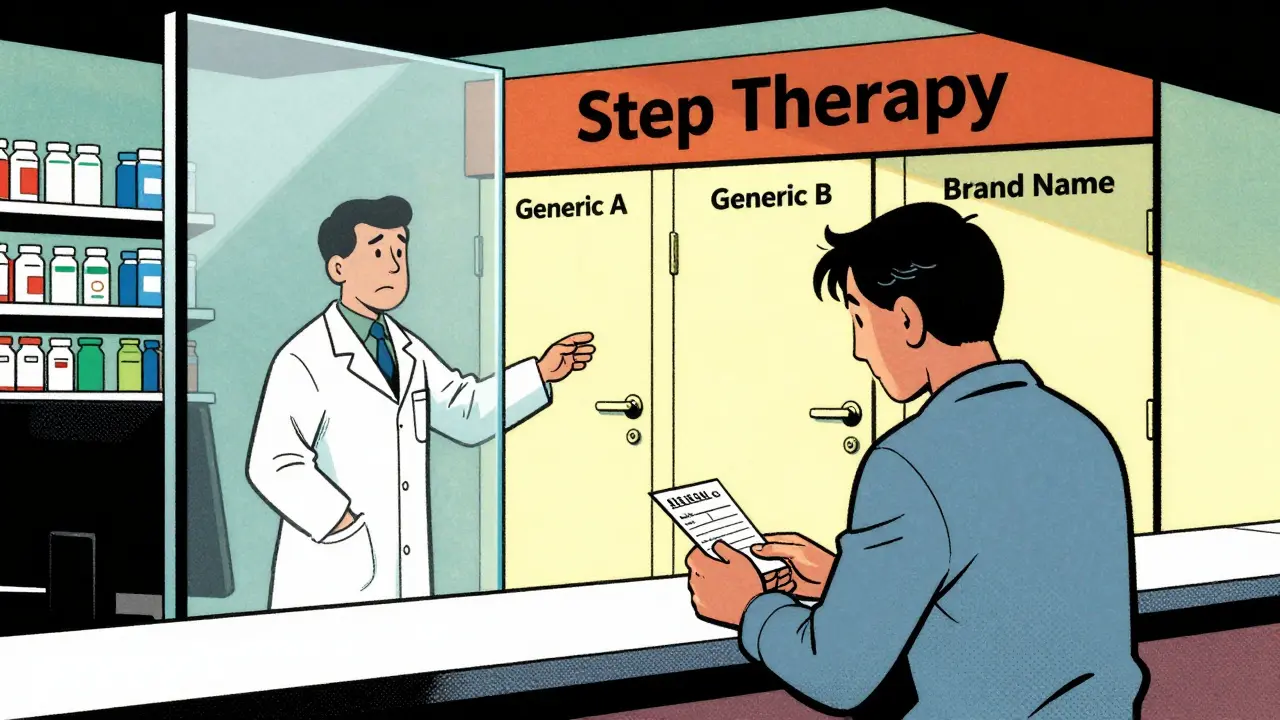
You ask your doctor for a specific medication that has worked wonders for others. They write the prescription. You take it to the pharmacy, and suddenly, you hit a wall. The pharmacist says your insurance won't cover it until you try three other cheaper options first. This is step therapy, also known as a "fail-first" policy. It is a utilization-management strategy used by health insurers to control costs by requiring patients to document unsuccessful attempts with less expensive therapies before gaining approval for restricted, typically more expensive treatments.
This isn't just an inconvenience; it’s a significant barrier to care that affects millions of Americans. According to a 2021 analysis published in PubMed, approximately 40% of health plan drug coverage policies incorporate step therapy requirements. For many, this means weeks or months of trial and error with medications that may not work for their specific condition, all while disease progression continues unchecked.
What Is Step Therapy and Why Do Insurers Use It?
To understand why you are being asked to switch meds, you need to look at how insurance companies operate. Step therapy is formally defined as a protocol setting the sequence in which prescription drugs are covered under a health benefit plan. The primary goal, as documented by Healthline's 2023 medical review, is to ensure patients receive the most reasonably priced and effective medication available, ultimately reducing the health plan's overall prescription drug costs.
Insurers argue that this approach prevents patients from taking medications that aren't the best choice for their symptoms right away. However, critics point out that this is largely a cost-containment measure. A 2022 National Institutes of Health (NIH) publication notes that step therapy was developed because policymakers failed to address high drug prices, leaving insurers to assume responsibility for controlling pharmaceutical expenditures due to their business interest in minimizing costs.
The logic is simple but flawed for individual patients: if a generic drug works for 80% of people, the insurer saves money by making everyone try it first, even if you are part of the 20% who need a brand-name specialty drug immediately. While about 90% of prescriptions filled in the U.S. are for generic drugs, step therapy becomes a major hurdle when those generics fail or are contraindicated for your specific medical history.
How Step Therapy Works: The Typical Process
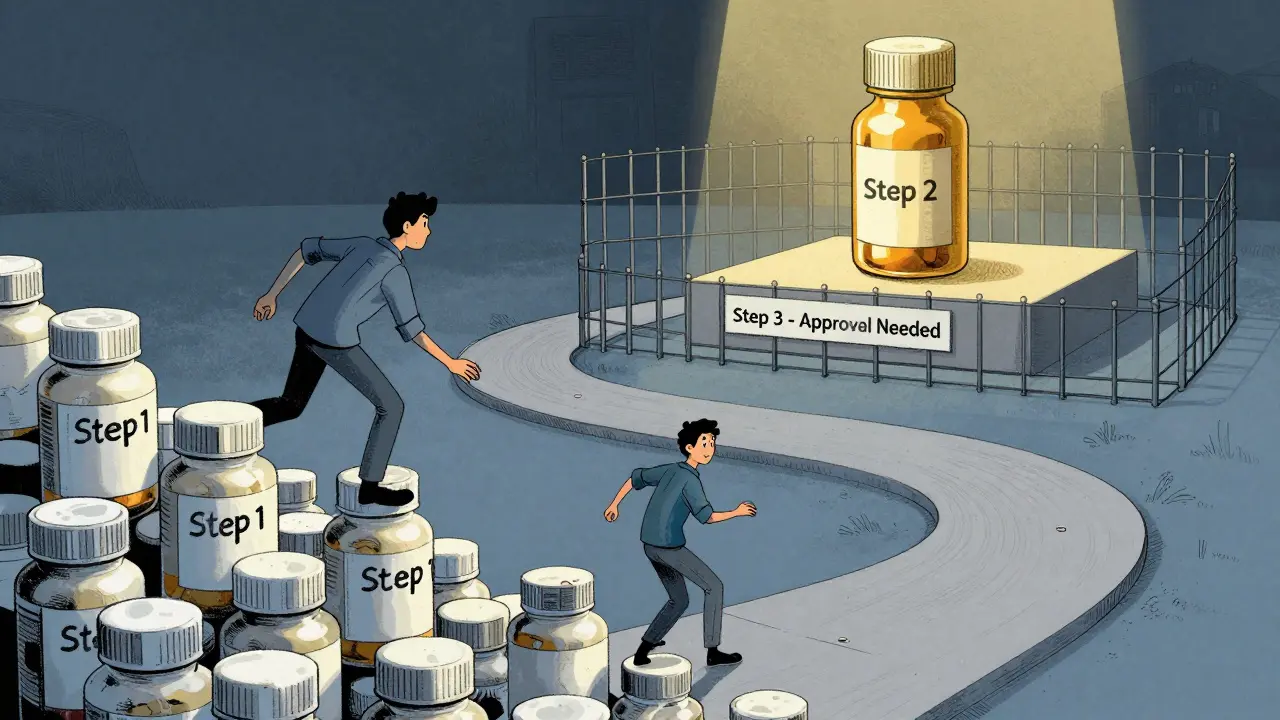
Step therapy protocols typically organize medications into two or three sequential steps. Here is how the process usually unfolds:
- Step One: Your doctor prescribes a Tier 1 or Tier 2 generic medication. These are usually covered without restrictions or with low copays. According to GoodRx's 2023 technical documentation, these medications often consist of widely available generic alternatives.
- Step Two: If the first medication doesn't work, causes severe side effects, or is ineffective after a set period, you move to the next tier. This might involve a different class of generic drug or a slightly more expensive option.
- Step Three: Only after failing the previous steps does the insurer approve coverage for the preferred, often brand-name or specialty medication your doctor originally wanted to prescribe.
For example, Aetna's 2023 Medicare Part B Drug Requirements documentation illustrates this by requiring a trial of "Drug A" before covering "Drug B" for the same medical condition. If you skip Drug A, Drug B is not covered. This creates a structured, sequential approach to medication access that differs significantly from standard prior authorization, which may be used for single medications without a required sequence of trials.
The Human Cost: Risks and Delays
The theoretical savings for insurers often come at a steep price for patients. The American College of Rheumatology (ACR) explicitly states in their 2022 patient blog that they do not support step therapy due to patient safety concerns. Their position is clear: delaying appropriate treatment can lead to irreversible damage.
Consider the experience of 'ChronicPainWarrior' on Reddit's r/healthinsurance forum in March 2023. They were required to fail three different NSAIDs over six months before gaining coverage for a biologic medication for rheumatoid arthritis. During those six months, their joint damage progressed significantly. This is not an isolated incident. The Arthritis Foundation's 2022 patient survey found that 68% of respondents experienced negative health consequences due to step therapy requirements, with 42% reporting disease progression during required medication trials.
Furthermore, the administrative burden is heavy. Physicians spend an average of 18.3 hours per week managing prior authorization and step therapy requests, according to the ACR's 2022 guidance. Appeals for step therapy exceptions can take insurers four to eight weeks to process. For a patient with a progressive condition, eight weeks is an eternity.
When Can You Skip Step Therapy? Exceptions and Exemptions
You don't always have to play the waiting game. There are legal pathways to bypass step therapy if your situation warrants it. The Virginia Code § 38.2-3407.9:05 defines a step therapy exception as overriding a step therapy protocol in favor of immediate coverage of the provider's selected prescription drug.
Federal legislation, such as the Safe Step Act introduced by Representatives Raul Ruiz and Brad Wenstrup, outlines five concrete circumstances where insurers must grant exceptions:
- Previous Ineffectiveness: The required treatments have previously been tried and were ineffective.
- Severe Consequences: Treatment delay would cause severe or irreversible consequences to the patient.
- Contraindications: The required treatments are contraindicated based on the patient's medical history.
- Daily Living Impairment: The required treatments would prevent the performance of daily living activities.
- Stable Condition: The patient's condition is stable on existing medication with prior coverage approval.
If you fall into any of these categories, your doctor can submit a request for an exception. Blue Cross Blue Shield of Michigan's 2023 documentation indicates their standard review timeframe for step therapy exceptions is 72 business hours for standard requests and 24 hours for urgent cases. However, actual processing times vary significantly across insurers, so knowing your state's laws is crucial.
State Laws vs. Federal Gaps: Who Is Protected?
Not everyone is protected equally. As of 2022, 29 states have passed specific legislation requiring insurers to include various exceptions in step-therapy protocols. However, there is a massive loophole. Most of these state laws apply only to individual, small group, and fully-insured employer plans.
Self-insured employer plans, which cover approximately 61% of Americans according to Department of Labor data from 2022, are regulated by the federal Department of Labor under ERISA. This means they are outside state law jurisdiction. Unless the Safe Step Act is passed and amended to include self-insured plans, millions of workers remain vulnerable to aggressive step therapy requirements without state-level protections.
| Plan Type | Regulated By | Subject to State Step Therapy Laws? | Risk Level |
|---|---|---|---|
| Fully-Insured Employer Plans | State Insurance Departments | Yes (in 29+ states) | Lower |
| Individual Market Plans | State Insurance Departments | Yes (in 29+ states) | Lower |
| Self-Insured Employer Plans | Federal DOL (ERISA) | No (unless federal law changes) | Higher |
| Medicaid | State/Federal Joint | Varies by state agency regulation | Moderate |

How to Fight Back: Practical Steps for Patients
If you are facing a step therapy requirement, do not just accept it. Here is how you can navigate the system effectively:
1. Document Everything. Keep records of every medication you have tried, including dates, dosages, and side effects. If a drug caused a rash or didn't lower your blood pressure, get that in writing. This evidence is vital for proving "previous ineffectiveness" or "contraindications."
2. Leverage Your Doctor. Your physician is your strongest ally. Ask them to submit a peer-to-peer review request. This allows your doctor to speak directly with the insurance company's medical director. Often, a direct conversation can override automated denials faster than paperwork alone.
3. Check for Manufacturer Assistance. The pharmaceutical industry has responded to these barriers with increased patient assistance programs. According to a 2022 Drug Topics industry report, 78% of major pharmaceutical companies offer co-pay assistance. While this doesn't always circumvent step therapy rules, it can sometimes make the initial generic trials more affordable, or provide bridge supplies while you appeal.
4. Know Your Appeal Rights. If your exception request is denied, you have the right to appeal. The Partnership to Fight Chronic Disease launched a 2023 campaign highlighting that the average four-week exception processing time is too long for patients with progressive conditions. Use this leverage. Cite specific state laws if you are in one of the 29 protected states. If you are in a self-insured plan, cite the clinical guidelines from organizations like the American College of Rheumatology to show that the insurer's policy contradicts established medical standards.
The Future of Step Therapy Regulations
The landscape is shifting. Industry analysts at Avalere Health project in their September 2023 report that step therapy requirements will expand to cover 55% of specialty drug prescriptions by 2025, up from the current 40% coverage rate. This means more patients will face these hurdles unless legislative action occurs.
Currently, 14 additional states have introduced step therapy legislation beyond the original 29, with 8 states strengthening existing protections to include more specific timeframes for exception decisions. The trend is moving toward more structured, time-bound exception processes with clearer medical criteria. The goal is to balance cost containment needs with patient access to timely appropriate care.
Until federal legislation like the Safe Step Act closes the gap for self-insured plans, patients must remain vigilant. Understanding your rights, documenting your medical history, and actively appealing unfair restrictions are the best tools you have to ensure you get the care you need, not just the cheapest care available.
What is the difference between step therapy and prior authorization?
Prior authorization is a general requirement where an insurer approves a specific medication before covering it. Step therapy is a stricter form of prior authorization that requires you to try and fail one or more cheaper medications in a specific sequence before the insurer will approve the prescribed drug. Prior authorization might be a single hurdle; step therapy is a multi-step process.
Can my doctor override step therapy?
Your doctor cannot unilaterally override step therapy, but they can request an exception. By submitting clinical evidence that the required lower-tier drugs are ineffective, contraindicated, or would cause harm, your doctor can petition the insurer to waive the step therapy requirement. This is often done through a peer-to-peer review.
Are self-insured plans subject to state step therapy laws?
Generally, no. Self-insured employer plans are regulated by the federal Employee Retirement Income Security Act (ERISA), which preempts state insurance laws. This means that even if your state has strong step therapy protections, your self-insured plan may not be required to follow them unless federal legislation like the Safe Step Act is enacted.
How long does it take to get a step therapy exception approved?
Processing times vary by insurer. Some, like Blue Cross Blue Shield of Michigan, aim for 72 business hours for standard requests and 24 hours for urgent cases. However, industry reports indicate that appeals can take four to eight weeks, which can be dangerous for patients with acute or progressive conditions.
Why do insurance companies use step therapy?
Insurance companies use step therapy primarily as a cost-containment measure. By forcing patients to try cheaper generic drugs first, they reduce overall pharmaceutical spending. Studies suggest this can reduce drug costs by 5-15%, but it often delays effective treatment for patients who do not respond to the initial, cheaper options.