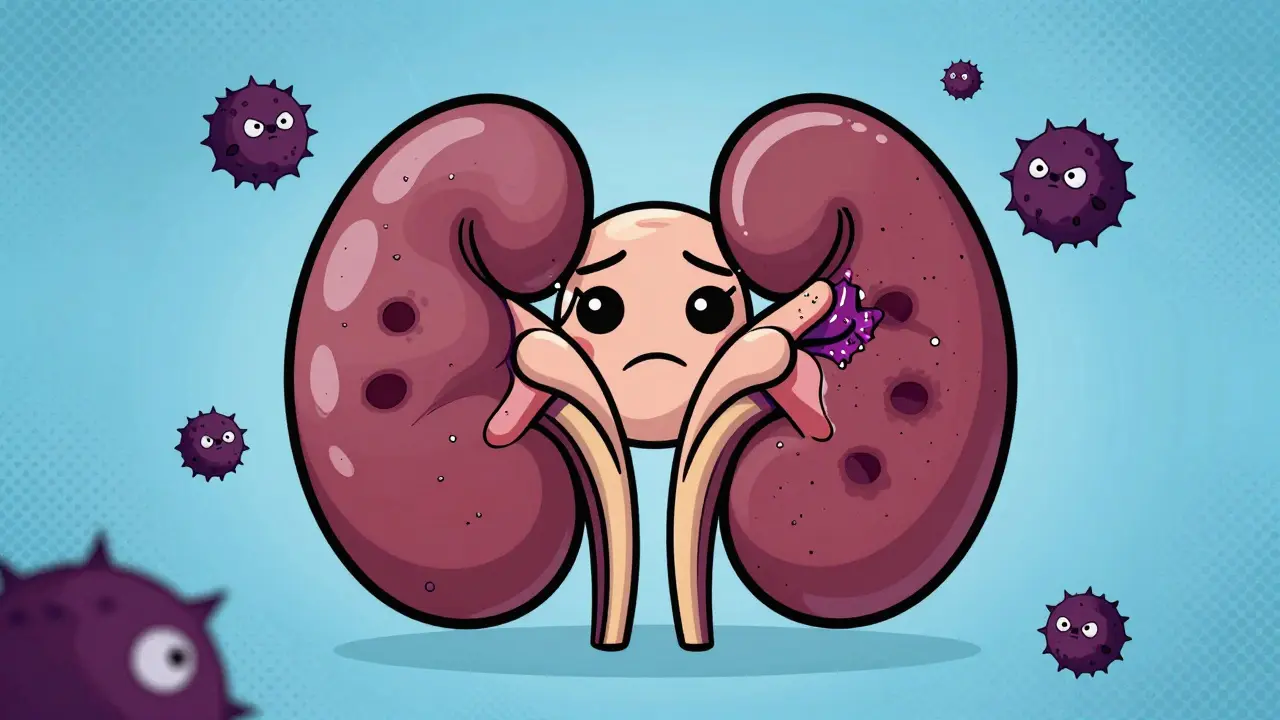
Imagine finding blood in your urine after a simple cold. For many people, this is just a scary moment that passes. But for others, it signals IgA Nephropathy, also known as Berger's disease. This condition occurs when immunoglobulin A (IgA) immune complexes deposit in the glomeruli of the kidneys, causing inflammation and progressive damage. It is the most common form of primary glomerulonephritis worldwide.
If you or a loved one has received this diagnosis, the questions are immediate and heavy. Will my kidneys fail? What drugs do I need to take? The landscape of treating IgA Nephropathy has changed dramatically. Gone are the days of simply waiting and watching. Today, we have targeted therapies and precise guidelines to help preserve kidney function. Let’s look at what the latest science says about your prognosis and how modern treatments work.
Understanding the Disease Mechanism
To understand the treatment, you first need to understand the enemy. In a healthy body, the immune system fights off infections. In IgA Nephropathy, something goes wrong with the glycosylation process of IgA antibodies. These abnormal IgA molecules clump together into immune complexes. Instead of being filtered out by the kidneys, these clumps get stuck in the glomeruli, which are the tiny filtering units within the kidneys responsible for removing waste from the blood.
This blockage triggers an inflammatory response. Over time, this inflammation scars the glomeruli. As scar tissue replaces healthy tissue, the kidneys lose their ability to filter blood effectively. Protein leaks into the urine-a condition called proteinuria, defined as the presence of excessive protein in the urine, serving as a key marker of kidney damage. High levels of proteinuria correlate strongly with faster progression to kidney failure. That is why controlling protein leakage is the central goal of all current therapies.
The Paradigm Shift in KDIGO 2025 Guidelines
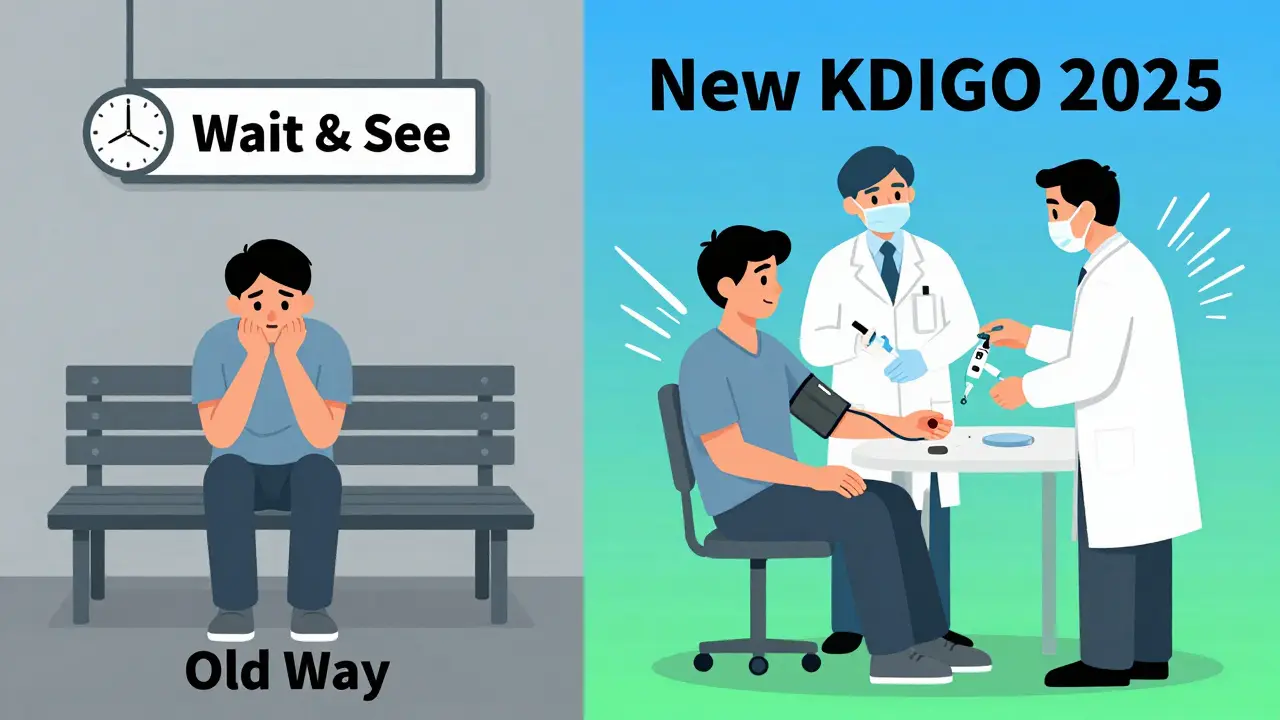
For years, doctors followed a "wait and see" approach. They would prescribe standard blood pressure medications and wait three months to see if they worked before trying stronger immunosuppressants. The KDIGO 2025 Clinical Practice Guideline, released by Kidney Disease: Improving Global Outcomes, represents a major shift away from this sequential method. The new guideline recommends simultaneous therapy.
What does this mean for you? It means that if you are identified as high-risk, doctors will start supportive care (like blood pressure control) AND targeted therapy at the same time. Dr. Laura H. Mariani, Director of the University of Michigan's IgA Nephropathy Program, notes that this addresses a critical gap where patients suffered continued disease activity during the initial waiting period. The goal is to stop the damage immediately, not wait for it to worsen.
Risk Stratification: Knowing Your Status
Not everyone with IgA Nephropathy progresses to kidney failure. Some people live decades with stable disease. Others decline rapidly. The KDIGO 2025 guidelines emphasize risk stratification, which is a process of categorizing patients based on their likelihood of progressing to end-stage kidney disease. Doctors use several factors to determine your risk level:
- Persistent Proteinuria: Levels above 1 g/day despite optimized supportive care indicate high risk.
- eGFR: Estimated Glomerular Filtration Rate shows how well your kidneys are filtering.
- Blood Pressure: Uncontrolled hypertension accelerates kidney damage.
- Histological Findings: Results from a kidney biopsy using the Oxford Classification (MEST-C score).
If you fall into the high-risk category, defined as persistent proteinuria >1 g/day or >0.75 g/day with other risk factors, aggressive combination therapy is recommended. If you are low-risk, conservative management may be sufficient. Understanding your specific risk profile helps you and your doctor choose the right path forward.
Current Therapeutic Options
Treatment now focuses on two pathways simultaneously: stopping the production of pathogenic IgA and managing the generic response to kidney injury. Here are the main tools available today.
Targeted Release Budesonide (Nefecon)
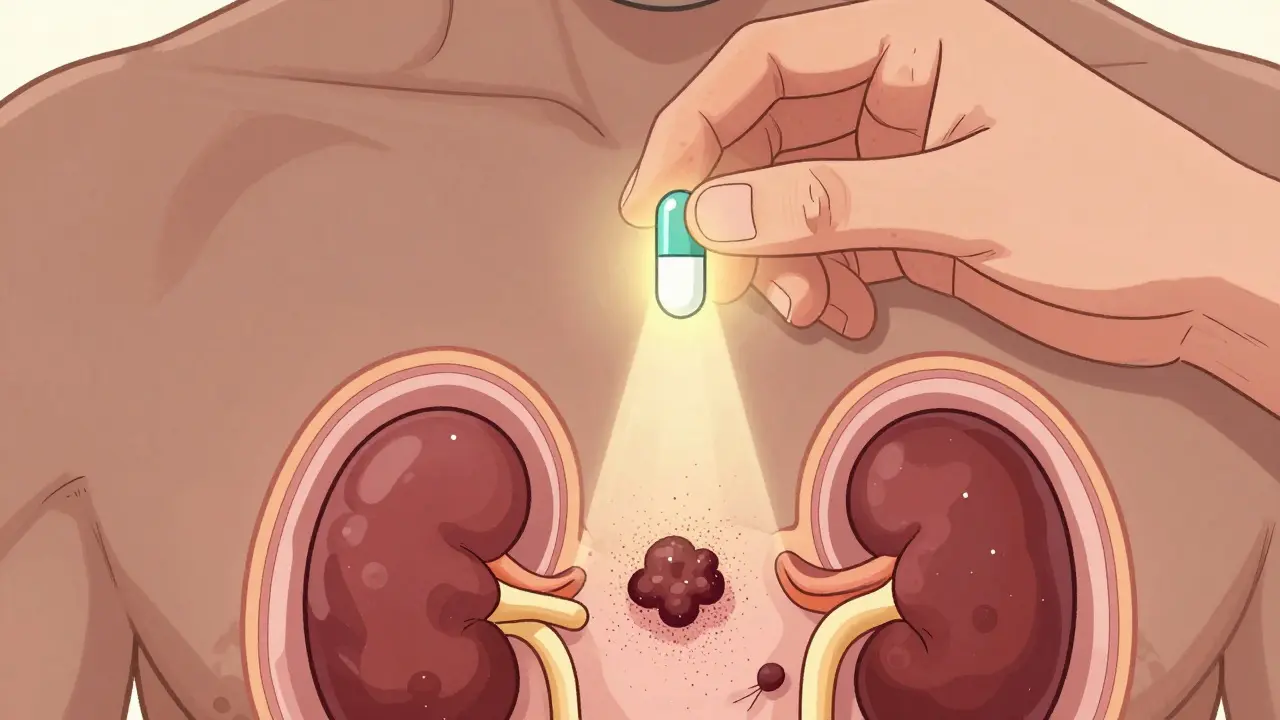
Nefecon is a targeted-release formulation of budesonide, a corticosteroid designed to act directly on the podocytes in the kidney. Approved by the FDA in December 2023, it was the first drug specifically approved for IgA Nephropathy. Unlike traditional steroids that affect the whole body, Nefecon releases medication directly in the distal small intestine, where much of the pathogenic IgA originates. This reduces systemic side effects like weight gain and diabetes risk. However, cost remains a barrier, with annual prices reaching $125,000 in the United States.
Renin-Angiotensin System Inhibitors (RASi)
RAS inhibitors, including ACE inhibitors and ARBs, remain the cornerstone of supportive care. These drugs lower blood pressure and reduce intraglomerular pressure, thereby decreasing proteinuria. They are almost always prescribed alongside other therapies unless contraindicated.
Dual Endothelin Receptor Antagonists (DEARA)
Sparsentan is a dual endothelin receptor antagonist approved by the EMA in June 2024 for high-risk IgA Nephropathy. It works by blocking endothelin, a hormone that causes blood vessels to narrow and promotes fibrosis. Sparsentan has shown significant efficacy in reducing proteinuria compared to losartan alone. It offers a powerful option for patients who cannot tolerate steroids or need additional proteinuria reduction.
SGLT2 Inhibitors
SGLT2 inhibitors, originally developed for diabetes, have proven benefits for kidney health. They help protect the kidneys by altering energy metabolism in kidney cells and reducing inflammation. They are often added to RASi therapy to further lower proteinuria and slow eGFR decline.
Regional Variations in Treatment
Treatment isn't one-size-fits-all globally. In Japan, tonsillectomy, the surgical removal of tonsils, is commonly used early in the disease course. The theory is that tonsils produce the abnormal IgA, so removing them stops the source. Evidence for this is strongest in Japanese populations. In China, mycophenolate mofetil and hydroxychloroquine are frequently used, showing good efficacy in Asian clinical trials but less robust data in Western populations. Your location and genetic background may influence which therapies your doctor recommends.
| Therapy | Mechanism | Key Benefit | Major Limitation |
|---|---|---|---|
| Nefecon | Targeted steroid release | Reduced systemic side effects | High cost ($125k/year) |
| Sparsentan | Dual endothelin blockade | Strong proteinuria reduction | Requires monitoring for fluid retention |
| RASi | Blood pressure/proteinuria control | First-line, widely available | May not be enough alone for high-risk |
| SGLT2i | Metabolic protection | Cardio-renal benefits | Genital infections possible |
Prognosis and Long-Term Outlook
What happens over the next 10 or 20 years? Statistics can be frightening but also motivating. According to CheckRare 2025 analysis, up to 50% of patients with persistent proteinuria progress to kidney failure within 10 to 20 years. However, this number drops significantly for those who achieve tight proteinuria control. The KDIGO 2025 guideline sets a new target: less than 0.5 g/day of proteinuria. Previous guidelines aimed for less than 1 g/day. This stricter target reflects data showing that even moderate proteinuria carries risk.
Dr. Fernando Fervenza from Mayo Clinic cautions that we don't yet know the exact benefit of hitting this 0.5 g/day target perfectly, as no trial has tested it directly. Still, the trend is clear: lower proteinuria equals better outcomes. Regular monitoring is essential. You should expect monthly checks of proteinuria and blood pressure for the first three months of any new therapy, then quarterly thereafter.
Patient Experience and Quality of Life
Medicine is not just about numbers; it's about living. The IgA Nephropathy Foundation's 2024 survey found that 83% of patients prioritize preserving quality of life while protecting kidney function. This aligns with the move toward targeted therapies like Nefecon, which fewer users report having severe side effects compared to traditional steroids. Online communities highlight the stress of insurance denials and the complexity of managing multiple medications. One patient described the old 90-day wait for immunosuppression as "watching my kidney function decline unnecessarily." The new simultaneous approach aims to alleviate this anxiety by acting faster.
However, combination therapy brings its own burden. Managing four different pills with complex schedules can be overwhelming, especially for younger patients. Open communication with your healthcare team is vital. Ask questions about dosing times, potential interactions, and what side effects to watch for. Don't hesitate to seek support groups; sharing experiences with others who understand the daily reality of IgA Nephropathy can be incredibly helpful.
Future Directions in IgA Nephropathy Care
We are entering an era of precision medicine for kidney disease. The KDIGO 2025 guideline acknowledges that meaningful progress depends on identifying biomarkers. Currently, we treat based on clinical signs like proteinuria. Soon, we may treat based on biological profiles. Trials like TARGET-IgAN aim to evaluate biomarker-guided therapy selection by 2027. New agents targeting complement inhibition and APRIL blockade are in late-stage development. While access remains unequal globally-with only 22% of patients in low-income countries receiving appropriate care-the trajectory points toward more personalized, effective, and less toxic treatments. The goal remains ambitious but clear: delay and prevent kidney failure across an entire lifetime.
Is IgA Nephropathy curable?
Currently, there is no cure for IgA Nephropathy. However, it is highly manageable. With early intervention and adherence to treatment plans, many patients can stabilize their kidney function and prevent progression to end-stage kidney disease for decades.
Why did the KDIGO guidelines change to simultaneous therapy?
Previous sequential approaches required waiting 3-6 months to see if supportive care worked before starting immunosuppression. Evidence showed that disease activity continued during this wait, causing irreversible damage. Simultaneous therapy attacks the disease mechanisms immediately, offering better protection for high-risk patients.
What is the target for proteinuria in 2025?
The KDIGO 2025 guideline recommends a target of less than 0.5 g/day of proteinuria. This is stricter than the previous target of less than 1 g/day, reflecting evidence that lower levels significantly reduce the risk of kidney failure.
Is Nefecon safe compared to traditional steroids?
Nefecon is generally considered to have a better safety profile regarding systemic side effects because it targets the gut and kidney directly rather than affecting the whole body. Patients report fewer issues with weight gain, mood changes, and blood sugar spikes compared to oral prednisone.
How does diet affect IgA Nephropathy?
While no specific diet cures IgA Nephropathy, a heart-healthy, low-sodium diet supports blood pressure control and reduces strain on the kidneys. Limiting processed foods and maintaining a healthy weight are crucial adjuncts to medical therapy.
When should I consider a kidney transplant?
Transplant is considered when kidney function declines to end-stage kidney disease (ESKD). Early management aims to delay this point as long as possible. Recurrence of IgA Nephropathy in the transplanted kidney is possible but often milder than the original disease.