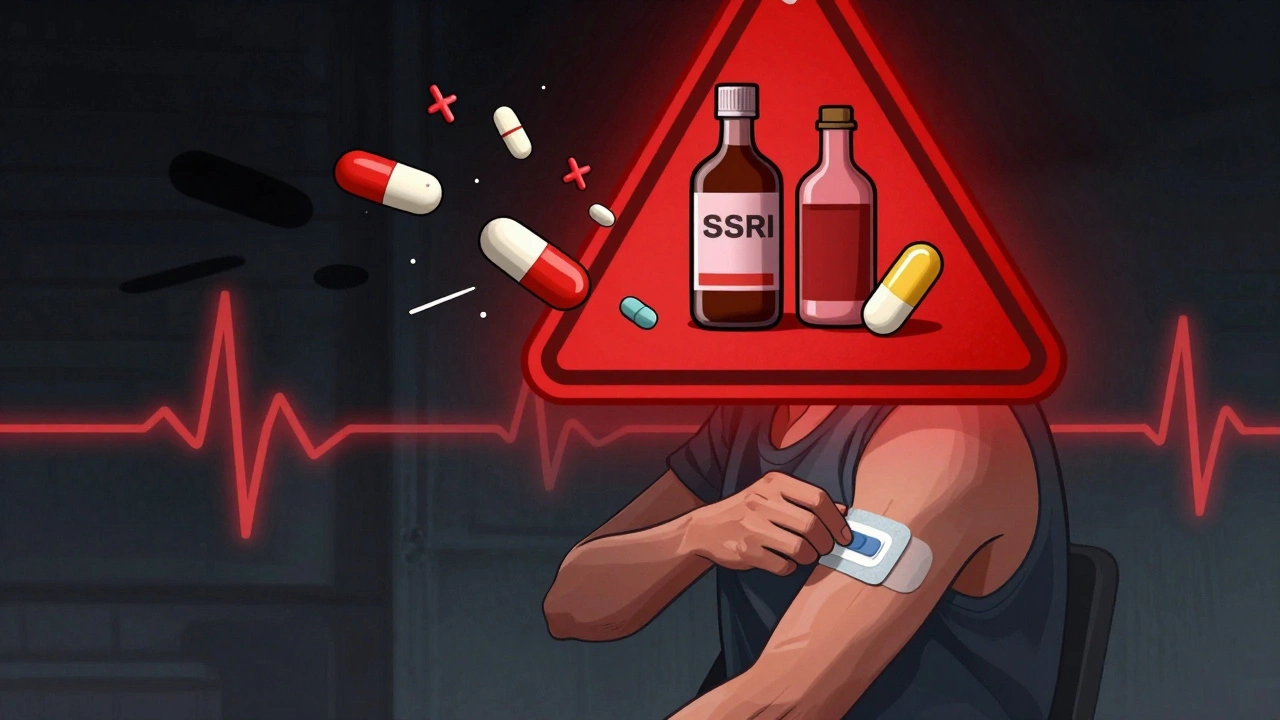
EMSAM Drug Interaction Checker
Check if your medication is safe to take with EMSAM (selegiline transdermal). This tool helps identify dangerous drug interactions that can lead to serotonin syndrome.
Important Safety Information
Never take EMSAM with these medications even at low doses. The risk of serotonin syndrome is real and potentially life-threatening.
- SSRIs: fluoxetine (Prozac), sertraline (Zoloft), escitalopram (Lexapro)
- SNRIs: venlafaxine (Effexor), duloxetine (Cymbalta)
- TCAs: amitriptyline, nortriptyline
- Triptans: sumatriptan (Imitrex), rizatriptan (Maxalt)
- Tramadol (Ultram) and meperidine (Demerol)
- Dextromethorphan (cough syrup)
- Buspirone (Buspar)
- St. John's Wort
- Linezolid (Zyvox)
- IV methylene blue
Always check OTC products and supplements. Many common cold medicines, sleep aids, and herbal supplements contain dangerous ingredients.
Selegiline transdermal, sold under the brand name EMSAM, is one of the few antidepressants that works differently from SSRIs or SNRIs. It’s a monoamine oxidase inhibitor (MAOI) delivered through a skin patch. Unlike older oral MAOIs, it doesn’t require strict dietary restrictions at the lowest dose-6 mg/24 hours. But here’s the catch: selegiline transdermal still carries a serious, life-threatening risk when mixed with common antidepressants, pain relievers, or even over-the-counter cough medicine.
Why This Interaction Is So Dangerous
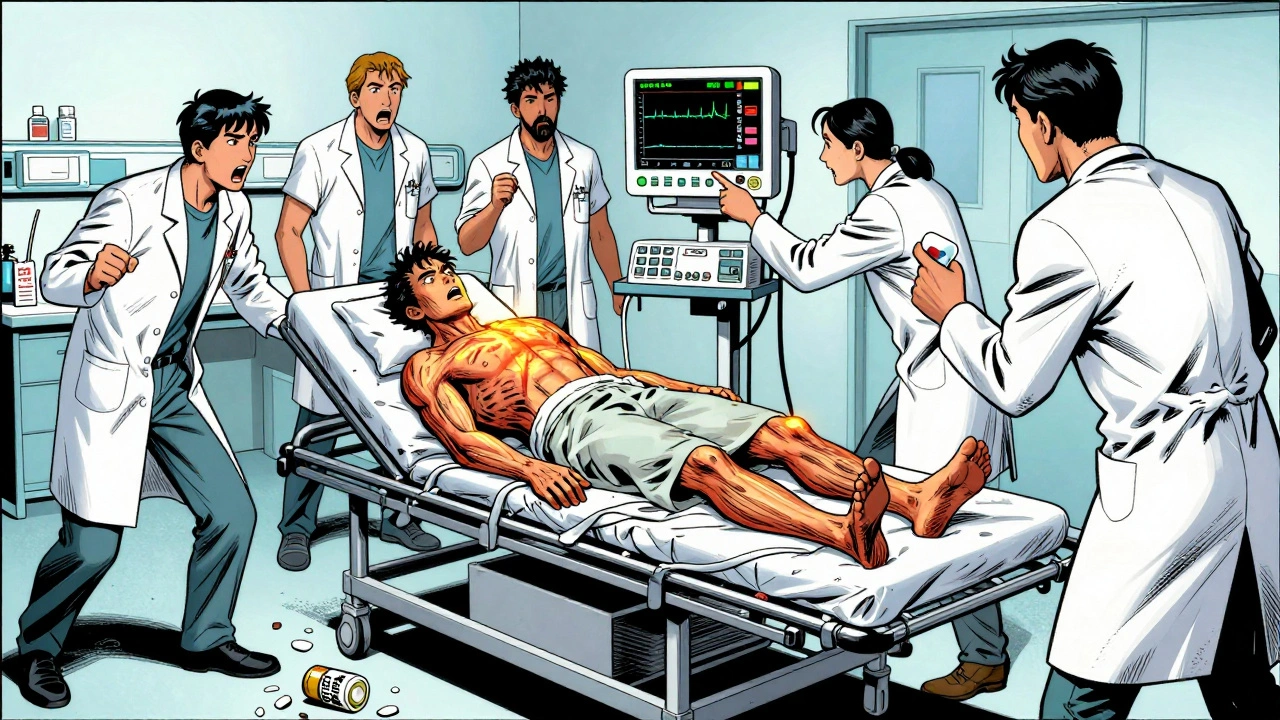
Selegiline works by blocking the enzyme monoamine oxidase, which normally breaks down serotonin, norepinephrine, and dopamine in the brain. When you take a serotonergic drug-like an SSRI, SNRI, or even tramadol-you’re flooding the system with more serotonin. Add selegiline on top, and your body can’t clear the excess. That’s when serotonin syndrome kicks in.Serotonin syndrome isn’t just a bad reaction. It’s a medical emergency. Symptoms include:
- High fever (over 104°F)
- Shaking, muscle rigidity, or twitching
- Rapid heartbeat, fluctuating blood pressure
- Confusion, hallucinations, or loss of consciousness
- Nausea, vomiting, diarrhea
These symptoms can appear within hours of combining drugs. In severe cases, patients end up in the ICU. A 2015 study in the Journal of Clinical Psychiatry found 12 cases of serotonin syndrome linked to MAOIs over five years-three of them involved EMSAM patches at the 12 mg dose combined with SSRIs. One patient needed mechanical ventilation.
What Drugs Absolutely Cannot Mix With EMSAM
The FDA label for EMSAM is blunt: don’t combine it with these:- SSRIs: fluoxetine (Prozac), sertraline (Zoloft), escitalopram (Lexapro)
- SNRIs: venlafaxine (Effexor), duloxetine (Cymbalta)
- TCAs: amitriptyline, nortriptyline
- Triptans: sumatriptan (Imitrex), rizatriptan (Maxalt)-used for migraines
- Tramadol (Ultram) and meperidine (Demerol)-painkillers
- Dextromethorphan-found in Robitussin, NyQuil, and many cough syrups
- Buspirone (Buspar)-an anxiety med
- St. John’s Wort-an herbal supplement many think is ‘safe’
- Linezolid (Zyvox)-an antibiotic
- Intravenous methylene blue-a dye used in some surgeries
Even if you’re on the lowest EMSAM dose (6 mg), you’re still inhibiting serotonin breakdown in your brain. That’s enough to trigger serotonin syndrome if you take even one of these drugs. The idea that ‘6 mg is safe’ is dangerously misleading. A 2018 article in Psychiatric Times pointed out that this myth has led to preventable ER visits.
Washout Periods: The Only Safe Way to Switch
There’s no safe way to overlap these drugs. You must wait. And the waiting time isn’t the same for every medication.If you’re stopping EMSAM and switching to an SSRI or SNRI:
- Wait at least 14 days after removing the patch
- Wait 5 weeks after stopping fluoxetine (Prozac)-it lingers in your system for weeks
If you’re switching from an SSRI/SNRI to EMSAM:
- Wait 2 weeks after stopping most SSRIs/SNRIs
- Wait 5 weeks after stopping fluoxetine
Why so long? Selegiline doesn’t just disappear when you stop using it. It permanently disables monoamine oxidase enzymes. Your body has to grow new ones. That takes time-up to two weeks, and possibly longer. A 2023 consensus guideline from the American Journal of Psychiatry now recommends a 21-day washout period for any dose of EMSAM, even higher than the FDA’s old recommendation.
And don’t assume short-acting drugs are safer. A 2021 case report in Anesthesia & Analgesia described a patient who developed serotonin syndrome after receiving ondansetron (a common anti-nausea drug) while using a 9 mg EMSAM patch. The drug was given in a hospital. The patient didn’t survive.
What About Over-the-Counter Medicines?
This is where most people get caught off guard.Dextromethorphan is in more than 150 cough and cold products. People don’t think of it as a drug-it’s just a cough syrup. But it’s a potent serotonin booster. A 2023 survey on the mental health forum Talkiatry found that 22% of EMSAM users had taken dextromethorphan without knowing the risk. Nearly half of them developed symptoms like agitation or nausea.
Other hidden risks:
- OTC sleep aids with diphenhydramine (Benadryl)-can worsen serotonin effects
- Herbal supplements like tryptophan or 5-HTP-direct serotonin precursors
- Energy drinks with high-dose B vitamins and stimulants-can amplify autonomic instability
Always check labels. If a product says ‘helps with mood’ or ‘boosts serotonin,’ avoid it. If you’re unsure, ask your pharmacist. Don’t assume ‘natural’ means ‘safe.’
How Doctors Should Handle This
Prescribers have a responsibility. A 2020 study in the Journal of the American Medical Informatics Association found that less than half of electronic health record systems correctly flag EMSAM-serotonergic interactions. That means patients can be prescribed dangerous combinations even when their doctor is using digital tools.Best practices:
- Review every medication-prescription, OTC, supplement-at every visit
- Use the 5 ‘T’s’ to guide patient education: Timing, Types, Testing, Transition, Telephone
- Give patients a printed list of contraindicated drugs
- Document the washout period clearly in the chart
- Warn patients: if they feel feverish, confused, or twitchy after starting a new drug, go to the ER immediately
The FDA issued a Drug Safety Communication in May 2022 specifically reminding doctors: ‘The absence of dietary restrictions at the 6 mg dose does not equate to absence of drug-drug interaction risks.’
What’s Changing in 2025?
Research is catching up with real-world risks. Columbia University’s ongoing study (NCT04567891) suggests full recovery of MAO-A enzymes after stopping EMSAM may take up to 28 days-not 14. That’s a big deal. It means even if you wait two weeks, you might still be at risk.Mylan Pharmaceuticals, the maker of EMSAM, is developing a genetic test to identify patients with variants that affect MAO enzyme activity. This could help personalize washout times in the future. The FDA submission is expected in mid-2024.
For now, the safest rule is simple: if you’re on EMSAM, assume every serotonergic drug is off-limits. No exceptions. No shortcuts. No ‘just one pill.’
What to Do If You’ve Already Mixed Them
If you accidentally took an SSRI, tramadol, or cough syrup while wearing an EMSAM patch:- Remove the patch immediately
- Call your doctor or go to the ER
- Do not wait to see if symptoms get worse
- Bring your medication list with you
There’s no antidote for serotonin syndrome. Treatment is supportive: cooling the body, sedating muscle rigidity, stopping all serotonergic drugs, and monitoring vital signs. The sooner you act, the better your outcome.
Final Warning
EMSAM is not a ‘safer’ MAOI. It’s a different delivery method. It avoids the cheese effect. It doesn’t avoid serotonin syndrome. The patch doesn’t make you immune to drug interactions-it just makes the risk less obvious.If you’re considering EMSAM, make sure your doctor knows every drug you’ve ever taken-even the ones you stopped years ago. If you’re already on it, don’t start anything new without checking with your prescriber. And if you’re a caregiver for someone on EMSAM, learn the signs of serotonin syndrome. It could save their life.
Can I use EMSAM with a low dose of an SSRI if I’m careful?
No. There is no safe dose combination of EMSAM and any SSRI, SNRI, or other serotonergic drug. Even tiny amounts can trigger serotonin syndrome. The FDA and major psychiatric associations strongly advise against any overlap. The risk is not worth it.
How long does selegiline stay in my system after I stop the patch?
The drug itself clears from your blood within hours. But the enzyme it blocks-monoamine oxidase-doesn’t come back right away. Your body needs to make new enzymes. That takes at least 14 days, and recent research suggests it may take up to 28 days for full recovery. Never assume you’re safe after two weeks.
Is it safe to take EMSAM with over-the-counter painkillers like ibuprofen or acetaminophen?
Yes, ibuprofen and acetaminophen are generally safe with EMSAM. They do not affect serotonin levels. But avoid tramadol, codeine, or any opioid that has serotonergic effects. Always double-check with your pharmacist before taking any new OTC product.
Why do some doctors say EMSAM is ‘safer’ than other MAOIs?
They’re referring to the fact that at the 6 mg dose, EMSAM doesn’t block MAO-A in the gut, so it doesn’t cause dangerous blood pressure spikes from tyramine-rich foods like aged cheese. But this doesn’t apply to the brain. Serotonin buildup in the CNS still happens, and that’s what causes serotonin syndrome. The ‘safer’ label is misleading and dangerous.
What should I do if I need surgery while on EMSAM?
You must stop EMSAM at least 14 days before surgery. Inform your anesthesiologist and surgeon that you’re on an MAOI. Many anesthetics and pain meds used during and after surgery (like meperidine, tramadol, or even ondansetron) can trigger serotonin syndrome. Your medical team needs to plan ahead.
Next Steps for Patients
If you’re on EMSAM:- Make a list of every medication, supplement, and OTC product you take-right now
- Compare it to the FDA’s list of contraindicated drugs
- Call your pharmacy and ask them to run a drug interaction check specifically for EMSAM
- If you’re switching antidepressants, plan the washout period with your doctor-don’t guess
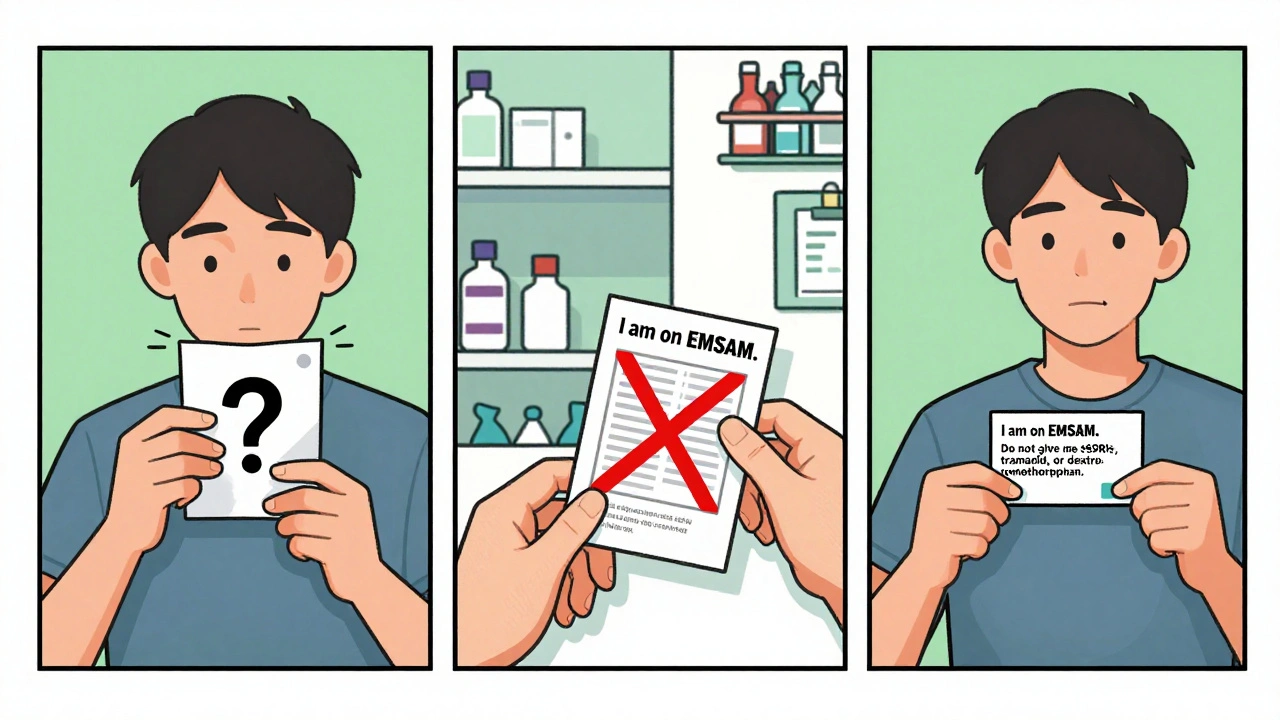
- Carry a wallet card with your meds and the warning: ‘I am on EMSAM. Do not give me SSRIs, tramadol, or dextromethorphan.’
If you’re not on EMSAM but your doctor is considering it:
- Ask: ‘What’s the washout period for my current meds?’
- Ask: ‘What happens if I accidentally take a cough medicine?’
- Ask: ‘Is there a genetic test to see if I’m at higher risk?’
Selegiline transdermal has a place in treating treatment-resistant depression. But it’s not a casual choice. It demands precision, discipline, and respect for the risks. Get it right, and it can change your life. Get it wrong, and the consequences can be fatal.


Mayur Panchamia on 6 December 2025, AT 11:25 AM
Let me get this straight-some dumbass thinks EMSAM is ‘safe’ because it doesn’t make you avoid cheese? Bro, serotonin syndrome doesn’t care about your diet, it cares about your dumbass decision to mix it with NyQuil. I’ve seen guys in the ER with fever spikes and twitching like they’re possessed by demons because they thought ‘one cough pill won’t hurt.’ You’re not a scientist, you’re a walking time bomb-and no, your ‘I’m careful’ mantra doesn’t save you.