More Americans are getting their medications delivered to their door than ever before. In 2023, mail-order pharmacy sales hit over $206 billion - more than double what they were a decade ago. But here’s the catch: prescription volume only went up 11%. That means prices, not quantity, are driving the explosion. For people managing chronic conditions like high blood pressure, diabetes, or depression, mail-order generics can be a lifeline. But for others, it’s a gamble with their health.
Why Mail-Order Generics Save Money (When They Work)
If you take the same pills every day, mail-order pharmacies can cut your costs dramatically. Most insurance plans offer a 90-day supply through mail-order for the same copay as a 30-day retail refill - sometimes as low as $10. One patient in Ohio saved $45 a month switching from a local pharmacy to mail-order for their blood pressure medication. That’s over $500 a year, just for showing up to your mailbox.
These savings come from volume. Mail-order companies fill thousands of prescriptions at once, buying generic drugs in bulk. The cost to produce a pill like lisinopril or metformin is pennies. Retail pharmacies mark them up to cover rent, staff, and overhead. Mail-order skips the storefront, so the savings get passed on - at least on paper.
And it’s not just about money. Automatic refills mean you don’t have to remember to call in a prescription. No more rushing to the pharmacy on a Friday night because you ran out. For people with mobility issues, chronic pain, or busy schedules, that convenience isn’t a luxury - it’s essential.
The Hidden Price Tag: Markups and Misleading Deals
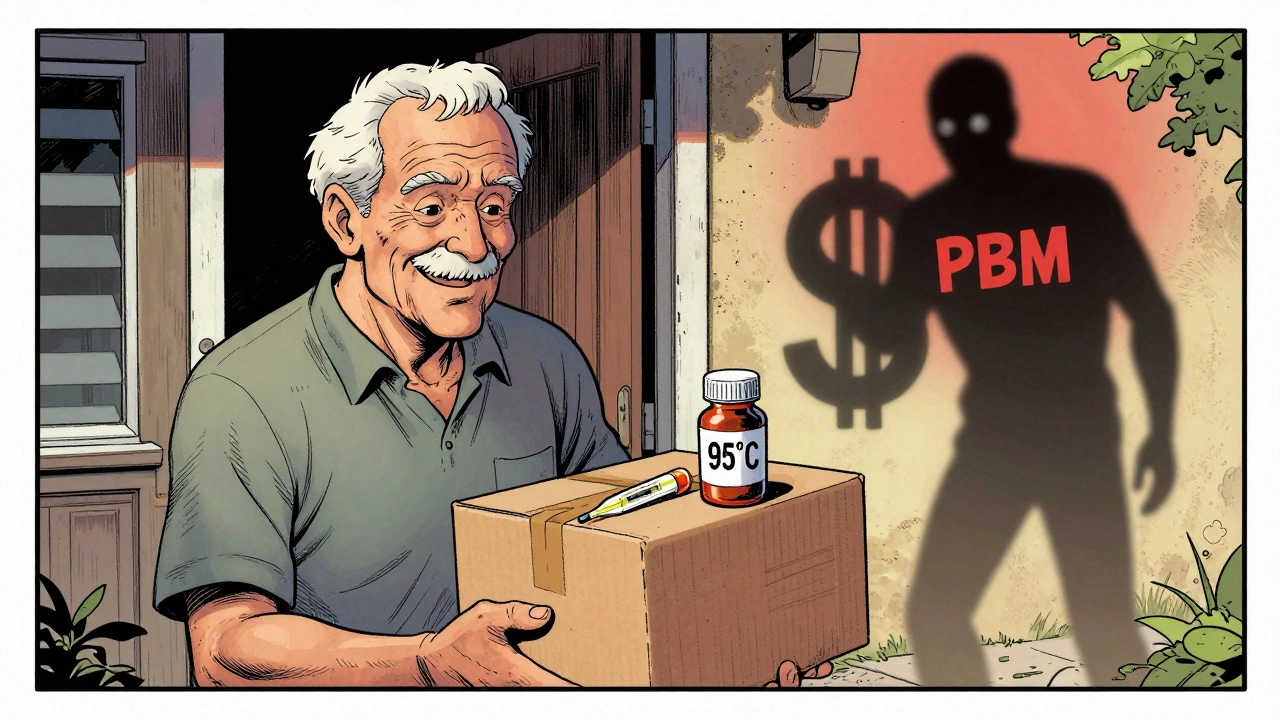
But here’s what most people don’t see: that $10 copay isn’t always the real price. Insurance companies and pharmacy benefit managers (PBMs) - the middlemen between drugmakers and pharmacies - often bill insurers $100 for a generic antidepressant that costs $12 at a retail pharmacy. That’s an 800% markup. And it’s legal.
These markups aren’t transparent. You’re not paying the $100 - your insurer is. But when insurers pay more, premiums go up. And if you’re uninsured? You might get hit with the full $100 list price. A 2024 JAMA Network Open study found that uninsured patients paying out-of-pocket for mail-order generics often pay more than they would at a local pharmacy. Some anti-obesity drugs like semaglutide cost $500 a month through direct-to-consumer mail-order - a price that puts treatment out of reach for most.
It’s not fraud. It’s a broken system. PBMs profit from the spread between what they charge insurers and what they pay pharmacies. And patients are left guessing what they’re really paying for.
Temperature Risks: When Your Medicine Melts
Medications aren’t books. They’re chemicals. And many - especially insulin, thyroid meds, and some antibiotics - need to stay between 68°F and 77°F during shipping. But a study from the Journal of the American Pharmacists Association found that only one-third of mail-order shipments stay in that safe range.
Real people are getting sick because of it. Reddit threads are full of stories about insulin arriving melted after sitting in a hot mailbox for hours. One patient in Texas had to rush to the ER after her insulin lost potency in a 95°F summer delivery. The FDA received over 1,200 reports of temperature-related medication failures between 2020 and 2023. That’s likely just the tip of the iceberg.
There are no federal rules forcing mail-order pharmacies to use cold packs or temperature monitors. Some companies do - Express Scripts and CVS Caremark have better tracking than others. But most don’t. And you won’t know unless you check the box when it arrives. If your pill looks cloudy, smells weird, or feels warm - don’t take it. Call your doctor. Get a new one.

When Mail-Order Isn’t Safe
Mail-order is great for long-term meds. It’s terrible for anything you need right now. Antibiotics for a sudden infection? Don’t wait a week. Inhalers for an asthma attack? You can’t order those in bulk. If you’re recovering from surgery and need pain meds, your pharmacy should be across the street, not across the country.
And if you take multiple medications? That’s where things get dangerous. You might get your blood pressure pill from mail-order because it’s cheaper, your diabetes med from a local pharmacy because they have a better deal, and your anxiety med from another one because your insurance doesn’t cover the mail-order version. Now you’ve got three different pharmacists, none of whom can see what the others are giving you. Drug interactions happen. All it takes is one missed connection.
A 2023 JAMA study found that patients using multiple pharmacies had a 37% higher chance of being prescribed conflicting drugs. Your doctor doesn’t always know what you’re taking. Neither does your pharmacist. And that’s a risk no one talks about.
Generic Switching: The Silent Problem
Generics are supposed to be identical to brand-name drugs. The FDA says so. But here’s the truth: they’re not always the same.
One company makes metformin in a blue oval. Another makes it in a white round tablet. The fillers, dyes, and coatings change. For most people, that doesn’t matter. But for some - especially those with epilepsy, mental health conditions, or autoimmune diseases - even tiny differences can trigger side effects or make the drug stop working.
A 2017 study found that patients switched between different generic versions of topiramate (used for seizures and migraines) ended up in the hospital more often. They took more other drugs. Their stays were longer. Why? Because their bodies reacted to the change in shape, color, or taste. One patient described it like this: “I didn’t know why I felt off. Then I looked at the pill. It wasn’t the same.”
Mail-order pharmacies switch generics without telling you. They’re trying to save money - not you. If you notice new side effects after a refill, check the pill. Look at the imprint. Compare it to your last bottle. If it’s different, call your doctor. Don’t assume it’s “just in your head.”
The Missing Pharmacist
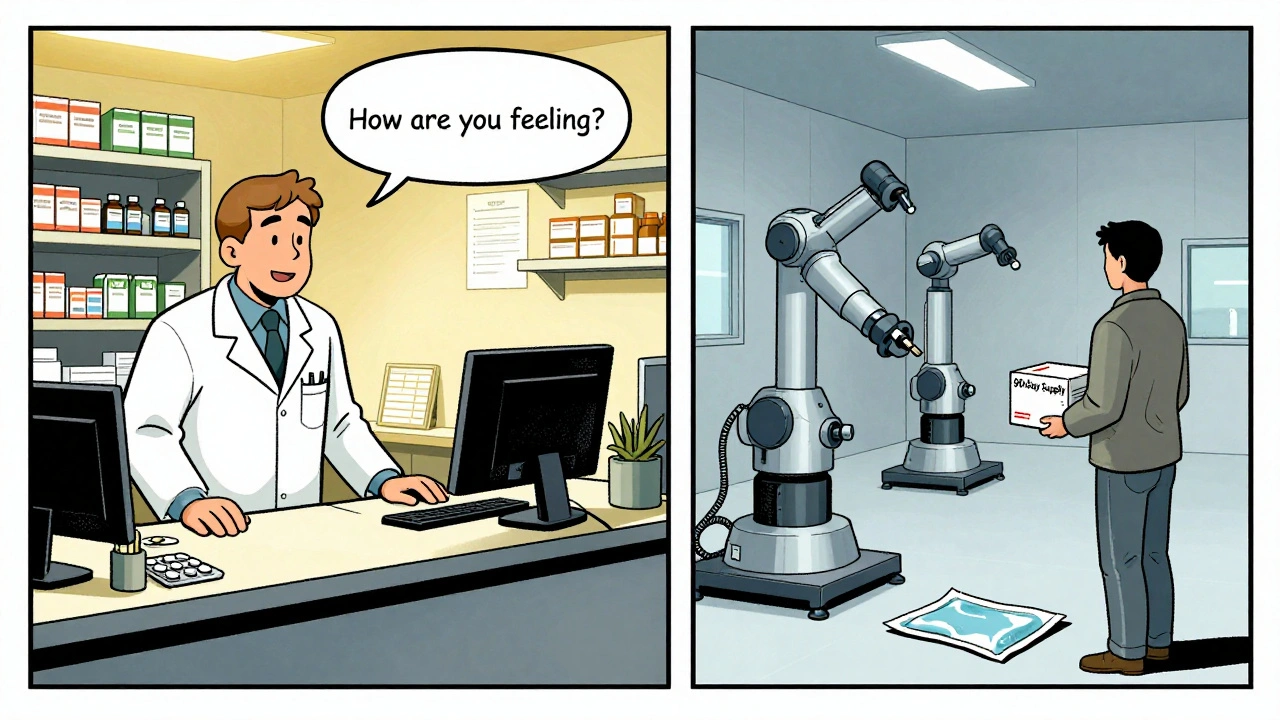
At a local pharmacy, you get a quick chat. “How’s the new med working?” “Any dizziness?” “Did you skip any doses?” That human touch matters. It catches problems before they become emergencies.
But mail-order? You get a box. A label. A phone number you never call. A 2023 Consumer Reports survey found that 68% of users felt anxious about missing face-to-face advice. No one asks if you’re having trouble swallowing pills. No one notices you’re not refilling your insulin. No one warns you that your new blood thinner clashes with the OTC painkiller you’ve been taking for years.
Pharmacists at retail stores are trained to spot these things. Mail-order centers are call centers with scripts. They’re not there to protect you. They’re there to ship pills.
Who Should Use Mail-Order? Who Should Avoid It?
Use mail-order if:
- You take the same medication every day for a chronic condition (diabetes, high blood pressure, cholesterol, depression)
- You’re on a 90-day refill plan and your copay is low
- You’ve used it before and never had delivery or quality issues
- You can track your shipments and check the pills when they arrive
Avoid mail-order if:
- You need medication right away (antibiotics, inhalers, pain meds after surgery)
- You take multiple drugs from different pharmacies
- You’re uninsured and paying full price
- You’ve had problems with temperature-sensitive meds like insulin
- You rely on your pharmacist for advice and don’t trust phone support
How to Use Mail-Order Safely
If you’re going to use it, don’t wing it. Here’s how to stay safe:
- Set up your refill at least two weeks before you run out. Don’t wait until you’re empty.
- Check the pill every time. Compare the shape, color, and imprint to your last bottle.
- Open the box as soon as it arrives. Feel the pills. Are they warm? Smell them. Do they look odd?
- If you’re on insulin or other temperature-sensitive drugs, ask for cold packs and tracking. If they don’t offer it, switch providers.
- Keep a list of all your meds - including who fills them - and share it with your doctor every visit.
- Don’t let your insurance push you to mail-order if you’re uncomfortable. You have the right to choose.
Mail-order generics aren’t good or bad. They’re a tool. And like any tool, they work best when you understand how they’re made - and what they’re hiding.
Are mail-order generics as effective as brand-name drugs?
Yes, by FDA standards. Generic drugs must contain the same active ingredient, strength, dosage form, and route of administration as the brand-name version. They’re tested to be bioequivalent - meaning they work the same way in your body. But the inactive ingredients (fillers, dyes, coatings) can differ. For most people, this doesn’t matter. For some - especially those with epilepsy, mental health conditions, or autoimmune diseases - switching generics can cause side effects or reduce effectiveness.
Why do mail-order pharmacies charge so much for some generics?
It’s not the pharmacy - it’s the middlemen. Pharmacy benefit managers (PBMs) negotiate prices with drugmakers and insurers. They often bill insurers far more than the actual cost of the drug, keeping the difference as profit. For example, a generic antidepressant that costs $12 at a retail pharmacy might be billed at $100 through mail-order. You pay a low copay, but your insurer (and eventually your premiums) cover the rest. Uninsured patients often pay the full inflated price.
Can my medication arrive damaged from heat or cold?
Yes, and it happens more often than you think. Studies show only about one-third of mail-order shipments stay within the safe temperature range of 68-77°F. Medications like insulin, thyroid pills, and some antibiotics can lose potency if exposed to extreme heat or cold. Insulin, for example, can degrade after just 24 hours above 86°F. Always open your package right away. If pills are melted, discolored, or smell odd, don’t take them. Contact your pharmacy and doctor immediately.
Is it safe to get my medications from different pharmacies?
It’s risky. If you use one pharmacy for blood pressure meds, another for diabetes, and a third for anxiety pills, none of the pharmacists can see your full list. That increases your chance of dangerous drug interactions. A 2023 JAMA study found patients using multiple pharmacies had a 37% higher risk of conflicting prescriptions. Always keep a written list of everything you take - including doses and who fills them - and share it with your doctor at every visit.
Should I switch to mail-order if I’m uninsured?
Not necessarily. While mail-order can save money for insured patients, uninsured people often pay the full list price - which can be much higher than what you’d pay at a local pharmacy using a discount program like GoodRx or SingleCare. Always compare prices. A 90-day supply of metformin might cost $10 through mail-order with insurance, but $25 out-of-pocket at a local pharmacy with a coupon. Don’t assume mail-order is cheaper unless you’ve checked the real price.


Jaswinder Singh on 1 December 2025, AT 09:56 AM
This whole system is a scam wrapped in a PowerPoint presentation. I’ve been on insulin for 12 years and my last mail-order box arrived warm like soup. The pills were sticky. I threw them out and drove 45 minutes to a pharmacy. They gave me a new one for $15 cash. Meanwhile, my insurer paid $98 for that toxic garbage. Someone’s making bank while I nearly died.