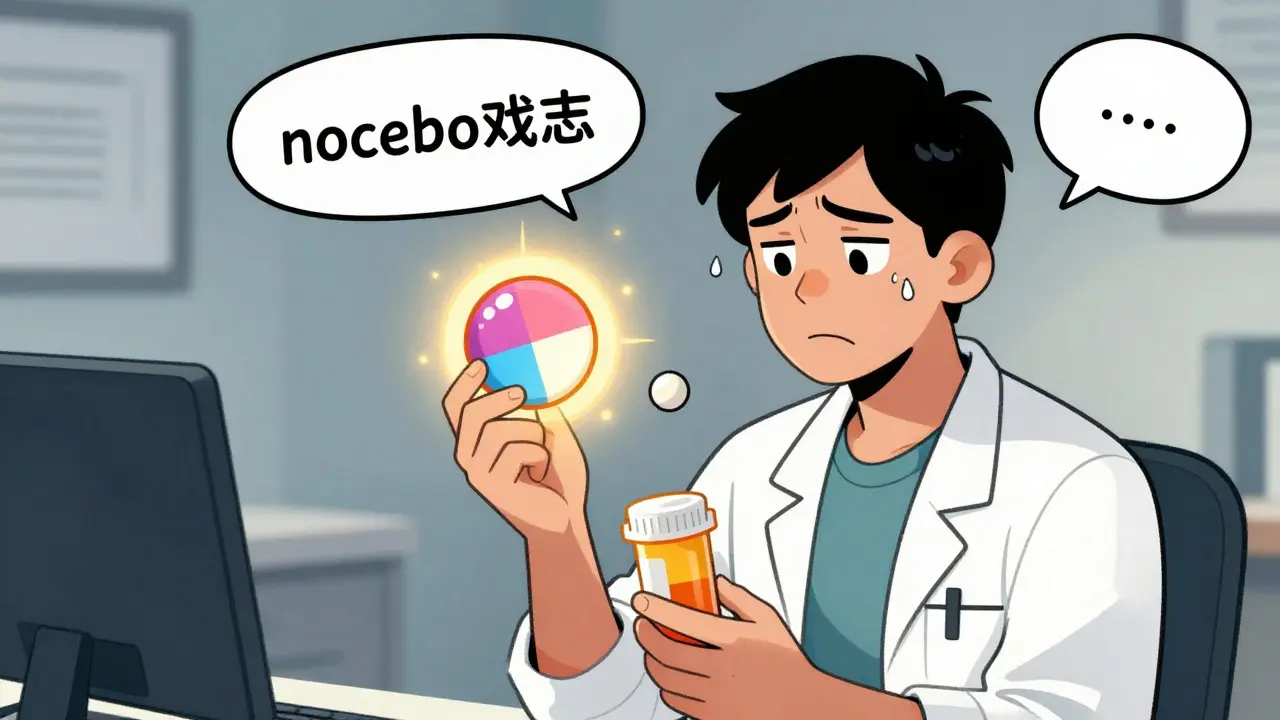
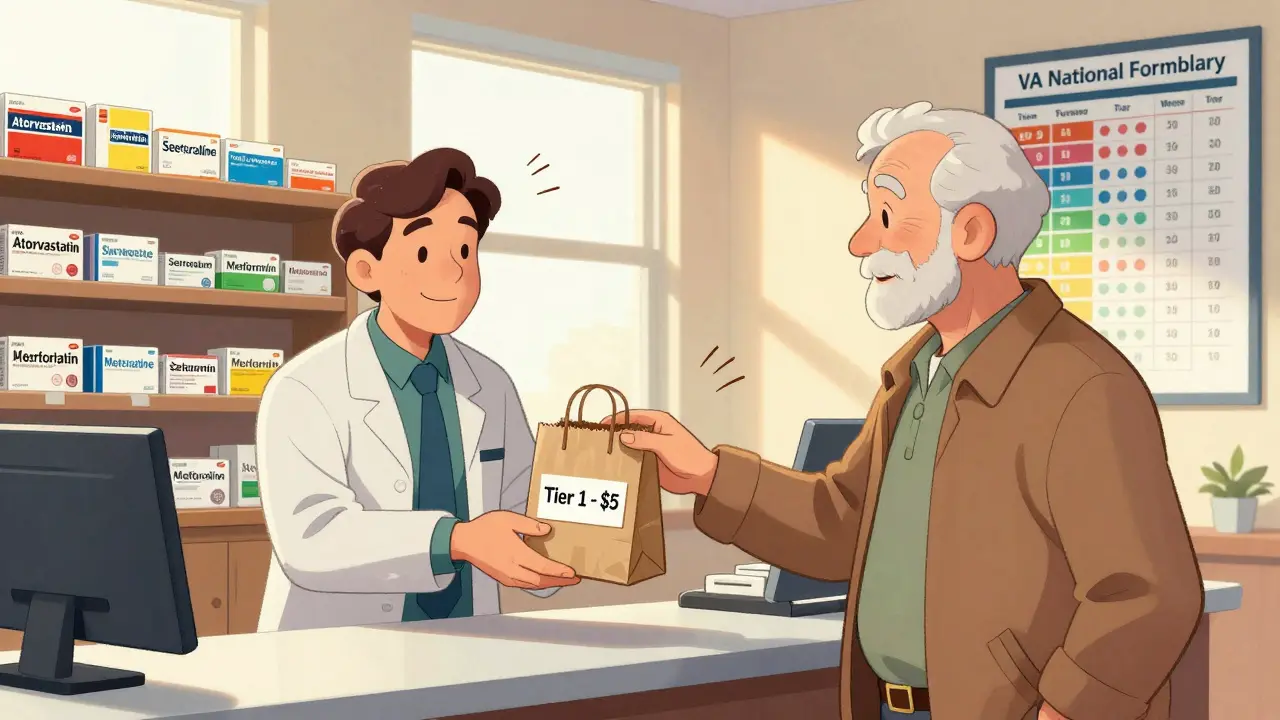
Imagine sitting in a doctor's office. The physician hands you a prescription for a familiar medication, but the pill looks different. It’s smaller, a different color, and has a strange code stamped on it. Your heart sinks. You’ve heard the whispers-generics aren’t as strong. They might cause side effects. Is this really the same medicine? This moment of doubt is not just in your head; it is a documented psychological phenomenon driven largely by how healthcare providers talk about these drugs.
The way a clinician communicates about generic medications is the single most significant factor influencing patient acceptance and adherence. Research shows that when doctors or pharmacists explain the science behind generics clearly and confidently, patients are far more likely to trust them. Conversely, silence or hesitation can trigger a "nocebo effect," where patients experience real negative symptoms simply because they expect them. Understanding this dynamic is crucial for anyone navigating modern healthcare, whether you are a patient worried about your meds or a provider trying to improve outcomes.
The Power of Bioequivalence and Regulatory Standards
To understand why communication matters so much, we first need to look at what a generic drug actually is. Many people assume that because a generic costs less, it must be inferior. This is a misconception rooted in brand loyalty rather than clinical evidence. In the United States, the Food and Drug Administration (FDA) enforces strict standards through the Abbreviated New Drug Application (ANDA) process.
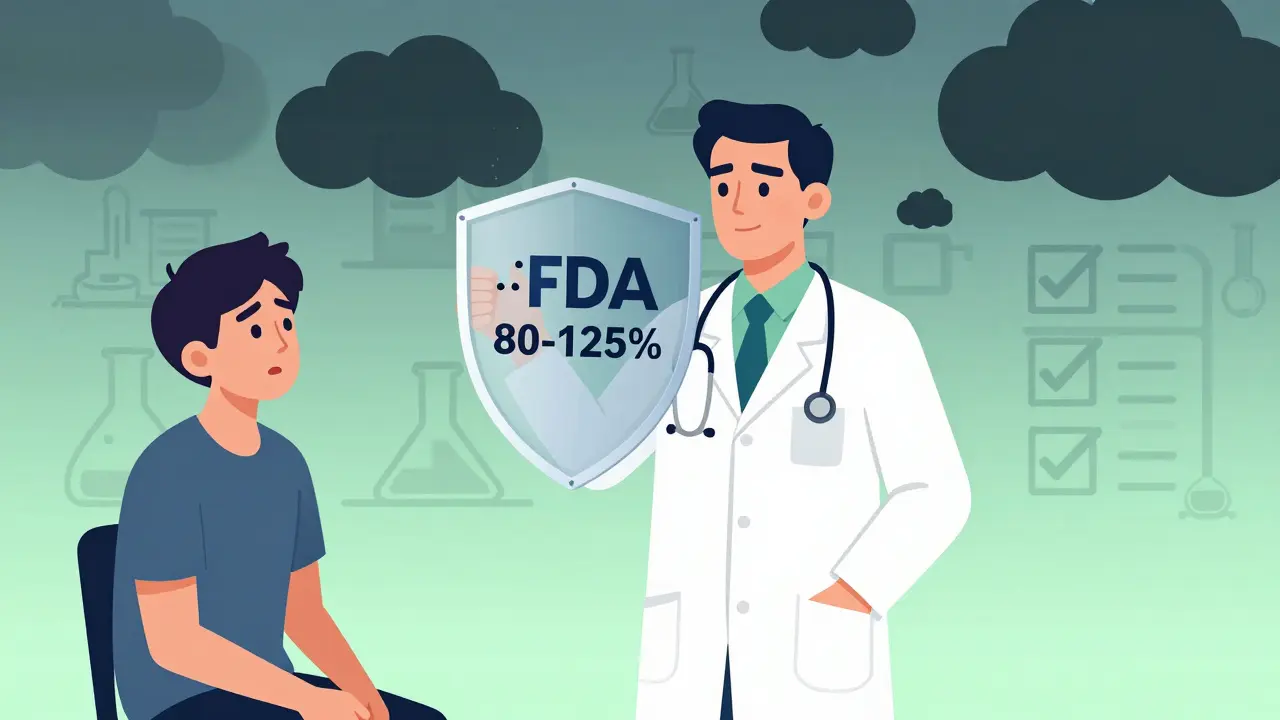
This process requires that a generic drug demonstrates bioequivalence to its brand-name counterpart. Specifically, the generic must deliver between 80% and 125% of the active ingredient into the bloodstream compared to the brand name. For most drugs, this range ensures identical therapeutic effect. Yet, despite this rigorous scientific backing, skepticism persists. A 2015 study published in Dove Press found that nearly 30% of patients still believed brand medicines were more effective than generics.
When clinicians fail to mention these regulatory safeguards, patients fill the information void with fear. Effective communication bridges this gap. By explicitly stating that the FDA mandates identical active ingredients and proven bioavailability, providers can dismantle the myth of inferiority. The key is not just knowing the facts, but sharing them proactively. If a doctor says, "This generic meets the exact same safety and efficacy standards as the brand," they are directly countering the subconscious bias against cheaper alternatives.
Understanding the Nocebo Effect in Generic Substitution
One of the most fascinating aspects of patient belief systems is the nocebo effect. While the placebo effect involves positive outcomes from believing a treatment works, the nocebo effect causes negative symptoms based on negative expectations. In the context of generic substitution, this means a patient might develop headaches, fatigue, or digestive issues after switching to a generic-not because the drug is different, but because they believe it is worse.
A pivotal 2019 study in the Journal of the American Medical Association highlighted this starkly. Researchers followed 412 patients with chronic conditions who switched to generic versions of their medications. Those who received detailed explanations about the FDA approval process reported 28% fewer adverse events than those who received only standard substitution notices. The researchers concluded that expectation of harm leads to the experience of real, perceived negative symptoms.
This finding transforms communication from a courtesy into a clinical intervention. Dr. Aaron Kesselheim, a Professor of Medicine at Harvard Medical School, emphasizes that discussing generics is not merely educational; it is a strategy to prevent the nocebo effect from compromising therapeutic outcomes. When a clinician avoids tentative language like "let’s try this and see how it goes," and instead uses confident endorsement, they help shape the patient’s physiological response positively.
Communication Gaps Between Physicians and Pharmacists
Despite the clear benefits of talking about generics, there is a significant communication gap in current healthcare practices. Data reveals that over half of patients report that their physicians never or seldom discuss generic options with them. Similarly, many patients feel that pharmacists hand over the new pill without adequate explanation.
This lack of engagement has measurable consequences. The American Pharmacists Association conducted a survey of 2,500 patients in 2020, revealing a striking difference in acceptance rates. When pharmacists provided thorough explanations about generic medications, 92% of patients accepted the substitution. However, when no explanation was given, the acceptance rate dropped to 68%. That 24-percentage-point difference is entirely attributable to the quality of communication.
Why does this gap exist? Time constraints are a major factor. An average primary care visit lasts only a few minutes, leaving little room for detailed discussions about pharmaceutical regulations. Additionally, some clinicians themselves may have knowledge gaps. A 2019 survey showed that only 54% of physicians could correctly answer questions about FDA bioequivalence standards. If the provider is unsure, the patient senses that uncertainty and becomes skeptical.
Tailoring Messages for Diverse Patient Populations
Not all patients respond to communication in the same way. Demographic factors play a substantial role in how generic medications are perceived. The National Institutes of Health (NIH) conducted a national survey of 3,500 patients in 2016, uncovering distinct patterns in skepticism. Non-Caucasian patients were 1.7 times more likely to express doubt about generics compared to Caucasian patients. Furthermore, individuals with lower socioeconomic status were 2.3 times more likely to prefer brand-name medications, often associating higher cost with higher quality.
These statistics highlight the need for culturally competent communication. A one-size-fits-all script rarely works. For instance, addressing historical mistrust in medical institutions or explaining the economic rationale behind generics can resonate differently across groups. A 2021 study in Health Affairs found that tailored, culturally sensitive communication reduced skepticism by 41% among non-Caucasian patients. Providers must recognize these nuances and adapt their messaging to build trust effectively.
Practical Strategies for Effective Clinician Communication
So, how can clinicians communicate more effectively about generics? It doesn’t require hours of extra time per patient. Several practical strategies have been proven to work:
- Explain the Science Simply: Use the 80-125% bioequivalence rule to show that the generic is scientifically equivalent to the brand. Avoid jargon; keep it conversational.
- Use Confident Language: Replace hesitant phrases with definitive statements. Say, "This generic contains the exact same active ingredient," rather than, "It should work the same way." Confidence builds trust.
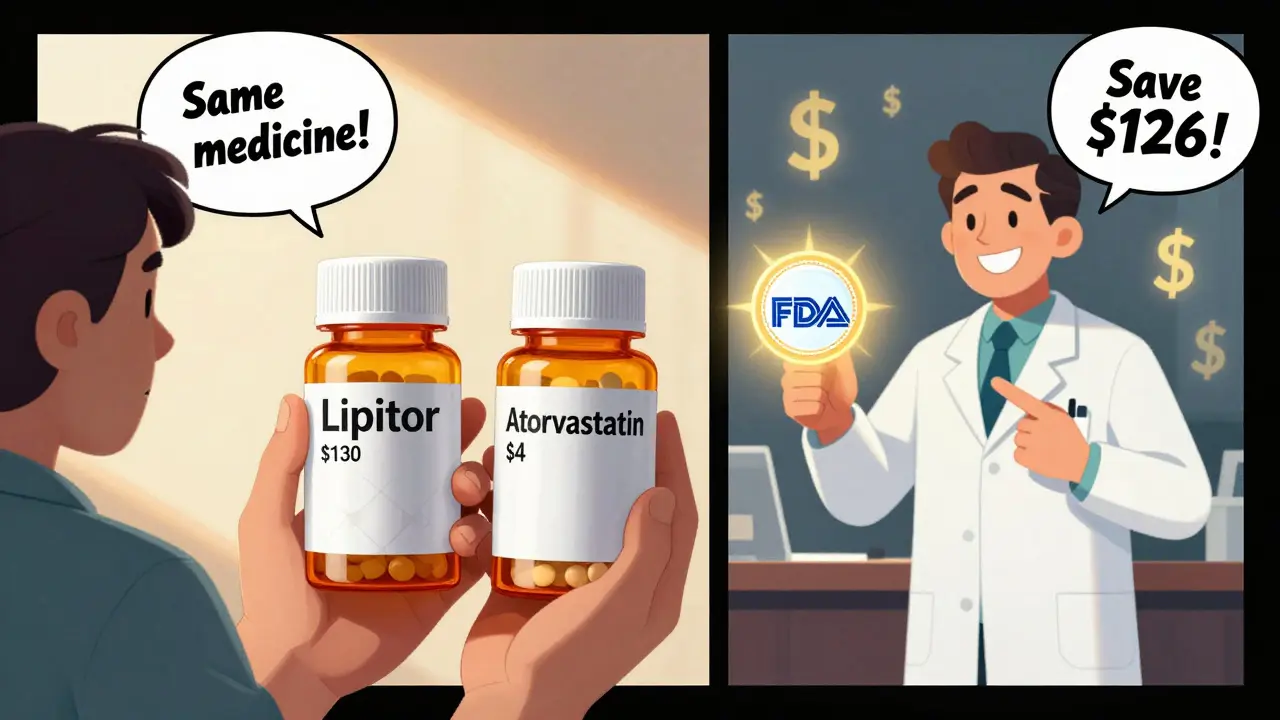
- Address Cost Benefits: Mention that generics typically cost 80-85% less than brand-name equivalents. For many patients, financial relief reinforces the value of the switch.
- Proactively Manage Expectations: Acknowledge that pills may look different due to inactive ingredients (like dyes or binders), but reassure patients that these do not affect the drug’s performance.
- Leverage Technology: Tools like Epic Systems’ "Generic Confidence Score" prompt clinicians to address specific communication elements during electronic health record interactions, ensuring consistency.
Training programs also make a difference. The American Pharmacists Association’s 2022 "Generic Medication Communication Toolkit" included 15-minute standardized modules. In a trial involving 32 community pharmacies, this training reduced communication time by 38% while increasing patient understanding scores from 42% to 87%. Efficiency and effectiveness can go hand in hand.
The Role of Brand Psychology and Marketing
We cannot ignore the influence of brand psychology. Pharmaceutical companies invest billions in marketing brand-name drugs, creating emotional associations with reliability, innovation, and premium quality. These campaigns are sophisticated and long-lasting. As Dr. Jerry Avorn noted in a 2020 commentary, some brand manufacturers have successfully sown doubt through targeted marketing efforts.
Patients often internalize these messages. They associate the brand name with identity and care. Switching to a generic feels like a downgrade in personal attention. Clinicians must counter this narrative not by attacking the brand, but by elevating the generic to an equal standing. Sharing personal anecdotes-such as a doctor mentioning they take generics themselves-can humanize the recommendation and reduce stigma.
| Communication Scenario | Patient Acceptance Rate | Key Outcome |
|---|---|---|
| No Explanation Provided | 68% | Higher likelihood of discontinuation |
| Standard Substitution Notice | 76% | Moderate adherence, potential nocebo effects |
| Thorough Explanation by Pharmacist | 92% | High trust, reduced adverse event reports |
| Dual Communication (Physician + Pharmacist) | 92-94% | Maximum confidence, lowest resistance |
Future Trends in Generic Medication Communication
The landscape of generic medication communication is evolving. Regulatory bodies and professional organizations are recognizing its importance. The FDA’s Generic Drugs Action Plan allocated funds specifically for developing evidence-based communication tools. Meanwhile, the Centers for Medicare & Medicaid Services (CMS) now require pharmacists to document therapeutic equivalence discussions in certain cases.
Looking ahead, integration into performance metrics seems inevitable. The American Medical Association began integrating generic communication metrics into physician evaluations in 2024. Future initiatives, such as the CDC’s plan to incorporate generic education into national health literacy standards, suggest a systemic shift toward proactive patient engagement.
As complex generic products like inhalers and injectables enter the market, the stakes will rise even further. Simple pills are easy to substitute; devices requiring technique are not. Clinicians will need to master not just the science of bioequivalence, but the art of teaching and reassurance. Those who embrace this role will see better adherence, fewer hospitalizations, and stronger patient relationships.
Why do patients distrust generic medications?
Patients often distrust generics due to misconceptions about quality, influenced by brand marketing and lack of clear information. Many believe that lower price equals lower efficacy. Without explicit confirmation from healthcare providers regarding FDA bioequivalence standards, patients may assume the generic is inferior or unsafe.
What is the nocebo effect in relation to generics?
The nocebo effect occurs when negative expectations lead to actual negative symptoms. In generic substitution, if a patient believes the new pill is weaker or dangerous, they may experience headaches, fatigue, or other side effects solely due to this belief, even though the medication is chemically equivalent to the brand name.
How can clinicians improve patient acceptance of generics?
Clinicians can improve acceptance by using confident, clear language about FDA bioequivalence standards (80-125% range). They should proactively explain that active ingredients are identical, address cost savings, and reassure patients about differences in appearance due to inactive ingredients. Tailoring the message to the patient’s cultural background also enhances trust.
Is there a difference in how physicians and pharmacists communicate about generics?
Yes, studies show that communication from both physicians and pharmacists yields the highest acceptance rates (over 90%). Physicians often focus on clinical equivalence, while pharmacists handle the logistical switch. When both engage the patient, skepticism drops significantly compared to scenarios where only one provider speaks or neither does.
Do demographics affect patient beliefs about generic drugs?
Yes, demographic factors significantly influence perceptions. Research indicates that non-Caucasian patients and those with lower socioeconomic status are more likely to express skepticism about generics. Culturally competent communication strategies can reduce this skepticism by up to 41%, highlighting the need for personalized approaches.
What role does the FDA play in ensuring generic drug quality?
The FDA ensures generic drug quality through the Abbreviated New Drug Application (ANDA) process. This requires manufacturers to prove bioequivalence, meaning the generic delivers the same amount of active ingredient into the bloodstream as the brand name within a strict 80-125% range. This rigorous testing guarantees therapeutic equivalence.
Can poor communication lead to medication non-adherence?
Absolutely. When patients receive inadequate explanations about generic substitutions, they are more likely to doubt the medication’s effectiveness. This doubt can lead to missed doses, discontinuation of therapy, or switching back to expensive brand names, ultimately compromising health outcomes and increasing healthcare costs.
Are there tools available to help clinicians communicate better about generics?
Yes, several resources exist. The American Pharmacists Association offers communication toolkits with standardized scripts. Electronic health record systems like Epic have integrated prompts to remind clinicians to discuss generics. Additionally, consumer guides from the FDA provide plain-language materials that providers can share with patients to reinforce key messages.



Dana Ellington on 16 May 2026, AT 08:57 AM
OMG this is so true!! I always get nervous when my pills look different lol. My doctor never really explains it and just hands me the bag. It makes me feel like im getting the short end of the stick or something. But reading this makes sense why i felt sick last time i switched. It was all in my head probably! We need doctors to be more open about it so we dont freak out. Thanks for sharing this info it helps soo much!