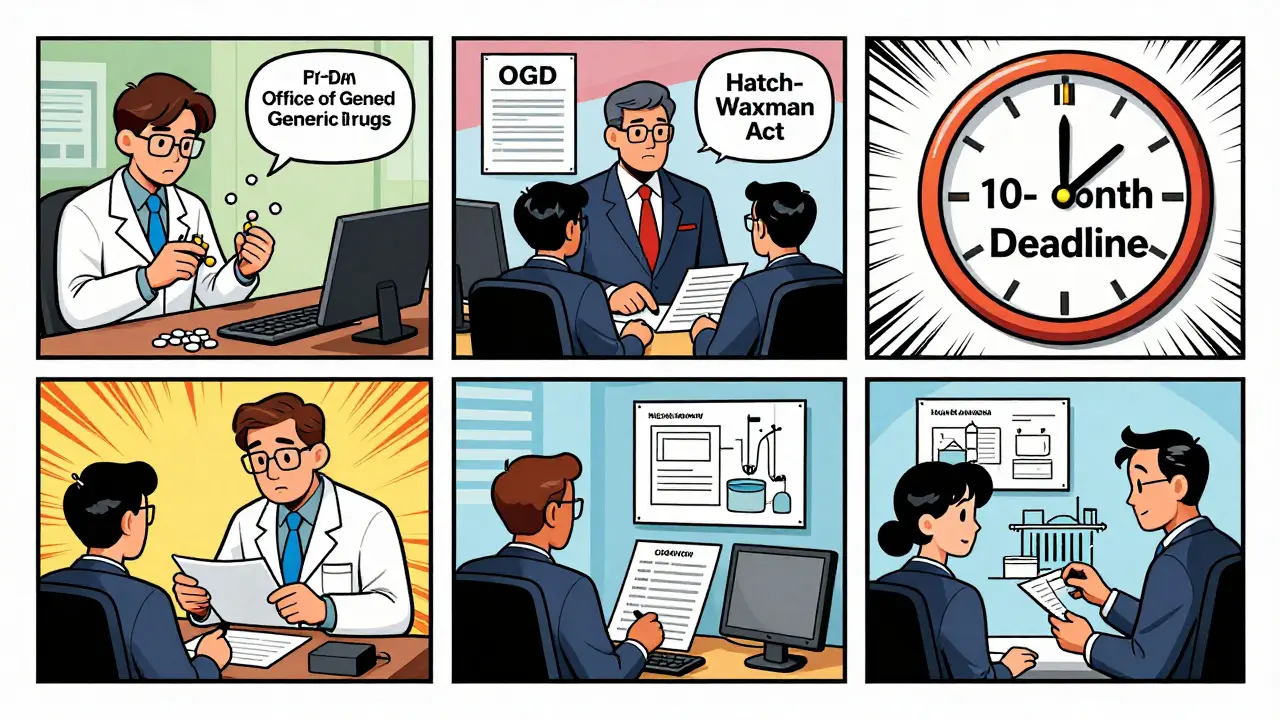
The U.S. Food and Drug Administration doesn’t just approve brand-name drugs. In fact, more than 90% of all prescriptions filled in America are for generic drugs. Behind that number is a quiet but powerful team: the FDA Office of Generic Drugs (OGD). This unit doesn’t get the spotlight, but it’s the engine that keeps affordable, safe, and effective generic medicines flowing to pharmacies nationwide.
What the Office of Generic Drugs Actually Does
The OGD is the part of the FDA that reviews and approves generic drug applications. That means they’re the ones deciding whether a generic version of, say, metformin or lisinopril, can legally be sold in the U.S. They don’t create the drugs. They don’t manufacture them. But they make sure every generic pill, injection, or inhaler meets the same strict standards as the brand-name original.
Here’s what that really means in practice:
- They check that the generic has the same active ingredient, strength, dosage form, and route of administration as the brand drug.
- They require proof that the generic is bioequivalent - meaning it gets into your bloodstream at the same rate and to the same extent as the brand version.
- They verify that the manufacturing process meets quality standards so the drug won’t degrade, break down, or become unsafe.
These aren’t just technical checks. They’re legal and scientific gatekeeping. Without OGD’s approval, a generic drug can’t be sold in the U.S. - even if it’s cheaper or made overseas.
The Structure: How OGD Is Organized
OGD isn’t a small team tucked into a corner. In 2013, it was elevated to a "super office" - reporting directly to the director of CDER (Center for Drug Evaluation and Research). That change gave it more authority, clearer leadership, and better resources to handle the growing volume of generic drug applications.
OGD is made up of six main parts:
- Immediate Office (IO): This is the command center. It sets strategy, manages budgets, and handles high-level decisions. It also includes the Global Generic Drug Affairs Team, which works with regulators in Europe, Canada, India, and elsewhere to align standards and avoid duplication. There’s also the Division of Legal and Regulatory Support, which advises on complex legal issues tied to the Hatch-Waxman Act.
- Office of Bioequivalence (OB): This group runs the science behind bioequivalence. They design and review studies that prove a generic drug behaves the same way in the body as the brand. They also have a Safety and Surveillance Team that watches for unexpected side effects after generics hit the market.
- Office of Generic Drug Policy: This team interprets and develops rules. They handle patent challenges, exclusivity periods, and legal gray areas under the Hatch-Waxman Act. If a brand company tries to block a generic by extending a patent, this office decides if it’s valid.
- Office of Regulatory Operations (ORO): This is where the rubber meets the road. ORO houses Regulatory Project Managers (RPMs) - the people who actually manage each generic drug application from submission to decision. They assign reviewers, track deadlines, and make sure reviews stay on schedule under GDUFA.
- Office of Research and Standards (ORS): This group develops the testing methods and scientific standards used to evaluate generics. They work on things like dissolution testing, stability protocols, and modeling how drugs behave in different populations.
- Office of Safety and Clinical Evaluation: This team looks at adverse event reports and clinical data to spot safety issues specific to generic drugs. If a batch of generic metformin starts showing higher levels of a carcinogen, this office investigates.
Each of these offices works together - but they’re structured to handle specific parts of the process. That’s what makes OGD efficient.
The Laws That Power OGD
OGD doesn’t operate in a vacuum. Two laws shape nearly everything they do:
The Hatch-Waxman Act (1984) created the modern generic drug system. Before this law, it was nearly impossible for a company to bring a generic to market without doing full clinical trials - which cost millions and took years. Hatch-Waxman changed that. It allowed generic makers to rely on the brand drug’s safety data, as long as they proved bioequivalence. It also gave brand companies a limited period of market exclusivity to recoup R&D costs. OGD is the enforcer of this delicate balance.
GDUFA (Generic Drug User Fee Amendments) is the funding engine. Since 2012, generic drug manufacturers pay fees to the FDA to review their applications. These fees fund OGD’s staff, labs, and systems. Without GDUFA, the review backlog would be enormous. The fees are tied to performance goals - OGD must review 90% of first generic applications within 10 months, and 90% of all applications within 18 months. They’re held accountable to those timelines.
Why OGD Matters to You
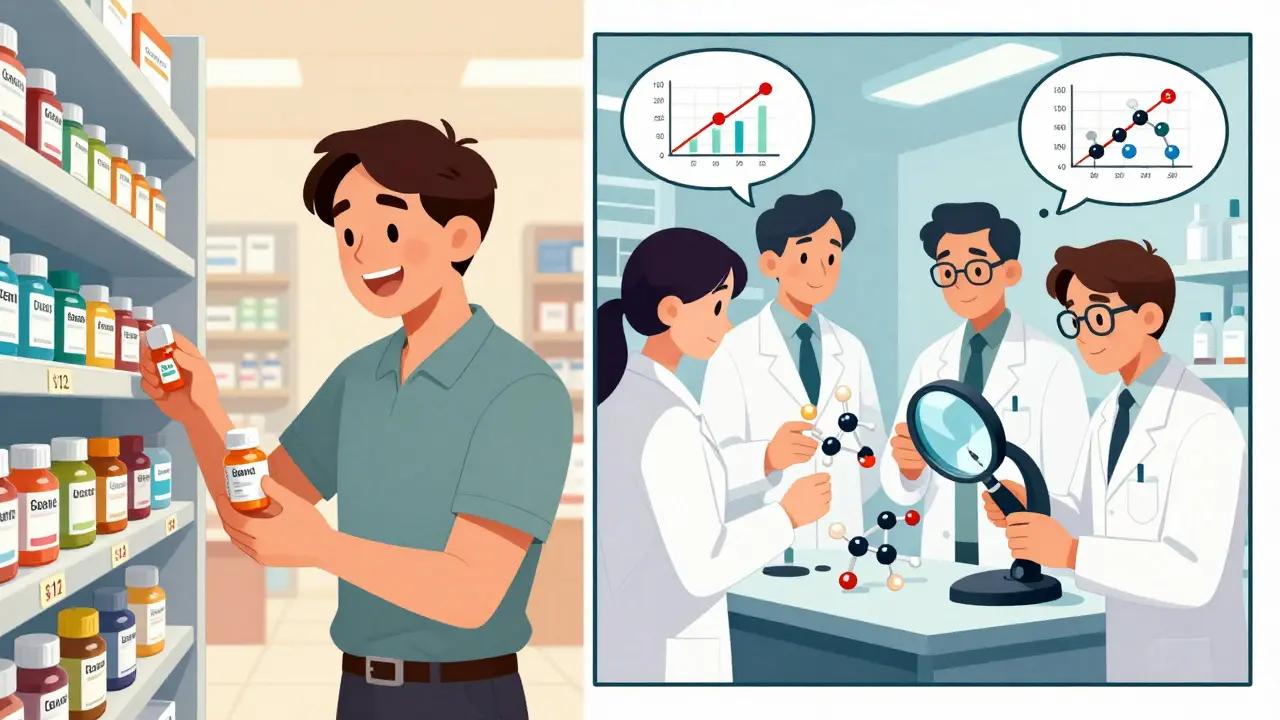
Let’s say you take a blood pressure pill. Your insurance only covers the generic version. That’s because OGD approved it as safe and effective. You didn’t pay $200 a month - you paid $12. That’s not luck. That’s OGD.
OGD also steps in during drug shortages. When a brand-name drug runs out, OGD fast-tracks the review of the first generic alternative. In 2023, they approved over 300 first generics - drugs that had no competition before. That’s thousands of patients who got their medication on time.
They also track safety signals. In 2021, OGD flagged elevated levels of NDMA - a probable carcinogen - in some generic ranitidine products. That led to a nationwide recall. Without OGD’s surveillance, those pills might have stayed on shelves.
OGD doesn’t just approve drugs. They protect public trust. When you pick up a generic, you’re trusting that it’s not a cheap knockoff. OGD makes sure that trust is earned.
How OGD Works With the World
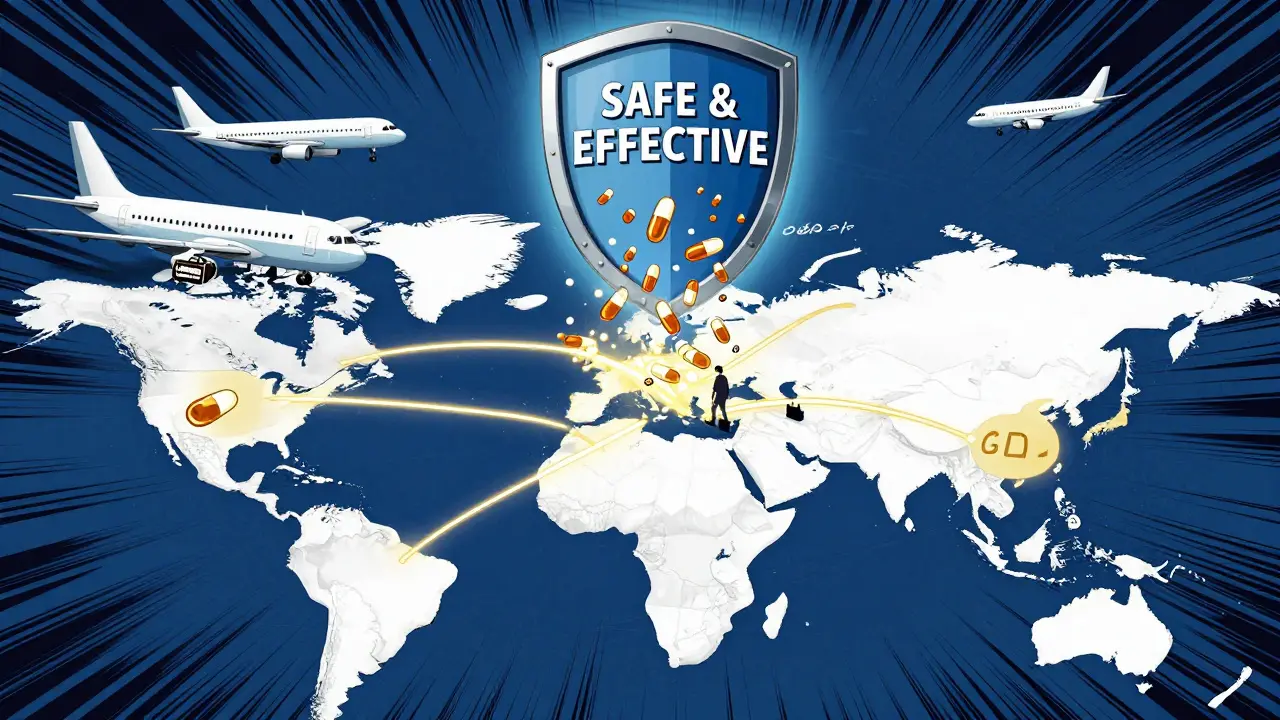
Generic drugs are made all over the world - India, China, Europe, and beyond. OGD doesn’t just review applications from U.S. companies. They inspect foreign manufacturing sites. In 2024, they conducted over 1,200 inspections of international facilities.
The Global Generic Drug Affairs Team works with regulators in other countries to share data, align testing standards, and avoid redundant reviews. If a generic drug is approved in the EU and meets FDA standards, OGD can use that data to speed up U.S. approval. That saves time and money for everyone.
This global coordination is critical. A shortage in one country can ripple across borders. OGD helps prevent that.
What Happens After Approval?
Approval isn’t the end. OGD keeps watching.
- They monitor adverse event reports from doctors, pharmacists, and patients.
- They inspect manufacturing facilities annually or as needed.
- They update standards as science evolves - for example, adding new tests for impurities.
- They publish guidance documents so companies know exactly what’s expected.
There’s no "set it and forget it" here. If a generic drug maker changes its formula or switches suppliers, OGD must re-review the change. That’s why some generics suddenly disappear from shelves - the company made a change, and the FDA hasn’t approved it yet.
Common Misconceptions About OGD
People think generic drugs are "lesser" because they’re cheaper. That’s not true. OGD requires them to be identical in active ingredient, strength, and performance. The only differences are in inactive ingredients - like color or filler - which don’t affect how the drug works.
Some believe OGD is slower than brand drug review. But under GDUFA, they’re held to strict timelines. In fact, the average review time for a generic is now under 12 months - faster than many brand drug approvals.
And no, OGD doesn’t favor big companies. They review applications from startups and multinationals alike. The process is blind to size - only science and data matter.
What’s the difference between OGD and the rest of the FDA?
OGD is a specialized unit within CDER focused only on generic drugs. Other parts of the FDA review brand-name drugs, vaccines, biologics, and medical devices. OGD’s entire mission is to ensure affordable, high-quality generic versions of approved drugs reach patients quickly and safely.
How long does it take OGD to approve a generic drug?
Under GDUFA, OGD aims to review first generic applications within 10 months and all others within 18 months. In practice, many are approved faster - especially if the application is complete and well-prepared. Delays usually happen when the applicant needs to provide more data or if there’s a patent dispute.
Can a generic drug be unsafe?
OGD requires generics to meet the same safety and quality standards as brand drugs. But like any medicine, rare side effects can appear after widespread use. OGD monitors adverse event reports and can issue recalls or safety alerts if needed. For example, they recalled several generic ranitidine products in 2020 after finding a cancer-causing impurity.
Does OGD inspect manufacturing plants?
Yes. OGD conducts inspections of both U.S. and international manufacturing sites. In 2024, they performed over 1,200 inspections globally. These checks ensure facilities follow good manufacturing practices and that drugs aren’t contaminated or mislabeled.
Why do some generic drugs cost more than others?
Price differences come from competition, supply chain issues, or manufacturing costs - not quality. If only one company makes a generic, it can charge more. Once more companies enter the market, prices drop. OGD doesn’t control pricing, but it does speed up approval of new competitors to drive down costs.
What’s Next for OGD?
OGD is adapting to new challenges. More complex generics - like injectables, inhalers, and biosimilars - are entering the market. These aren’t simple pills. They require advanced testing and new standards.
OGD is investing in digital tools to speed up reviews. They’re also expanding their global partnerships to keep pace with international manufacturing trends. And they’re working on better ways to track real-world safety data from electronic health records.
The goal hasn’t changed since 2013: make sure every American has access to safe, effective, and affordable medicines. Whether you’re taking a generic for diabetes, high cholesterol, or asthma, OGD is the unseen force making sure that drug works - just like it should.


Angie Thompson on 26 January 2026, AT 10:02 AM
I had no idea generics were this tightly monitored! 🤯 My blood pressure med costs $4 a month and I just assumed it was some cheap knockoff. Turns out it’s basically the same science as the brand, just without the marketing budget. OGD is the real MVP.