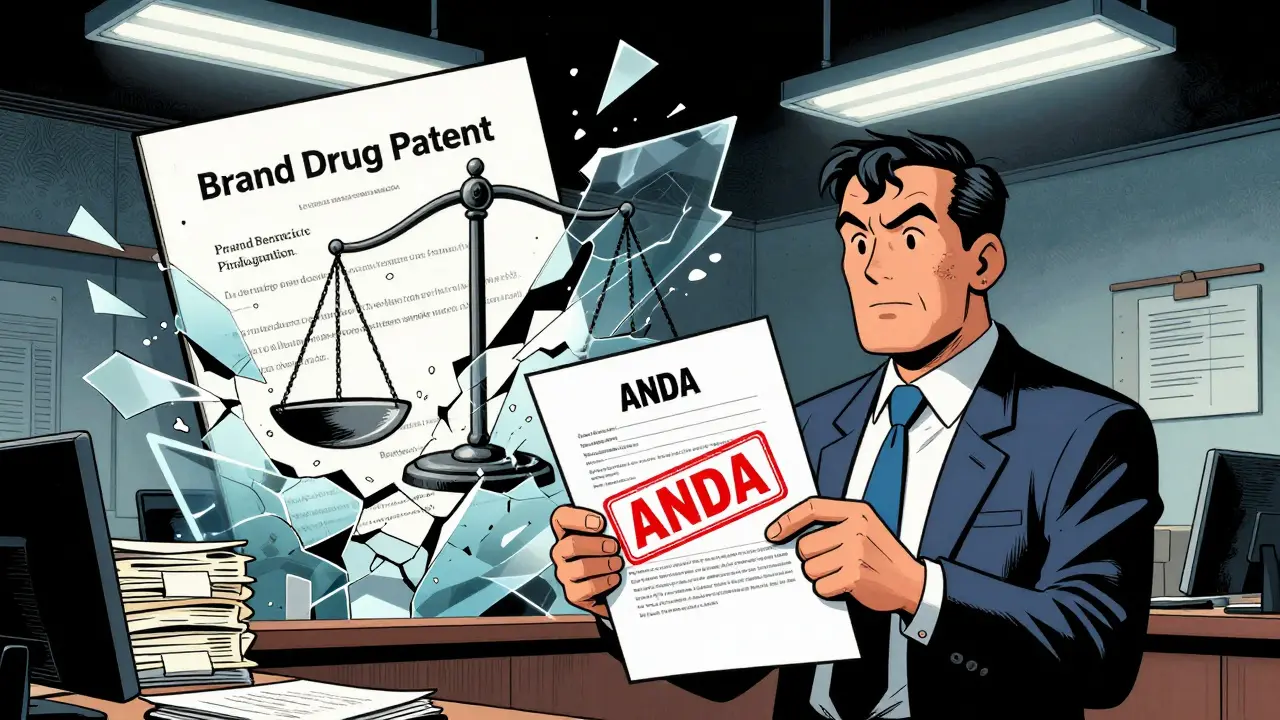
When a brand-name drug company holds a patent, it gets a legal monopoly-often for 20 years-to sell its medicine without competition. But what happens when a generic version is ready to hit the market years before that patent expires? That’s where Paragraph IV certification comes in. It’s not a loophole. It’s not a trick. It’s a carefully designed legal tool built into U.S. drug law to force patent disputes into court before generics even hit shelves. And it’s responsible for most of the generic drugs you buy today.
What Exactly Is a Paragraph IV Certification?
A Paragraph IV certification is a formal statement made by a generic drug company when it files an Abbreviated New Drug Application (ANDA) with the FDA. In this statement, the generic maker says: "One or more patents listed for this brand drug are either invalid, unenforceable, or our version won’t infringe them." This isn’t just a guess. It’s a legally binding declaration backed by detailed analysis.
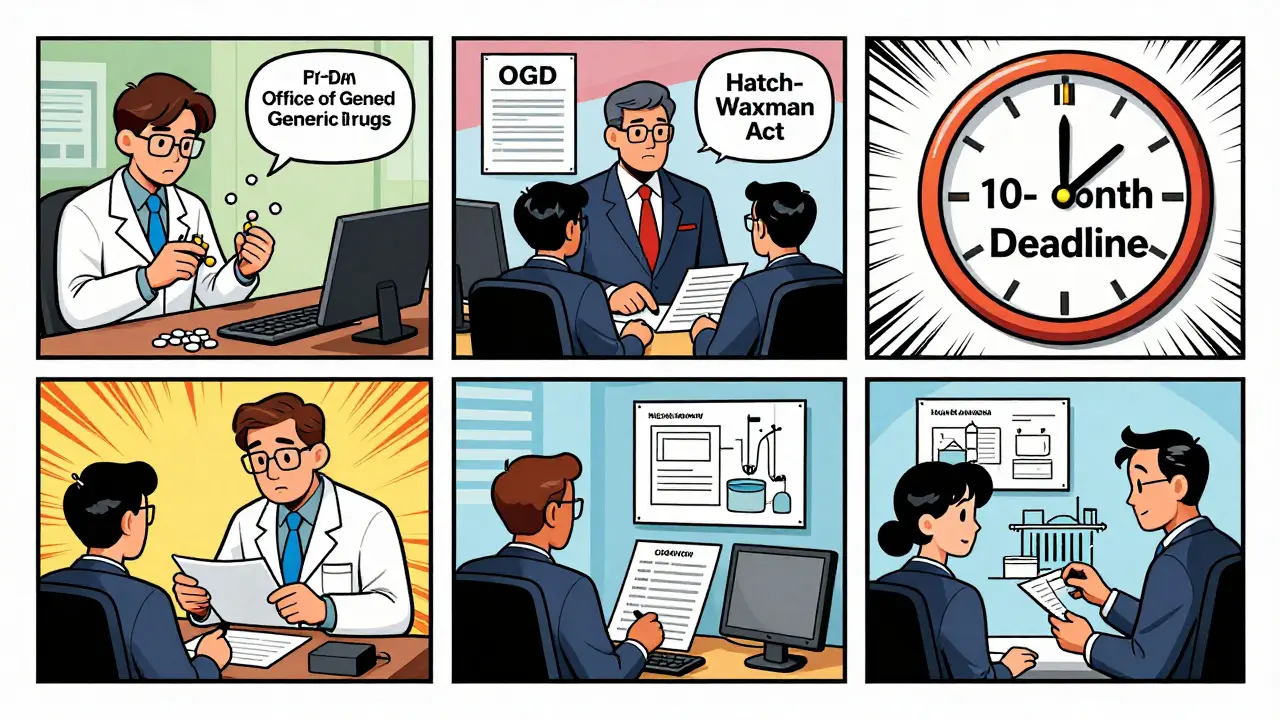
This mechanism was created by the Hatch-Waxman Act of 1984. Before that, generic companies had to wait until every patent expired-even if those patents were weak, obvious, or just thinly disguised attempts to extend monopoly pricing. Hatch-Waxman changed that. It gave generics a way to challenge patents head-on, without waiting. The law even created something called an "artificial act of infringement"-meaning, just by filing the Paragraph IV notice, the generic company triggers a legal violation, letting the brand-name company sue them before any drug is sold. This sounds backwards, but it’s actually smart: it keeps the legal fight out of the marketplace and into the courtroom.
How Does the Process Work?
The process is tightly timed and full of legal traps. Here’s how it plays out:
- File the ANDA with Paragraph IV certification - The generic company submits its application to the FDA, including a detailed legal and scientific argument explaining why the patent doesn’t hold up. This isn’t a one-liner. Courts have ruled it needs a "rational, reasonable basis"-meaning real data, not just wishful thinking.
- Send a notice letter within 20 days - The generic company must mail a copy of this certification directly to the brand-name patent holder. The letter must include the exact legal basis for the challenge and confirm the generic has done bioequivalence studies. If this letter is sloppy, the FDA will reject the whole application-even if the patent challenge is strong.
- Brand company has 45 days to sue - If the brand company believes it has a valid patent, it has 45 days to file a lawsuit. If they do, the FDA can’t approve the generic for 30 months-or until a court rules otherwise. This is called the "30-month stay." It’s not automatic approval delay-it’s a legal pause button.
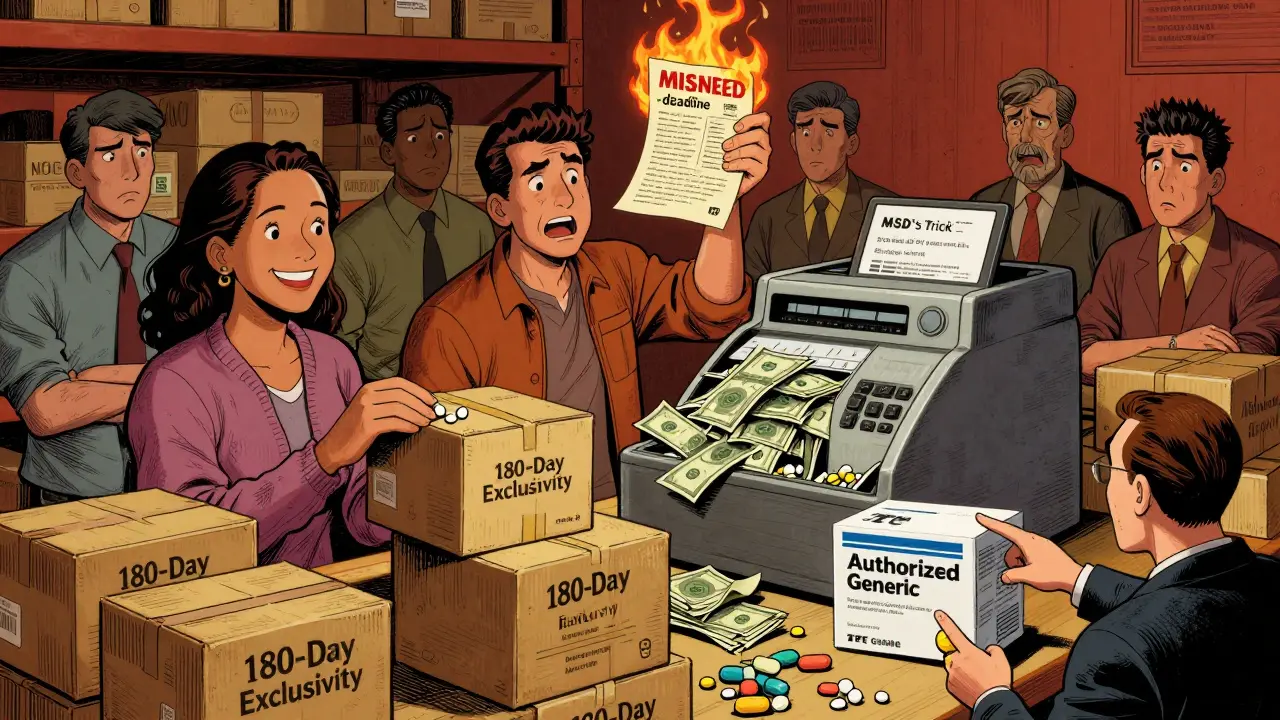
- First filer gets 180 days of exclusivity - The first company to file a complete ANDA with a Paragraph IV certification gets a massive reward: 180 days where no other generic can enter the market. That’s not just a head start-it’s a cash cow. On a $2 billion drug, that window can mean over $500 million in revenue.
It’s high risk, high reward. Win, and you dominate the market. Lose, and you’ve spent millions for nothing.
Why Do Generic Companies Take the Risk?
The math is simple: if you can knock out a patent early, you make a fortune. Take Mylan’s challenge to Gilead’s tenofovir patent in 2019. The brand drug sold for over $1,000 per pill. Mylan challenged the formulation patent, won in court, and brought its generic to market 27 months before the patent was set to expire. That’s not just savings for patients-that’s billions in revenue.
Apotex did something similar with GlaxoSmithKline’s Paxil in 2004. After winning its Paragraph IV challenge, Apotex had 180 days of exclusivity. They made over $1.2 billion during that window.
But the cost is brutal. The median legal bill for a Paragraph IV case? $12.7 million, according to Fish & Richardson’s 2022 report. Some cases cost over $15 million. And the clock is ticking. If you miss a deadline on the notice letter, your application gets rejected. If you don’t start selling within 75 days of approval, you lose your 180-day exclusivity. Teva learned this the hard way with Copaxone in 2017-they missed the deadline and lost exclusivity to a dozen competitors overnight.
How Is This Different From Other Patent Certifications?
There are four types of patent certifications in an ANDA. Only one is a fight.
- Paragraph I: "This drug isn’t patented." Only 5% of applications use this. It’s easy, but it’s rare.
- Paragraph II: "The patent expires in 2027." 15% of applications. You wait. No risk. No reward.
- Paragraph III: "We won’t launch until the patent expires." 20% of applications. Straightforward. Safe. No exclusivity.
- Paragraph IV: "This patent is garbage." 60-70% of applications. This is where the real action is.
Paragraph IV is the only one that triggers litigation. It’s also the only one that offers the 180-day exclusivity prize. That’s why 9 out of 10 generic companies targeting blockbuster drugs choose it-even though it’s the most expensive and risky path.
What’s Changing Now?
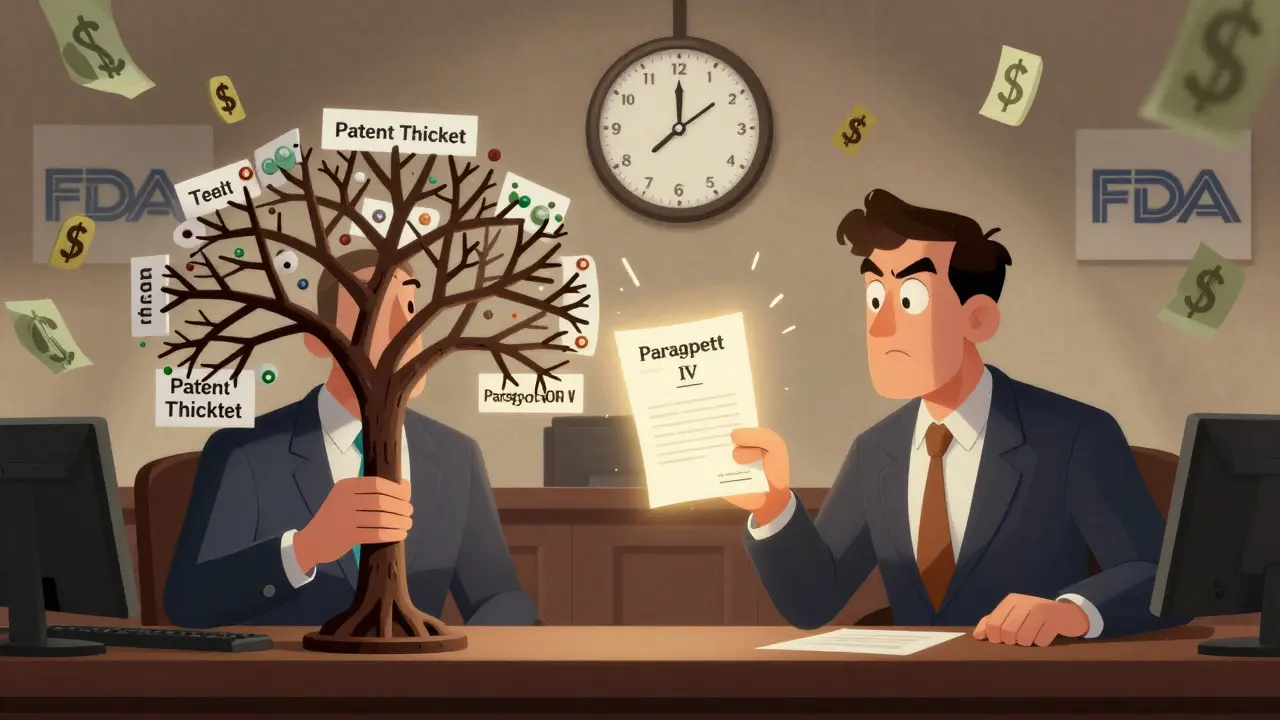
The game is evolving. Brand companies now file multiple patents on the same drug-sometimes 20 or more-on minor changes like pill color, coating, or dosing schedule. This is called "patent thicketing." It’s designed to overwhelm generics with legal costs and delays. In 2022, 63% of generic manufacturers said patent thickets made challenges harder than five years ago.
There’s also the rise of "authorized generics." That’s when the brand company launches its own generic version during the 180-day exclusivity window. It’s legal, but it kills the reward for the first challenger. The FTC has been fighting this since 2021, calling it anticompetitive.
And courts are getting tougher. In 2023, the Supreme Court’s Amgen v. Sanofi decision made it harder to prove a patent is invalid by requiring the patent to cover every possible version of the drug-not just the one the company actually made. That’s a big blow to biologics and complex drugs.
At the same time, generic companies are now combining Paragraph IV challenges with Inter Partes Review (IPR) at the Patent Trial and Appeal Board. It’s a two-pronged attack: court + patent office. In 2023, 42% of Paragraph IV cases included IPR filings.
Who Benefits?
Patients. The healthcare system. Taxpayers. Since 1984, Paragraph IV challenges have saved the U.S. healthcare system over $1.7 trillion. The FDA estimates they’ll keep saving $150-$200 billion every year through 2030.
But the biggest winners? The first generic company to file. They get the exclusivity. They get the market. They get to set the price-often 80-90% lower than the brand. That’s why the top five generic manufacturers-Teva, Viatris, Sandoz, Hikma, and Amneal-control nearly 60% of all Paragraph IV filings. It’s a high-stakes game, and they’ve got the lawyers, the money, and the strategy to play it.
Is This System Fair?
It’s controversial. Critics say it lets generics bully small patent holders or forces brand companies into "pay-for-delay" deals-where the brand pays the generic to delay entry. The FTC found 197 such deals between 1999 and 2009. The Supreme Court ruled those deals illegal in 2013 (FTC v. Actavis), but they still happen in subtle forms.
Proponents say it’s the only way to break monopolies on life-saving drugs. Without Paragraph IV, generics wouldn’t challenge patents unless they were clearly expired. Weak patents would linger for years. Patients would pay more. Innovation would be stifled-not encouraged.
The system isn’t perfect. But it works. It forces companies to prove their patents are real-not just legal paper. And it’s the reason you can buy a $10 generic version of a drug that once cost $500.


Isabella Reid on 16 January 2026, AT 04:00 AM
Man, I never realized how much of my $10 pill was just lawyers fighting over ink on paper. This whole Paragraph IV thing is wild-it’s like the legal system built a chess match into the drug market. And the 180-day exclusivity? That’s not competition, that’s a monopoly-with-a-timer. But hey, at least it’s pushing prices down.