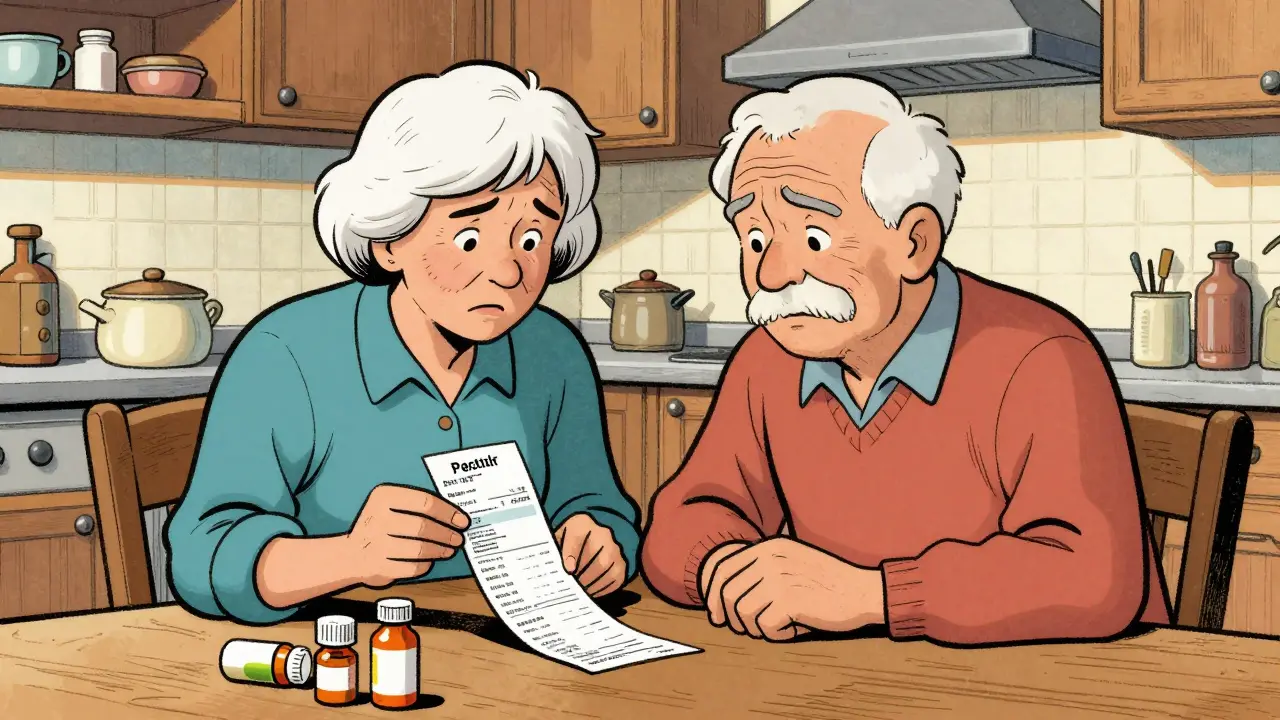
Key Takeaways for Fast Answers
- What it is: Help paying for Medicare Part D prescription drug costs.
- Who it's for: Seniors with limited income and assets.
- Core Benefit: Eliminates deductibles, lowers copays, and covers premiums for $0 plans.
- 2026 Income Limit: Generally up to $23,475 for individuals and $31,725 for couples.
- How to apply: Online at SSA.gov, by phone, or in person at a Social Security office.
Do You Qualify? Checking the Numbers
Whether you qualify depends on two main things: how much money you make (income) and what you own (resources).First, let's look at income. The government looks at your adjusted gross income plus any tax-exempt interest. For 2025-2026, the general limits are $23,475 for a single person and $31,725 for a married couple living together. If you live in Alaska or Hawaii, these numbers are slightly higher to account for the higher cost of living there.
Next, they check your resources. This is where people often get confused. They count things like money in your checking or savings accounts, stocks, bonds, and any real estate you own that isn't your home. For a single person, the limit is $17,600; for couples, it's $35,130.
Here is the good news: not everything you own counts. The government ignores your primary home, one vehicle, your personal belongings, and up to $1,500 set aside for burial expenses. You might actually qualify even if your bank balance looks a bit high on paper because of these exclusions.
| Category | Individual Limit | Married Couple Limit |
|---|---|---|
| Annual Income | $23,475 | $31,725 |
| Countable Resources | $17,600 | $35,130 |
The Three Ways to Get Enrolled
Depending on your current benefits, you might already be in the program without knowing it, or you might need to fill out a few forms. There are three main pathways to enrollment:- Automatic Enrollment: You don't need to do a thing if you have both Medicare and Medicaid, receive Supplemental Security Income (SSI), or are in a Medicare Savings Program. Millions of people are added this way every year.
- Simplified Application: This is for people who are already receiving certain benefits that make them likely to qualify, requiring fewer documents.
- Standard Application: If you aren't automatically enrolled, you'll need to provide proof of income (like tax returns or pay stubs) and bank statements to prove your resources.
What Actually Happens to Your Costs?
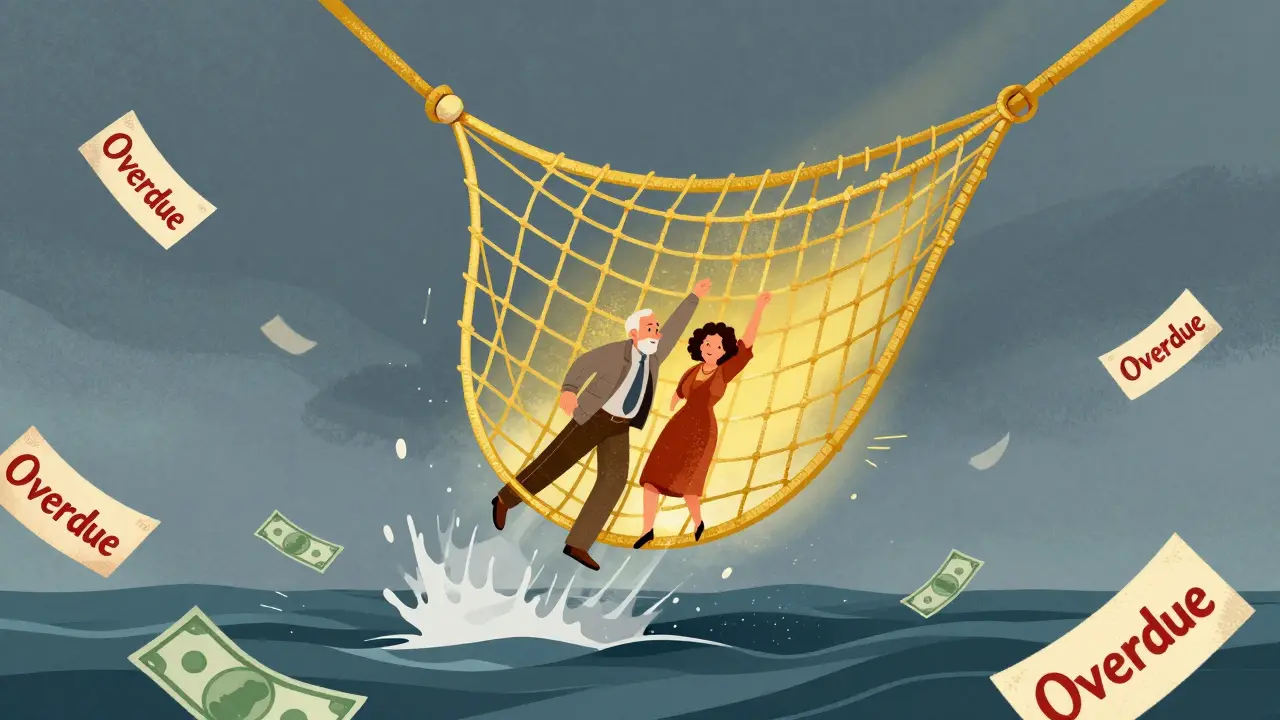
Once you're approved, your pharmacy experience changes immediately. The biggest win is the elimination of the Part D deductible. In 2025, that deductible was $595-basically a "entry fee" you had to pay before the insurance kicked in. With Extra Help, that fee vanishes.Your copays also drop significantly. If your income is very low (at or below 100% of the Federal Poverty Level), you'll pay as little as $1.60 for a generic drug and $4.80 for a brand-name one. If you're in the higher bracket (100-150% of the poverty level), you'll pay up to $4.90 for generics and $12.15 for brand names.
Another huge relief is the late enrollment penalty. If you waited too long to join a drug plan, Medicare usually charges you a monthly penalty for the rest of your life. Extra Help wipes that penalty away. Plus, if you're starting the program and have no coverage, programs like LINET (run by Humana) can provide temporary coverage for up to two months to bridge the gap.
Step-by-Step: How to Apply Today
If you've checked the numbers and think you qualify, don't wait. About 4.3 million eligible people are missing out on this money right now. Here is how to get your application in:- Option 1: Go Online. This is the fastest way. Visit SSA.gov/extrahelp. The Social Security Administration recently launched an automated screening tool that tells you quickly if you're likely to qualify.
- Option 2: Call them. Dial 1-800-772-1213. Be prepared for some hold time, but the agents can walk you through the requirements.
- Option 3: Go in person. Download and print form SSA-1020, fill it out, and take it to your local Social Security office.
Be careful with your paperwork. Many applications are rejected because people accidentally include income that should be excluded (like the first $20 of monthly income) or miscalculate the value of their assets. Double-check your bank statements and tax forms before hitting submit.
Common Pitfalls and Expert Tips
One of the biggest mistakes seniors make is assuming they make "too much" because they don't account for exclusions. For example, income from a child in military service is often excluded. Also, remember that the program is updated annually. If you were denied last year, check again this year; the limits usually go up slightly to keep pace with inflation.If you are managing chronic conditions-like diabetes or heart disease-the impact of this program is massive. It reduces out-of-pocket spending by roughly 83%. With the 2025 updates, insulin is capped at $35 per month, and select vaccines are now $0 for everyone on Extra Help.
Does Extra Help pay for my monthly Medicare Part D premium?
It depends on the plan. Extra Help pays the full premium for plans that offer a $0 premium option. If your current plan has a premium, you may need to switch to a $0 premium plan to get the full benefit. Most states have several of these plans available.
How long does it take to get approved?
Typically, the process takes between 3 and 6 weeks. However, recent data shows that about 87% of applications are actually processed within 21 days. Once approved, it takes about 45 days for the full transition to your new drug plan costs to complete.
Will I lose my house if I apply for this?
Absolutely not. Your primary residence is completely excluded from the resource calculation. The government does not count the value of the home you live in when determining if you are "low-income" for this program.
What happens if my income goes up mid-year?
You are generally required to report significant changes in income or resources to the Social Security Administration. If your income exceeds the limits, you may lose eligibility or be transitioned to a different benefit level, though the current rules have simplified this process significantly.
Can I apply for Extra Help if I'm not yet 65?
Yes, if you have a qualifying disability or are eligible for Medicare early. The program is tied to Medicare Part D eligibility, not just age.


Spencer Farrell on 1 May 2026, AT 12:12 PM
It is fundamentally imperative to recognize that the structural integrity of such social safety nets serves as a societal bulwark against the inevitable erosion of dignity that accompanies the intersection of age and indigence. One must approach the application process with a meticulous adherence to the specified criteria to avoid the banal frustrations of bureaucratic rejection.