Medication Adaptation Estimator
Commonly Disappear
-
May Persist
-
Disclaimer: This tool provides general pharmacological estimates based on the article. Adaptation varies by individual genetics (e.g., CYP2D6 variants). Always consult your doctor before changing medication or doses.
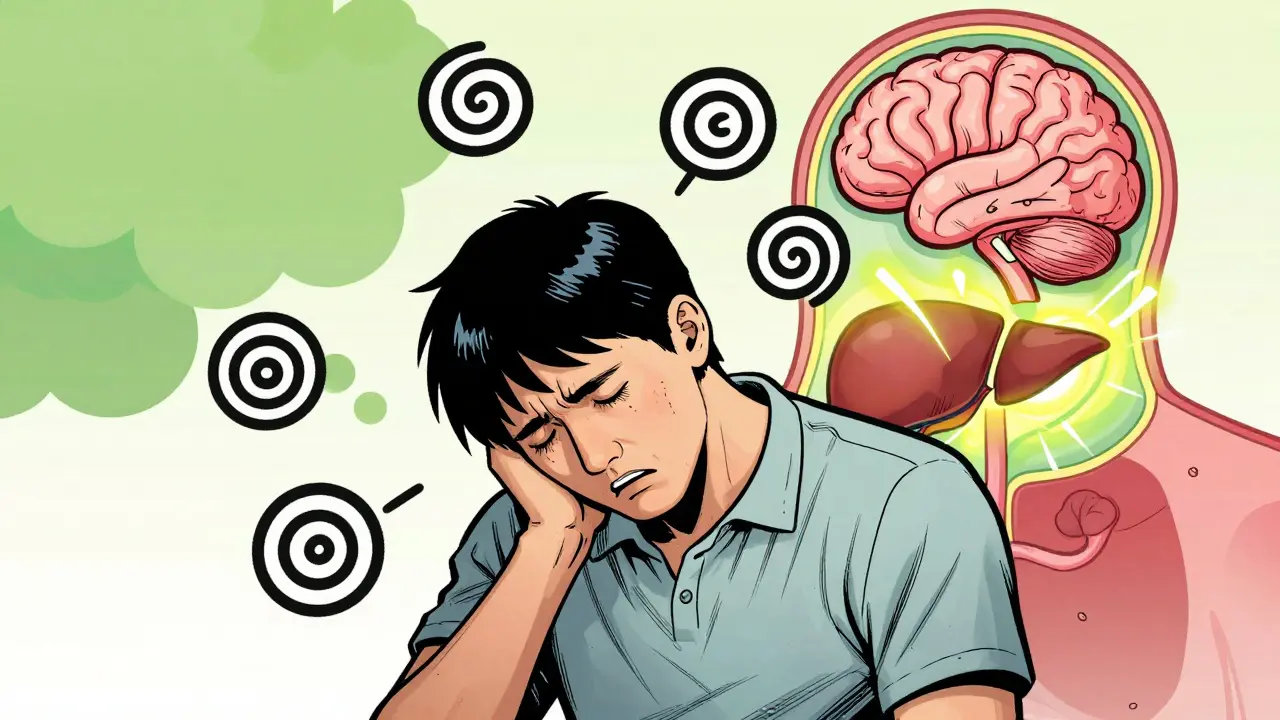
You start a new prescription, and for the first week, you feel like a zombie. Maybe you're dizzy, nauseous, or just exhausted. But then, something strange happens: after ten days, the dizziness vanishes. You're still getting the benefit of the medicine, but the annoying side effects have simply evaporated. Is it a placebo effect, or is your body actually changing? The reality is that your brain and liver are actively adapting to the chemical intruder. This process, known as drug tolerance is a pharmacological phenomenon where the body exhibits a reduced reaction to a medication after repeated use. But here is the catch: your body doesn't always develop tolerance to everything in the drug at the same speed.
The Quick Rundown on Tolerance
- What it is: Your body gets "used to" a drug, requiring more of it to get the same effect or simply stopping the reaction to certain side effects.
- Why it happens: Your liver speeds up metabolism, or your brain cells change how they receive the drug.
- The "Mixed Bag": You can develop tolerance to a side effect (like nausea) while still feeling the primary benefit (like pain relief).
- Individual Difference: Your genes determine how fast this happens; some people adapt in days, others in weeks.
How Your Body "Turns Down the Volume"
To understand why that morning grogginess disappears, you have to look at how the drug interacts with your system. It isn't just one process; it's a three-pronged attack by your body to restore balance.
First, there is pharmacokinetic tolerance. Think of this as your body's cleaning crew. When you take a drug regularly, your liver realizes there is a new substance to deal with. It responds by producing more cytochrome P-450 enzymes, which are specialized proteins that break down medications. For example, people who drink alcohol regularly see an induction of the CYP 2E1 enzyme, which can increase the metabolism of ethanol by up to 300%. Essentially, your liver becomes so efficient at destroying the drug that less of it reaches your bloodstream, which can make some side effects vanish.
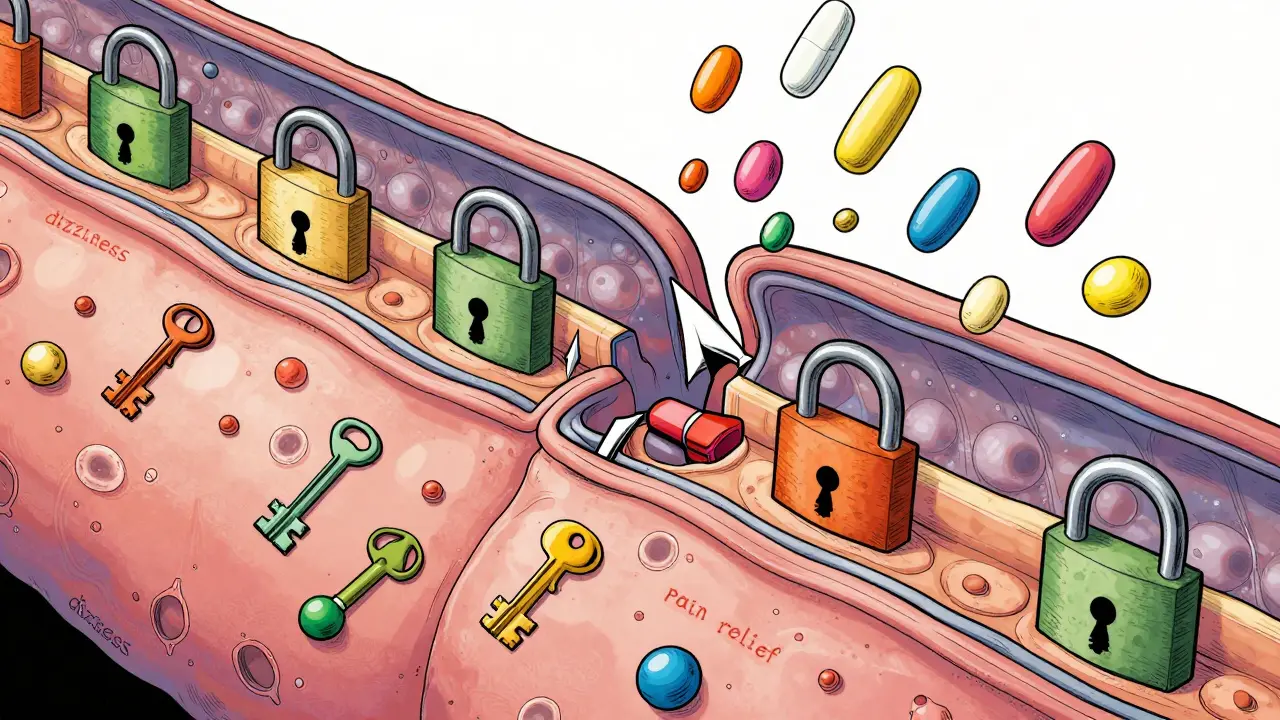
Then, we have pharmacodynamic tolerance. This happens at the cellular level. Your cells have receptors-think of them as locks-and the drug is the key. If a drug overstimulates a receptor, the cell protects itself by "hiding" the locks. This is called downregulation. In some cases, the number of receptors can drop by 20% to 50%. If the receptors that cause dizziness are hidden, but the receptors that treat pain remain active, the dizziness goes away while the drug still works.
Finally, there is cellular adaptation. This is the most complex version, where the cell doesn't just hide the lock, but actually changes the lock's shape. For instance, chronic alcohol exposure can increase the expression of the NMDA receptor R2B subunit by 40% to 60%. Your brain is effectively rewriting its own wiring to survive the presence of the drug.
The Mystery of Differential Tolerance
The most frustrating part of medication is when the "good" effects vanish but the "bad" ones stay. Or, conversely, when the bad stuff disappears and the good stuff remains. This is called differential tolerance. It happens because different organ systems adapt at different speeds.
Take opioids as a prime example. If you're taking them for chronic pain, your brain develops a tolerance to the "high" (euphoria) and the dangerous respiratory depression very quickly-often within the first few doses. However, your gut doesn't get the memo. The receptors in your gastrointestinal tract are much slower to adapt. This is why a patient might stop feeling sleepy after a week but still struggle with severe constipation for months.
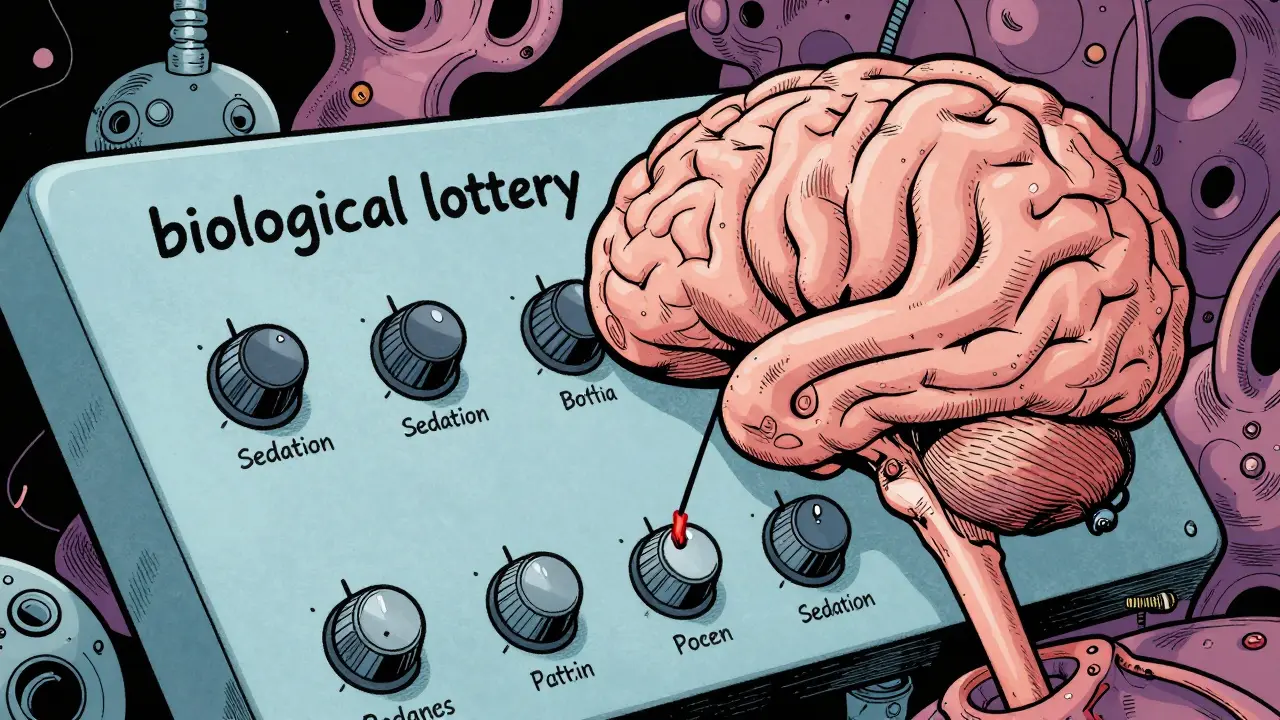
We see this with other common meds too. People taking benzodiazepines often find that the sedative effect (the sleepiness) drops by 60% to 70% within two weeks, yet the drug still manages anxiety at about 90% of its original strength. It's a strange biological lottery where your brain decides which effects to keep and which to discard.
| Medication Class | Side Effect That Often Disappears | Effect That Often Persists | Typical Adaptation Timeline |
|---|---|---|---|
| Opioids | Nausea / Sedation | Constipation | Rapid (2-7 days) |
| SSRIs (Antidepressants) | Nausea / Dizziness | Sexual Dysfunction | Moderate (2-3 weeks) |
| Beta-blockers | Initial Fatigue | Blood Pressure Control | Slow (up to 3 months) |
| Antipsychotics | Muscle Stiffness (EPS) | Therapeutic Effect | Moderate (4-6 weeks) |
Why Your Experience Might Differ from Your Neighbor's
Ever wonder why your friend handles a medication perfectly while you feel like you've been hit by a truck? It often comes down to genetics, specifically your CYP2D6 variants. This gene helps produce the enzymes that break down many common drugs. In some people-about 7% to 10% of Caucasians-this gene is essentially "broken," making them poor metabolizers. If you can't break the drug down, you won't develop metabolic tolerance, meaning those early side effects might last much longer for you than for someone else.
There is also the issue of "dose chasing." When the therapeutic effect starts to dip due to tolerance, some people instinctively take more. This is a dangerous game. Increasing the dose can temporarily bring back the desired effect, but it often accelerates the tolerance process, pushing the body to adapt even faster. It creates a cycle where you need higher and higher doses just to feel "normal," even though the side effects may have long since disappeared.
Managing the Transition Period
If you're currently in the "rough patch" of a new medication, knowing the timeline can be a lifesaver. For many antidepressants or nerve pain medications like pregabalin, the dizziness often peaks in the first week and clears up by day 21. Knowing that there is a biological "off switch" for those side effects can make it easier to stick with the treatment.
Doctors sometimes use a strategy called a "drug holiday." This is a planned break from the medication to "reset" the receptors. In some cases, like with nitroglycerin for heart issues, a short break can reverse tolerance by 40% to 60% within ten days. It's like rebooting a computer; once the system is cleared, the drug can start working effectively again without needing a higher dose.
Does tolerance mean I'm addicted to my medication?
No. Tolerance is a physical response by your cells and liver; it is not the same as addiction or dependence. Many non-addictive medications, such as blood pressure meds or certain antidepressants, cause the body to develop tolerance to early side effects without creating a psychological craving or addiction.
Why do some side effects never go away?
This is due to differential tolerance. Some receptors, like those in the gut (causing constipation with opioids) or those involved in sexual function (with SSRIs), simply do not downregulate or adapt as quickly as the receptors in the brain. If the body doesn't find a way to "balance" that specific reaction, the side effect persists.
Can I speed up the process of getting rid of side effects?
Generally, you cannot force your receptors to downregulate faster. However, managing the symptoms (like using laxatives for opioid-induced constipation) can make the adaptation period more bearable. Never increase your dose to "push through" the side effects without consulting your doctor, as this can actually make tolerance worse.
How long does it usually take for side effects to disappear?
It varies by drug class. Opioid-related nausea often fades in 5-7 days. SSRI-related jitters or nausea typically resolve in 2-3 weeks. Beta-blocker fatigue can take up to 3 months to improve. Always check the specific prescribing information or ask your pharmacist for the expected adaptation timeline for your specific medication.
If the side effects are gone, does that mean the drug is working?
Not necessarily. While the disappearance of side effects is a sign of tolerance, it doesn't always guarantee the therapeutic effect is at its peak. In some cases, you might develop tolerance to both the side effects and the benefits. This is why regular check-ups are vital to ensure the dose is still effective.
Next Steps for Patients
If you are starting a new medication, keep a simple daily log of your symptoms. Note when a side effect starts and exactly when it begins to fade. This data is incredibly valuable for your doctor to determine if you are a "fast" or "slow" adapter. If you find that a side effect is intolerable and isn't budging after the expected window (e.g., 3 weeks for an SSRI), it may be a sign that you have a genetic variant that affects how you process the drug, and a different medication might be a better fit.