
Traveling doesn’t have to wreck your weight management goals. But let’s be honest - airports and restaurants are designed to make you eat more than you planned. The smell of fries, the sight of oversized burritos, the guilt-free marketing of "healthy" salads that actually pack 900 calories - it’s a minefield. And yet, thousands of people manage to stay on track while flying or dining out. How? They don’t fight hunger. They outsmart the system.
Why Airports Are So Hard for Weight Management
Airports used to be junk food corridors. Back in 2015, if you wanted a meal that didn’t come with a side of sodium and sugar, you were out of luck. But things have changed. Today, 71.3% of U.S. airports offer at least one high-fiber, plant-based option. That’s up from barely 20% in 2018. The shift didn’t happen by accident. Major airports like Chicago O’Hare and Los Angeles International now enforce strict nutritional rules. O’Hare requires 25% of all food outlets to serve meals under 500 calories, with less than 10g of fat and 600mg of sodium. LAX mandates calorie labels on every menu. These aren’t just nice gestures - they’re responses to real demand. But here’s the catch: just because something is labeled "healthy" doesn’t mean it is. A salad at JFK might look clean, but drenched in ranch dressing, it becomes a 700-calorie bomb. A protein bar might sound perfect - until you check the label and see 28g of sugar. The real challenge isn’t finding healthy food. It’s spotting the traps.What Your Meal Should Actually Look Like
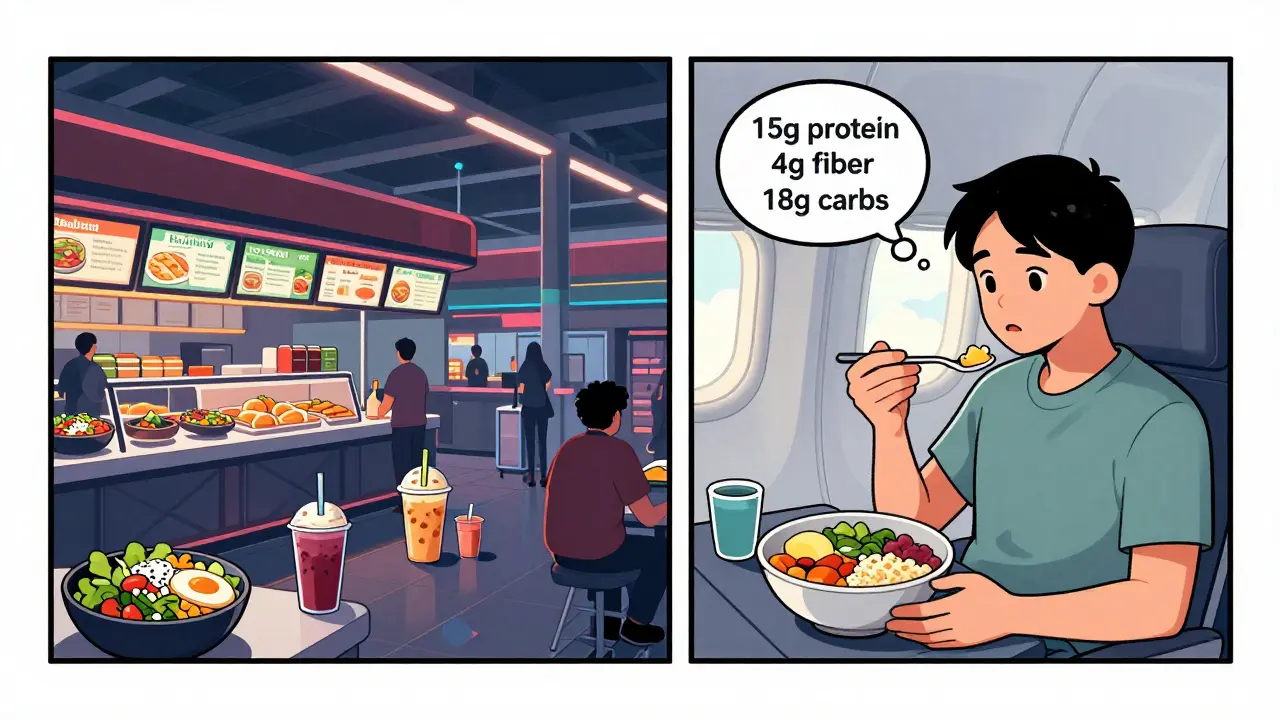
Registered dietitian Hernandez, featured in multiple travel nutrition guides, breaks it down simply: protein, fiber, and controlled carbs. That’s the golden triangle for staying full, stable, and on track.- Protein: Aim for 15-20 grams per meal. It keeps you satisfied longer and prevents blood sugar crashes.
- Fiber: At least 3 grams. It slows digestion, helps regulate appetite, and supports gut health.
- Carbs: Keep them under 25 grams per snack. Too much = energy spike, then crash = cravings.
- Hard-boiled eggs (2 eggs = 12g protein)
- Plain Greek yogurt cup (10-20g protein, depending on brand)
- Justin’s 1.15-ounce almond butter packet (16g fat, 2g protein, 190 calories)
- Trader Joe’s 2-ounce hummus cup (70 calories, 4g fat, 2g protein)
- Fresh fruit cup (3-4g fiber, natural sugars)
- GoMacro protein bar (10g protein, 18g carbs)

What to Order (and What to Avoid)
Not all airport restaurants are created equal. Some have clearly optimized for health-conscious travelers. Others? Not so much. Good choices:- Potbelly’s grilled chicken salad (Chicago-Midway): 350 calories, 30g protein. 127 reviews average 4.2/5.
- Mod Market at Denver International: Build-your-own bowl. Order "double vegetables, half rice" - keeps it around 500-600 calories.
- Starbucks plain oatmeal with fruit and nuts: 300-350 calories, 8g protein, 5g fiber. Beats the sausage-egg-cheese biscuit (500+ calories, 25g fat).
- McDonald’s Classic Grilled Chicken Sandwich: 360 calories, 33g protein. Introduced in 2021 and now available at 87% of airport locations.
- Pre-made grab-and-go salads: Often 600-900mg sodium - that’s 25-40% of your daily limit.
- Yogurt parfaits: One JetBlue parfait at JFK had 48g of sugar. That’s more than the American Heart Association recommends for an entire day.
- Trail mix: A single handful = 300 calories. Stick to 100-calorie packs.
- "Healthy" smoothies: Jamba Juice’s "Green Greens" has 48g of sugar. That’s 12 teaspoons.
- Burrito bowls: They look healthy. Until you add rice, beans, cheese, sour cream, and guac. Easily hits 900+ calories.
How to Plan Ahead (Before You Even Leave Home)
The most successful travelers don’t wing it. They plan.- Check the airport’s official website 24-48 hours before your flight. Most have full menus listed. For example, dfwairport.com/food-beverage shows every restaurant and item.
- Identify your top 2-3 protein-based options before you arrive. That way, when you’re hungry and tired, you’re not making a snap decision.
- Pack your own snacks. TSA allows solid foods. Bring:
- Protein bars (like GoMacro or RXBAR)
- Individual nut butter packets (under 3.4 oz - no liquid rules)
- Hard-boiled eggs (peeled, stored in a small container with a teaspoon of water to keep moist - safe for 4-5 hours at room temperature, per USDA guidelines)
- Small bags of raw almonds or pumpkin seeds (pre-portioned into 100-calorie servings)
The Bigger Picture: Why This Matters
The food industry knows we’re watching. Healthy options now make up 38.7% of all airport food offerings - up from 19.2% in 2018. Airlines are responding too. United Airlines partnered with Beyond Meat in February 2024 to roll out plant-based meals in 87 lounges. JetBlue launched its "Evening Well" program at JFK Terminal 5 in March 2024 - meals with 450-550 calories, 25-30g protein, and 8-10g fiber. And it’s not just about calories. It’s about how you feel. Blood sugar spikes make you sluggish. Sodium bloats you. Sugar crashes make you irritable. When you’re trying to get through a long flight, a business meeting, or a red-eye, you don’t need to feel like garbage. The data is clear: travelers who use apps like Lose It! or MyFitnessPal to plan meals before arriving at the airport reduce their caloric intake by 18.7% compared to those who don’t. That’s not luck. That’s strategy.What Works for Most People
If you’re just starting out, here’s the simplest system:- Before you leave: Pack 1-2 protein-rich snacks (eggs, bars, nut butter).
- At the airport: Skip the fast-food lines. Head straight to the salad bar, grilled chicken station, or yogurt cup section.
- Order: Protein first. Then vegetables. Then a small portion of carbs (if needed). Skip the dressing - bring your own oil/vinegar packet if you can.
- Drink: Water. Always. Skip the sugary drinks, even if they’re "natural" or "green."
- After landing: Wait 20 minutes before eating. Hunger is often thirst or fatigue.
Traveling doesn’t have to mean abandoning your health. You just have to stop assuming the food environment has your best interests at heart. It doesn’t. But you do. And now you know exactly how to navigate it.
Can I bring hard-boiled eggs on a plane?
Yes. Hard-boiled eggs are solid food and allowed through TSA security. Peel them and store them in a small container with a teaspoon of water to keep them moist. They stay safe for up to 4-5 hours at room temperature, according to USDA guidelines. Many travelers pack 2-4 for long flights.
What’s the best airport snack for weight loss?
The best airport snack combines protein and fiber with low sugar. Justin’s almond butter packets (190 calories, 2g protein) or Trader Joe’s hummus cups (70 calories, 2g protein) are excellent. Pre-portioned 100-calorie almond packs (rated 4.7/5 by 214 Amazon reviewers) also work well. Avoid trail mix unless it’s in single-serve packs - a handful can be 300 calories.
Are airport salads really healthy?
Only if you control the toppings and dressing. A plain salad with grilled chicken and vegetables can be under 400 calories. But add cheese, croutons, bacon, and creamy dressing? It jumps to 800+. Always ask for dressing on the side - and use half. Oil and vinegar is your friend. Ranch? Avoid.
Why do airport meals cost so much?
Airport restaurants pay high rent and have limited space, so prices are inflated. Healthy entrees typically cost $12.50-$18.00 - 25-40% more than fast food. But the nutritional value is often better. If you’re on a budget, pack your own snacks and only buy one meal. Many travelers save money by bringing food and using airport restaurants for drinks only.
How can I avoid sugar traps at airports?
Check labels. A "healthy" yogurt parfait can have 48g of sugar. A "green" smoothie might have 40g. The American Heart Association recommends no more than 36g per day for men. Always look for "no added sugar" or "unsweetened." Choose plain yogurt and add your own fruit. Skip juice, flavored coffee drinks, and anything labeled "fruit-flavored" or "natural sweetener."



Alfred Noble on 23 February 2026, AT 18:41 PM
I just packed 2 hard-boiled eggs and an almond butter packet for my flight yesterday. No stress, no airport junk. Best part? I didn't feel sluggish after landing. Seriously, why do people still buy those "healthy" smoothies? They're just sugar water in a cup. 🤦♂️