HAS-BLED Risk Calculator
Calculate Your Bleeding Risk
The HAS-BLED score helps determine your risk of serious bleeding while taking anticoagulants. A score of 3 or higher means you need extra monitoring.
Important: This calculator is for informational purposes only. Always consult your doctor for medical advice.
Severe bleeding isn't just a side effect - it's a medical emergency
Imagine taking your daily pill to prevent a stroke, only to wake up with black, tarry stools or a nosebleed that won’t stop. This isn’t rare. Around 3.1% of people on anticoagulants for atrial fibrillation experience a serious bleed within their first year. And for those over 80, the risk jumps to more than 4% per year. These aren’t statistics - they’re real people showing up in emergency rooms, often too late.
Medications like warfarin, apixaban, rivaroxaban, and dabigatran save lives by stopping dangerous clots. But they also thin your blood. Too much, and even a minor bump can turn deadly. The truth? Most people don’t know what severe bleeding looks like until it’s too late.
What counts as severe bleeding? It’s not just blood on the floor
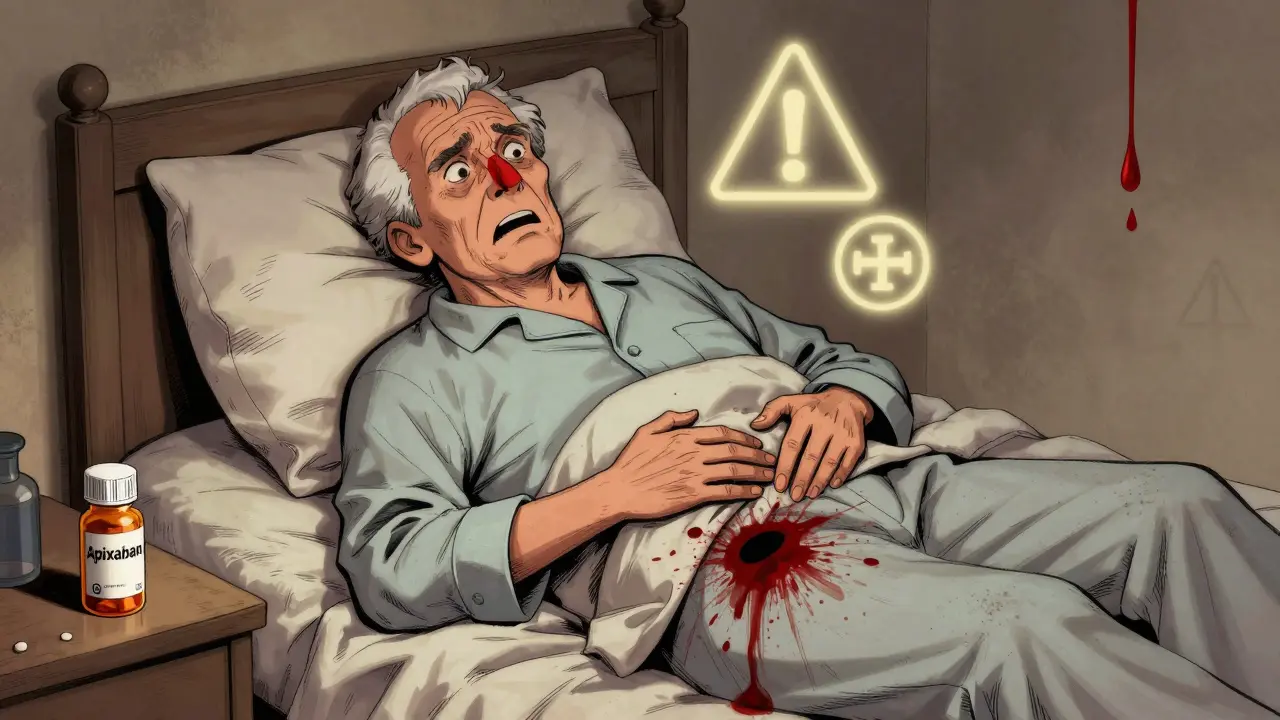
Severe bleeding isn’t always obvious. It doesn’t always mean gushing wounds. The clinical definition is simple: any bleeding that requires a transfusion, surgery, or causes a drop in hemoglobin of more than 5 g/dL. But in real life, it looks like this:
- Nosebleeds lasting more than 10 minutes, even if they seem minor
- Urine that’s red, pink, or dark brown - like cola
- Black, sticky, tar-like stools - a sign of internal gut bleeding
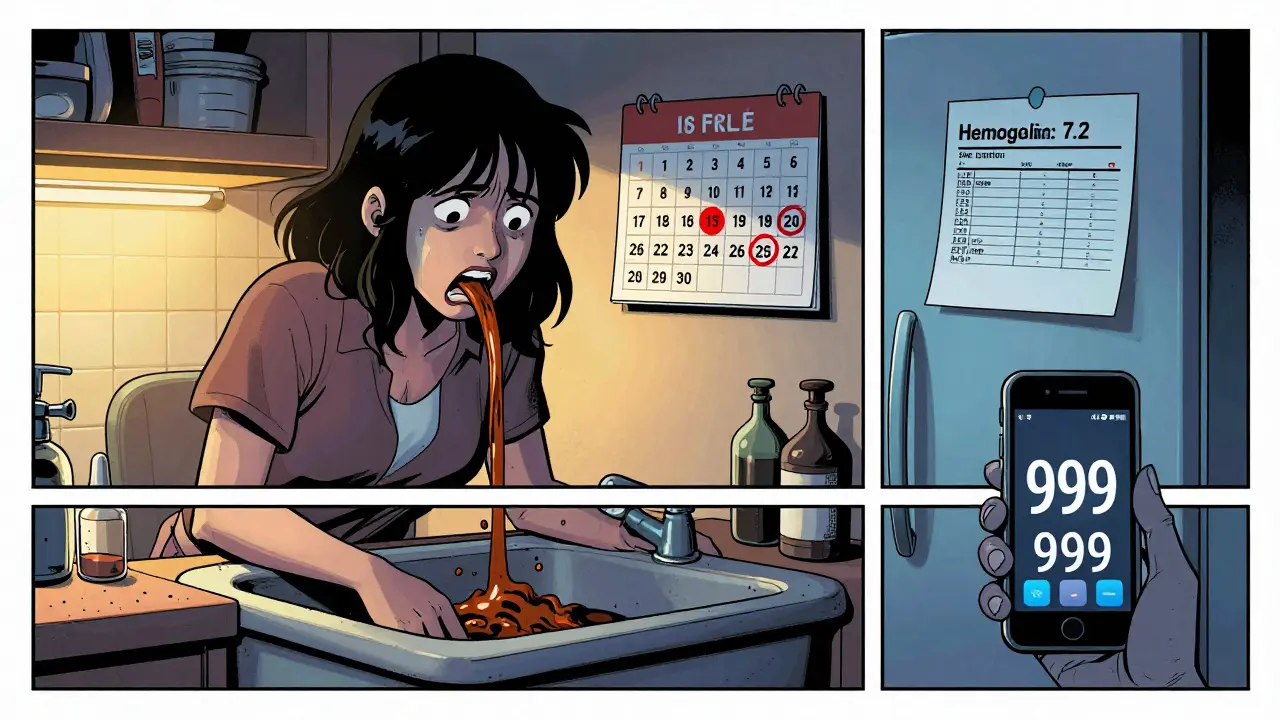
- Vomiting blood or material that looks like coffee grounds
- Unexplained, large bruises - especially on the torso or back
- Severe headaches, blurred vision, or sudden weakness - possible brain bleed
- Joint swelling or pain after a small injury - bleeding into the joint
- Excessive menstrual bleeding that soaks through a pad in under an hour
These aren’t "maybe call your doctor" situations. These are "call 999 or go to A&E now" moments. A 2023 study in JAMA Internal Medicine found that patients who waited more than two hours before seeking help had twice the risk of dying. Delay isn’t patience - it’s danger.
Who’s at highest risk? It’s not just the elderly
Yes, age is a major factor. People over 80 have more than 3.5 times the bleeding risk of those under 60. But other hidden risks are just as dangerous:
- Previous bleeding - if you’ve had a major bleed before, your chance of another is 4.2 times higher
- Kidney problems - even mild kidney impairment doubles your risk
- Combining medications - taking aspirin, ibuprofen, or clopidogrel with your anticoagulant can double bleeding risk
- First three months - over 60% of all serious bleeds happen in the first 90 days of starting treatment
One patient on Reddit shared: "I took apixaban after a heart procedure. I thought the black stools were just from iron pills. By the time I went to the hospital, I’d lost two units of blood. They found a bleeding ulcer. I was lucky I didn’t pass out on the way."
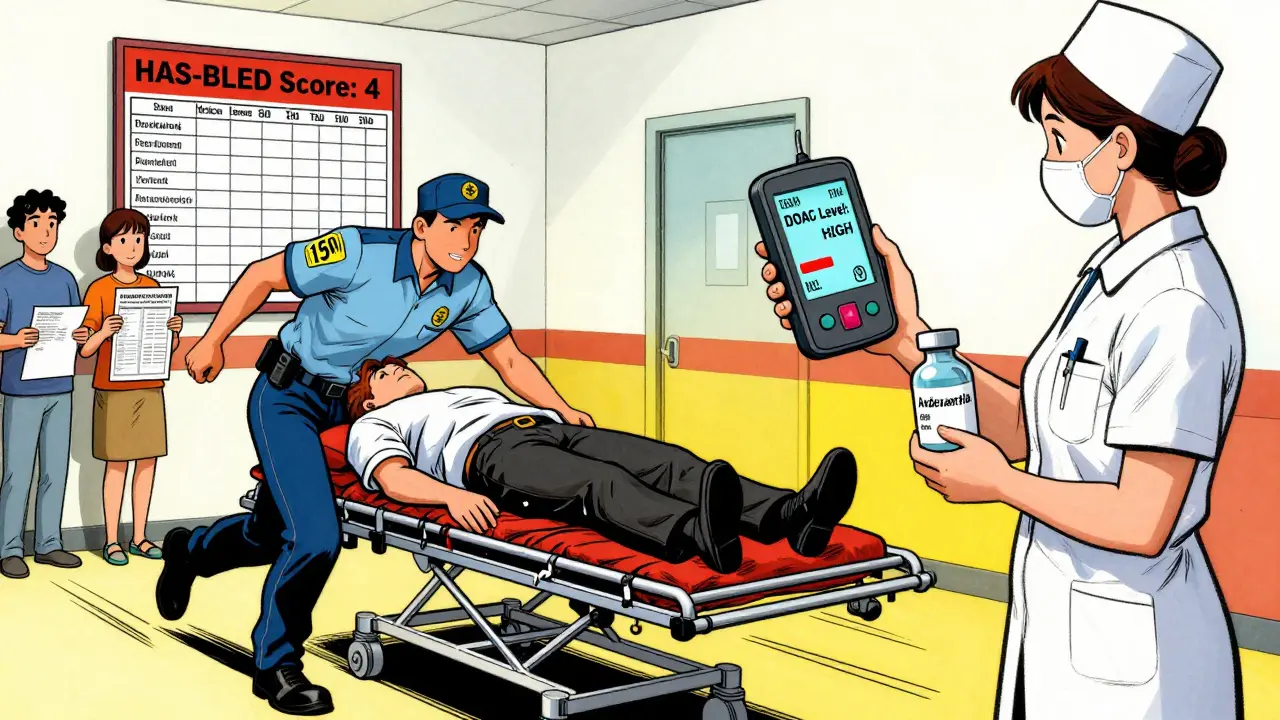
Doctors use the HAS-BLED score to predict risk. If your score is 3 or higher, you need extra monitoring - not just a prescription and a leaflet.
DOACs vs. warfarin: which is safer? It’s more complicated than you think
Many assume newer drugs like apixaban or rivaroxaban are automatically safer than warfarin. The data says otherwise - it depends on the person.
| Medication | Annual Major Bleeding Rate | Key Risk Factor |
|---|---|---|
| Warfarin | 3.09% | Requires frequent INR checks; too high = bleeding |
| Apixaban | 2.13% | Lowest bleeding risk among DOACs; preferred for GI history |
| Dabigatran | 3.11% | Higher GI bleed risk; reversal agent available |
| Rivaroxaban | 3.6% | Higher GI bleed risk; avoid if past stomach bleeding |
| Edoxaban | ~2.8% | Lower dose often used in elderly; risk rises with kidney issues |
Here’s what matters most: if you’ve had a stomach bleed before, apixaban cuts your chance of another by 31% compared to rivaroxaban. But if you have poor kidney function, even apixaban can be risky. Dosing isn’t one-size-fits-all. Rivaroxaban drops from 20mg to 15mg if your creatinine clearance is below 50. Many patients never get this adjusted.
The first 90 days are the most dangerous - and most preventable
Most patients are sent home after their first prescription with a leaflet. That’s not enough. The first three months are when bleeding risk peaks - and when patients are least prepared.
A 2024 study found that patients with blood levels of DOACs in the top 25% were 3.2 times more likely to bleed in those first 90 days. That’s not a fluke. It’s predictable. And now, there’s a tool to catch it.
In January 2024, the FDA approved the first point-of-care test that can measure DOAC levels in under 20 minutes - no lab needed. Clinics in the UK and US are starting to use it for patients over 75, those with kidney issues, or anyone who’s had a near-miss bleed. If your doctor hasn’t mentioned this, ask. It’s not experimental - it’s becoming standard.
And education works. A 2023 trial showed that patients who spent 20 minutes with their nurse going over bleeding symptoms had 34% fewer delayed emergency visits. That’s not just advice - it’s a life-saving conversation.
What to do if you’re bleeding - step by step
- Stop taking your anticoagulant - don’t wait for a doctor’s call. If you’re bleeding severely, pause the dose until you’re evaluated.
- Call emergency services immediately - don’t drive yourself. Even if you feel "okay," internal bleeding can worsen fast.
- Bring your medication list - include the name, dose, and when you last took it. This saves critical minutes.
- Know your reversal agents - if you’re on dabigatran, the antidote is idarucizumab. If you’re on rivaroxaban or apixaban, it’s andexanet alfa. These aren’t in every hospital - but they’re in all major A&E departments in the UK.
- Don’t take NSAIDs - no ibuprofen, aspirin, or naproxen. They make bleeding worse.
One patient in Bristol described it: "I had a nosebleed that lasted 45 minutes. I thought I’d just been too dry. When I got dizzy, I called 999. The ER staff said, 'Thank God you came in.' They gave me a reversal agent and a transfusion. I didn’t know any of this until I got there. I wish I’d known sooner."
What hospitals are doing differently now
The NHS updated its Anticoagulant Safety Checklist in 2023. Now, every patient starting anticoagulants gets:
- A HAS-BLED risk score (written on their prescription)
- A printed symptom checklist to take home
- Emergency contact info - not just a GP number, but a dedicated anticoagulation line
- For warfarin users: weekly INR checks for the first month, then biweekly until stable
And it’s working. In areas where this checklist is used, hospital admissions for anticoagulant bleeding dropped by 22% in 2024.
Reversal agents are still expensive - and not always available in rural clinics. But the NHS has started stockpiling idarucizumab and andexanet alfa in all major hospitals. The cost? Up to £10,000 per dose. But compared to the £50,000 average cost of an intracranial bleed? It’s a bargain.
What’s coming next? Safer drugs are on the horizon
By 2026, two new drugs - milvexian and asundexian - could change everything. In early trials, they prevented clots just as well as current anticoagulants, but with 20-25% less bleeding. They’re not available yet, but Phase III trials are well underway.
And a universal reversal agent called Ciraparantag is in late-stage testing. If approved, it could reverse all DOACs and even heparin with one injection. No more guessing which antidote to use. Just give it - and stop the bleed.
For now, the best tool you have is knowledge. Not fear. Not avoidance. Knowledge.
Frequently Asked Questions
Can I stop my anticoagulant if I’m bleeding?
Yes - if you’re having a severe bleed, pause your medication immediately. But don’t stop permanently without medical advice. The risk of a stroke or clot is often greater than the bleeding risk. Call emergency services first, then follow their instructions on whether to resume the drug.
Is it safe to take painkillers like paracetamol while on anticoagulants?
Paracetamol (acetaminophen) is generally safe at standard doses (up to 3,000mg per day). Avoid ibuprofen, aspirin, naproxen, or diclofenac - they increase bleeding risk. If you need regular pain relief, talk to your doctor about alternatives.
How often should I get blood tests if I’m on a DOAC?
Unlike warfarin, DOACs don’t require routine blood tests for most people. But if you’re over 75, have kidney problems, or have had a bleed before, your doctor may check your drug levels using a point-of-care test. This is now standard practice for high-risk patients.
What if I forget to take my anticoagulant and then bleed?
Don’t double up. If you miss a dose and then start bleeding, stop taking the medication and seek medical help. Taking two doses at once increases bleeding risk dramatically. Always follow the instructions on your prescription leaflet or ask your anticoagulation clinic for guidance.
Can I drink alcohol while on anticoagulants?
Moderate alcohol is usually okay - one drink a day for women, two for men. But heavy drinking increases bleeding risk and can interfere with how your body processes the drug. If you drink regularly, tell your doctor. They may adjust your dose or recommend more frequent monitoring.
Next steps: What you should do today
- If you’re on an anticoagulant, review your symptoms list - know what’s dangerous and what’s not.
- Ask your doctor for your HAS-BLED score. If it’s 3 or higher, ask about extra monitoring.
- Keep your medication list in your wallet or phone - include names, doses, and last taken time.
- If you’re over 75 or have kidney issues, ask if a DOAC level test is right for you.
- Share this information with a family member. Someone else might notice symptoms before you do.
Anticoagulants are powerful tools. They prevent strokes. They save lives. But they also carry real, measurable risks. The difference between a bad outcome and a full recovery often comes down to one thing: knowing what to do before it’s too late.


Kerry Howarth on 2 January 2026, AT 04:09 AM
Black stools? Call 999. No exceptions. This isn't a 'maybe' situation.