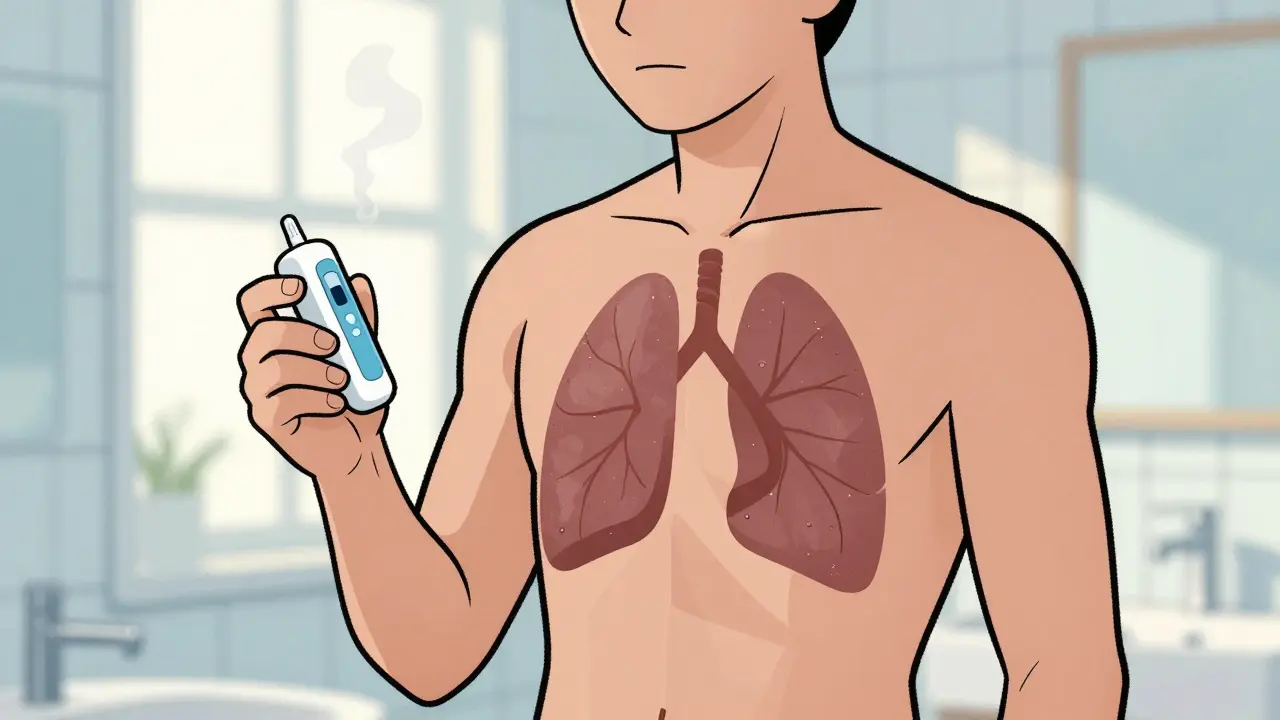
You feel fine. Your chest is clear, you aren't wheezing, and you can run up the stairs without gasping. Yet, deep inside your lungs, inflammation is building like a slow-burning fuse. This is the dangerous trap of asthma, a chronic respiratory condition where symptoms often lag behind physiological changes. Relying solely on how you feel can lead to severe attacks that catch you off guard. That is why doctors prescribe a small plastic device called a peak flow meter, a handheld tool that measures the maximum speed of your exhalation. It acts as an early warning system, detecting airflow obstruction 24 to 48 hours before you even notice a cough or shortness of breath.
Tracking your numbers isn't just busywork; it’s about taking control of your breathing. By understanding daily tracking protocols and threshold zones, you transform from a passive patient into an active manager of your health. You stop guessing whether you need your rescue inhaler and start knowing for sure. Let’s break down exactly how to use this tool effectively, establish your baseline, and interpret the results so you can stay safe and breathe easier.
Why Peak Flow Matters More Than Symptoms
Your body is tricky. Many people with asthma have what experts call "poor symptom perception." You might adapt to slightly lower lung function over time, thinking it’s normal, when in reality, your airways are narrowing significantly. A peak expiratory flow (PEF) measurement, which quantifies how fast you can push air out of your lungs, provides objective data that your feelings cannot. Think of it like a car’s temperature gauge. You might not smell burning rubber until the engine is already damaged, but the gauge warns you minutes before disaster strikes.
Clinical guidelines from organizations like the Global Initiative for Asthma (GINA) highlight that PEF monitoring is critical when spirometry (the more complex hospital test) isn't available for daily use. It helps identify early signs of exacerbations. Studies show that regular monitoring allows for proactive intervention. If your numbers drop, you can adjust medication before a full-blown attack forces you to the emergency room. This is especially vital for those with moderate to severe asthma or a history of sudden worsening.
Establishing Your Personal Best Value
Before you can track trends, you need a baseline. This is known as your "personal best." It is not a random number pulled from a chart based on your height and age. It is the highest number you can consistently achieve when your asthma is well-controlled. Establishing this correctly is the most important step in the process.
To find your personal best, follow this protocol:
- Timing: Measure twice a day-once in the morning and once in the evening-for two to three weeks.
- Condition: Do this when your asthma is stable and you are feeling good.
- Medication: Record values both before and after taking any quick-relief medicine during this period to see the full range.
- Selection: Look at all the numbers recorded during these two weeks. The highest value is your personal best.
Note that your personal best might be higher or lower than the "predicted" value found in medical tables. That doesn’t matter. Your personal best is unique to you. For children, this number will change as they grow, so it should be reevaluated every six to twelve months. Adults should revisit their personal best if their asthma severity changes significantly or after a major illness.
The Correct Technique for Accurate Readings
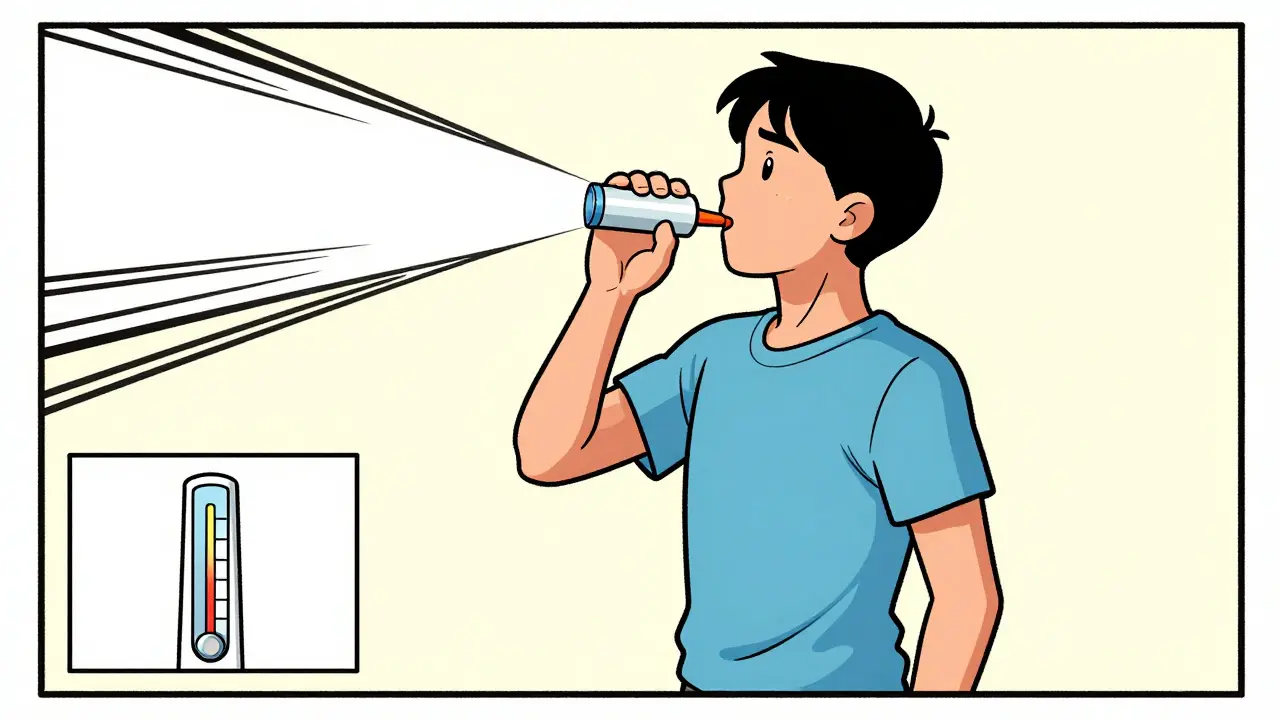
A peak flow meter is simple, but it requires effort. If you don’t blow hard enough, the reading is useless. Inconsistent technique leads to confusing data, making it impossible to spot real trends. Here is how to ensure every reading counts.
- Stand Up: Standing straight opens your diaphragm and allows for a fuller breath. Sitting or slouching restricts lung expansion.
- Reset the Indicator: Make sure the sliding marker on the side of the meter is at zero (the bottom).
- Take a Deep Breath: Inhale fully, filling your lungs completely.
- Seal Your Lips: Place the mouthpiece in your mouth and close your lips tightly around it. Do not block the hole with your tongue.
- Blow Hard and Fast: Exhale as forcefully and quickly as possible. Imagine you are trying to fog up a mirror in one second. It should be a sharp burst, not a long sigh.
- Repeat Three Times: Take three separate readings. Wait a few seconds between each to take another deep breath.
- Record the Highest: Write down the highest of the three numbers. All three should be relatively close to each other. If one is much lower, you likely didn’t seal your lips properly or didn’t give maximum effort.
Consistency is key. Use the same meter every time. Different meters can vary slightly in calibration. Bring your specific device to doctor appointments so they can watch your technique and verify accuracy.
Daily Tracking Protocols and Timing
When should you measure? Lung function naturally fluctuates throughout the day due to circadian rhythms. Most people have lower peak flow values in the early morning and higher values in the afternoon. To account for this, timing must be rigid.
Authoritative sources recommend measuring at the same times every day. Ideally, check your peak flow between 7:00 AM and 9:00 AM, and again between 6:00 PM and 8:00 PM. This captures the natural dip and peak of your daily cycle. If you miss a window, try to get back on schedule the next day rather than measuring randomly.
How often you track depends on your asthma severity:
- Mild/Stable Asthma: You may only need to measure two to three times a week, or only when you sense symptoms starting.
- Moderate/Severe Asthma: Twice-daily monitoring is standard. Some severe cases require eight weeks of continuous twice-daily tracking to establish reliable patterns.
- During Illness: Increase frequency to every four hours if you are sick or experiencing symptoms.
Keep a diary. Whether it’s a paper logbook or a calendar app on your phone, write down every score. Without a record, a single number means nothing. Trends reveal the truth.
Understanding the Traffic Light Threshold Zones
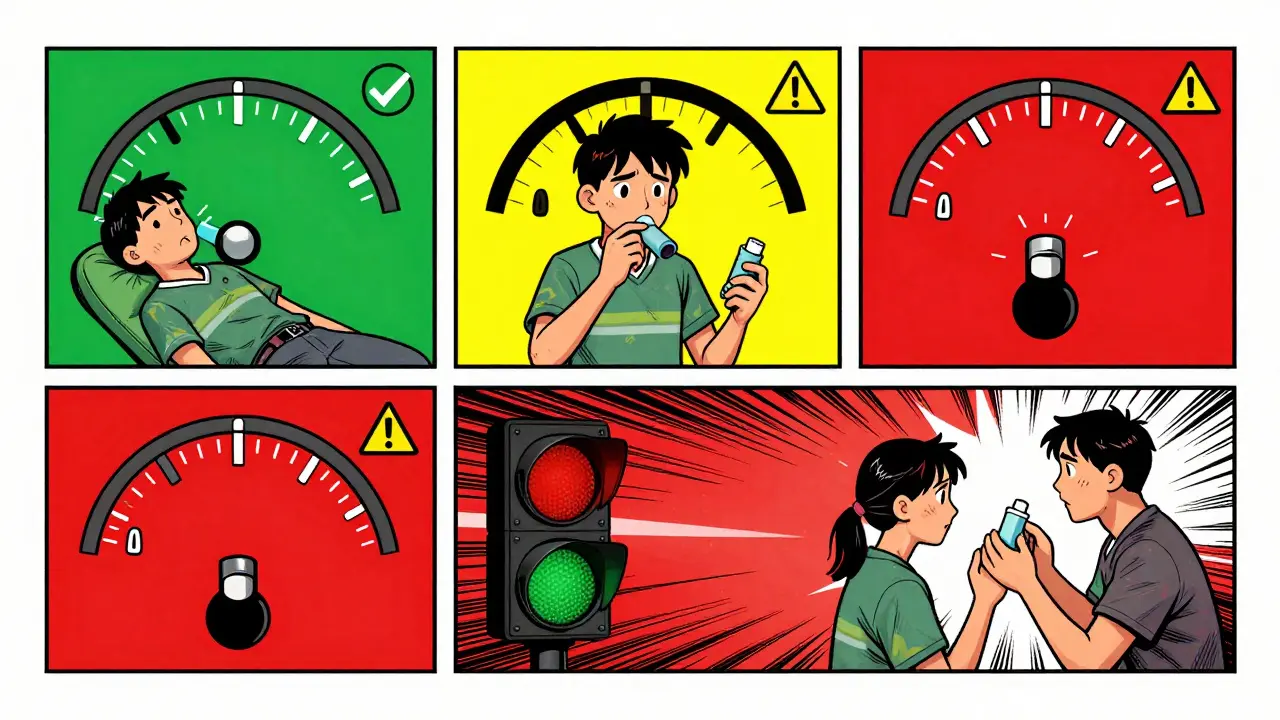
This is where the data becomes actionable. Your asthma action plan uses a color-coded system based on percentages of your personal best. These thresholds help you decide whether to relax, adjust medication, or seek emergency care.
| Zone Color | Percentage of Personal Best | Status | Action Required |
|---|---|---|---|
| Green | 80% - 100% | Good Control | Continue current maintenance meds. No action needed unless symptoms arise. |
| Yellow | 50% - 80% | Caution | Asthma is getting worse. Take quick-relief medication. Monitor closely. Contact doctor if no improvement. |
| Red | Below 50% | Medical Alert | Emergency. Take quick-relief med immediately. Call doctor or go to ER if no rapid improvement. |
The Green Zone (80-100%): This is your target. You should aim to keep your numbers here. If you are in the green but still having symptoms, talk to your doctor. Your personal best might need recalibration, or your underlying inflammation needs stronger treatment.
The Yellow Zone (50-80%): This is the danger zone that catches people off guard. A drop of 20-30 percent from your personal best often signals the start of an asthma episode. Don’t ignore it. Follow your action plan: usually, this means using your rescue inhaler and increasing monitoring frequency. If you stay in the yellow zone despite medication, your asthma is not controlled, and you need medical advice.
The Red Zone (Below 50%): This indicates severe airflow limitation. Breathing becomes difficult, and oxygen levels may drop. This is a medical emergency. Do not wait to see if it gets better. Seek immediate help.
Integrating Peak Flow into Your Lifestyle
Using a peak flow meter shouldn’t feel like a chore. Integrate it into existing habits. Check your morning reading while brushing your teeth. Check your evening reading while watching TV or winding down. Pairing it with a routine ensures consistency.
Be aware of factors that can temporarily skew results. Heavy meals, extreme exercise, or emotional stress can affect breathing mechanics. While these don’t invalidate the reading, they provide context. If your number is low after running a marathon, it might be fatigue. If it’s low on a calm Tuesday morning, it’s likely asthma-related inflammation.
Remember, peak flow monitoring is a complementary tool. It does not replace spirometry or professional medical advice. However, for daily management, it offers unparalleled insight. It empowers you to act early, reducing hospital visits and improving your quality of life. By mastering your personal best and respecting the traffic light zones, you turn invisible threats into manageable numbers.
How often should I check my peak flow if my asthma is mild?
If your asthma is mild and well-controlled, you may only need to measure your peak flow two to three times a week, or specifically when you notice symptoms developing. However, always follow the specific advice given by your healthcare provider, as individual needs vary.
What should I do if my peak flow reading is in the yellow zone?
A yellow zone reading (50-80% of your personal best) indicates caution. You should take your quick-relief medication as prescribed in your asthma action plan. Monitor your peak flow more frequently that day. If your numbers do not improve or move back into the green zone, contact your doctor for further guidance.
Can I use different peak flow meters interchangeably?
No, you should use the same peak flow meter every time. Different devices can have slight variations in calibration, leading to inconsistent readings. Using one specific meter ensures that your comparisons are accurate and reliable over time.
Why are my morning peak flow readings always lower than my evening ones?
This is normal due to circadian rhythms. Lung function naturally dips in the early morning hours and peaks in the late afternoon or early evening. Consistent timing of measurements helps account for this natural variation, allowing you to track true trends in your asthma control.
How do I determine my personal best peak flow number?
To find your personal best, measure your peak flow twice daily for two to three weeks when your asthma is well-controlled. Record all values. The highest number achieved during this period becomes your personal best. This baseline is used to calculate your green, yellow, and red zones.
Is peak flow monitoring necessary if I don't have symptoms?
Yes, especially if you have moderate to severe asthma or poor symptom perception. Peak flow can detect airflow obstruction 24-48 hours before symptoms appear. Regular monitoring allows for early intervention, preventing severe attacks even when you feel fine.
What is the correct technique for blowing into a peak flow meter?
Stand up, reset the indicator to zero, take a deep breath, seal your lips around the mouthpiece, and blow out as hard and fast as possible in one sharp burst. Repeat this three times and record the highest of the three numbers to ensure accuracy.
When should I seek emergency help based on peak flow readings?
Seek immediate medical attention if your peak flow reading falls into the red zone, which is below 50% of your personal best. This indicates severe airflow limitation. Take your quick-relief medication immediately and call emergency services if there is no rapid improvement.