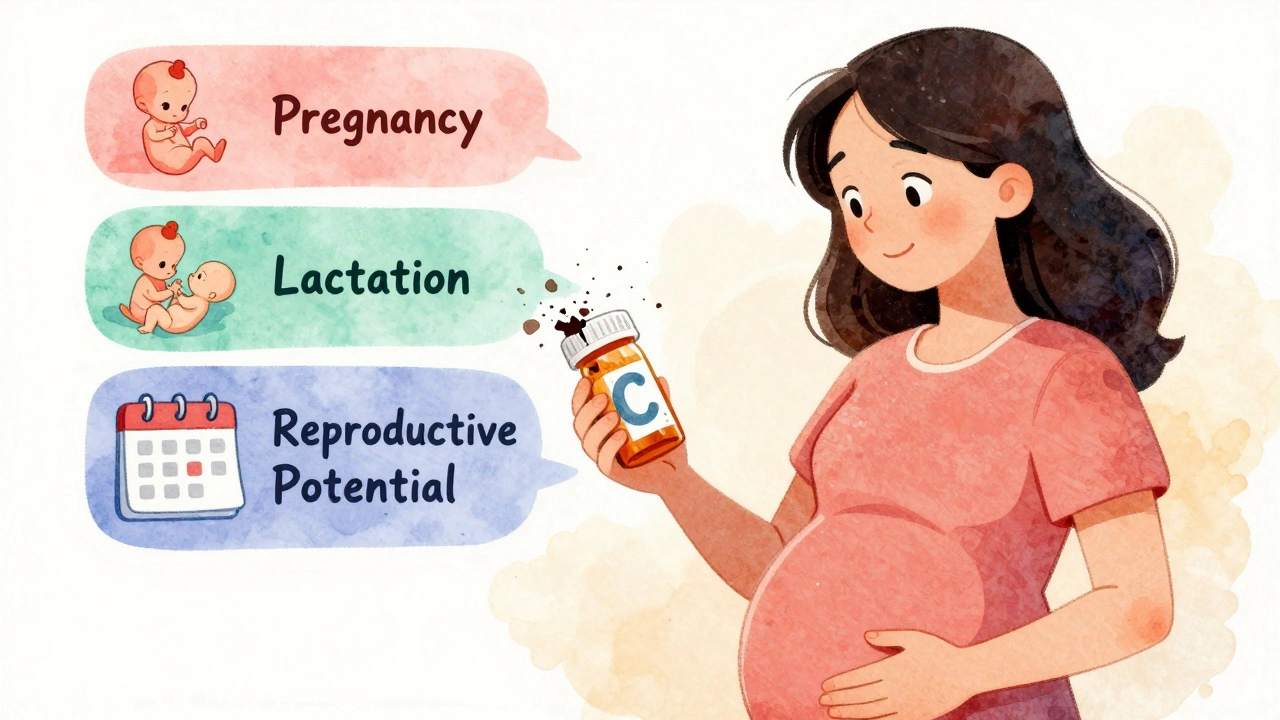
For years, if you saw a drug labeled with a letter like C or D on its pregnancy warning, you might have assumed it meant ‘safe’ or ‘dangerous.’ But that system is gone. Since 2015, the FDA replaced those simple letters with detailed, narrative labels that give real context - not just a grade. If you’re pregnant, breastfeeding, or helping someone who is, understanding these new labels isn’t optional. It’s essential.
What Changed with Pregnancy and Lactation Labels?
The old system used five letters: A, B, C, D, and X. A meant low risk. X meant don’t use. But here’s the problem - most drugs fell into C, which meant ‘risk can’t be ruled out.’ That didn’t tell you anything useful. Was the risk 1 in 1,000? Or 1 in 10? Was it only in the first trimester? The letter didn’t say. And many people thought C meant ‘probably safe,’ when it really meant ‘we don’t know enough.’
The Pregnancy and Lactation Labeling Rule (PLLR), rolled out in 2015, got rid of the letters. Now, every prescription drug label has three clear sections under ‘Use in Specific Populations’: Pregnancy (8.1), Lactation (8.2), and Females and Males of Reproductive Potential (8.3). Each one follows the same format: Risk Summary, Clinical Considerations, and Data. No more guessing. Just facts - if you know how to read them.
How to Read the Pregnancy Section (8.1)
Start with the Risk Summary. This isn’t a vague warning. It gives you numbers. For example: ‘The background risk of major birth defects in the U.S. general population is 2-4%. Exposure to this drug during the first trimester is associated with a 1.5-fold increased risk of neural tube defects.’ That means if the normal chance is 3%, now it’s about 4.5%. Not zero risk - but not catastrophic either.
Look for timing. Does the risk happen only in the first trimester? Or does it continue through the third? Some drugs are only risky early on. Others build up over time. The label will say: ‘Increased risk observed with exposure after 20 weeks gestation.’ That’s critical for planning care.
The Clinical Considerations section tells you what to do. It might say: ‘Monitor fetal growth every 4 weeks if used beyond 20 weeks.’ Or: ‘Consider switching to a safer alternative during the first trimester.’ These aren’t suggestions - they’re clinical guidance based on real data.
The Data section is for the details: how many women were studied? Was it a randomized trial? Or just observations from medical records? Was the group diverse? Many labels still lack data from Black, Hispanic, or Indigenous populations - a known gap. But now, at least you can see the limitations.
Understanding Lactation Labeling (8.2)
Many mothers assume if a drug is safe in pregnancy, it’s safe while breastfeeding. Not always. The Lactation section answers three key questions: How much gets into breast milk? What’s the baby exposed to? And are there any known side effects?
Look for numbers like: ‘Infant exposure is approximately 7% of the maternal weight-adjusted dose.’ That’s low. Or: ‘Peak milk concentration occurs 2 hours after maternal dose.’ That helps you time feedings.
The section also tells you if the drug has been linked to infant issues - like drowsiness, poor feeding, or changes in heart rate. For example, some antidepressants show no effect in breastfed babies. Others might cause mild fussiness. The label will say exactly what’s been observed.
And yes - it includes whether there’s a pregnancy exposure registry. These registries track outcomes for women who take certain drugs during pregnancy or while breastfeeding. If a drug has one, it means the manufacturer is actively collecting real-world data. That’s a good sign they’re committed to safety.
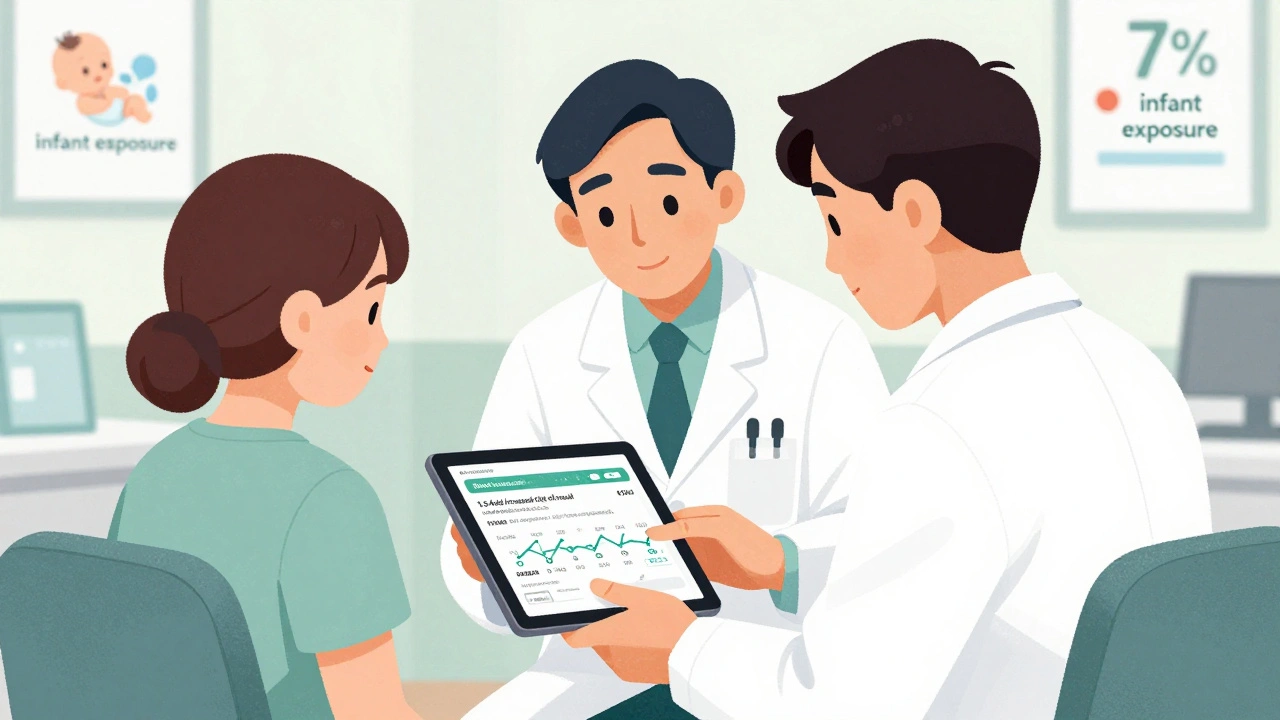
What About Fertility and Contraception? (8.3)
This section is often overlooked. But if you’re a woman of childbearing age, it matters. It tells you: Do you need a pregnancy test before starting? How effective does your birth control need to be? And what if you get pregnant while taking it?
For example, some acne or epilepsy drugs require two forms of contraception because the risk to a fetus is so high. The label will say: ‘Use a method with a failure rate of less than 1% per year.’ That means an IUD or implant - not just the pill.
It also tells you if the drug affects fertility - for women or men. Some chemotherapy drugs can reduce sperm count. Others may delay ovulation. This isn’t just about pregnancy - it’s about planning your future.
Why This Matters More Than You Think
Before the PLLR, 68% of doctors and patients misinterpreted the letter categories. Many thought a ‘C’ meant ‘safe enough.’ Now, with the new labels, misinterpretation dropped to 31%. That’s a huge win.
But here’s the catch: the new labels are longer. A typical pregnancy section now has 300-500 extra words. That’s a lot to read during a 15-minute appointment. That’s why many providers now use tools like MotherToBaby or TERIS - free, expert-reviewed databases that summarize the info in plain language.
Pharmacists report that since 2015, patients ask more questions. And they’re right to. A 2021 survey found 78% of pharmacists now spend 5-7 extra minutes counseling on pregnancy and breastfeeding risks. That’s time well spent.
What to Do If the Label Is Confusing
Don’t panic. Don’t stop your medication without talking to your provider. But do ask:
- ‘What’s the actual risk to the baby - not just a letter?’
- ‘Is this risk only in the first trimester, or all the way through?’
- ‘Are there safer alternatives that work just as well?’
- ‘Is there a pregnancy registry for this drug? Can I join?’
- ‘What’s the infant exposure percentage if I’m breastfeeding?’
Use the FDA’s free PLLR Navigator app. It lets you search any drug and pull up the exact labeling. Or call MotherToBaby at 1-866-626-6847. They’re staffed by specialists who explain this stuff every day.
What’s Coming Next?
The FDA is working on visual icons to go with the text - like a small symbol that shows risk level at a glance. That’s coming soon. Also, by 2025, all pregnancy-related labels will be fully updated. Right now, about 78% of U.S. prescription drugs have the new format. The rest are catching up.
One big gap? Data from diverse populations. Only 15% of women in pregnancy registries are Black or Hispanic - even though they make up 30% of U.S. pregnancies. That’s changing slowly, but you should know: if you’re from an underrepresented group, the data might not fully reflect your risk.
The bottom line: the new system is better. It’s more honest. It gives you real numbers, not labels. But it asks more of you - and your provider. Be ready to ask questions. Be ready to dig a little deeper. Because when it comes to your body and your baby, vague warnings aren’t enough anymore.
What do the old pregnancy letter categories (A, B, C, D, X) mean now?
They’re no longer used. The FDA removed them in 2015 under the Pregnancy and Lactation Labeling Rule (PLLR). You may still see them on older packaging or in old resources, but all new and updated drug labels use narrative descriptions instead. The letter system was misleading because it oversimplified complex risks. Today, labels explain actual risks with numbers, timing, and context - not a single letter.
Is a drug labeled ‘no known risk’ during pregnancy really safe?
Very few drugs have zero known risk. Even drugs labeled ‘no increased risk above background’ are based on available data - not proof of safety. Background risk means about 3% of all babies are born with a birth defect, no matter what the mother takes. A drug that says ‘no increased risk’ means studies didn’t find it raises that number above 3-4%. That’s reassuring, but not absolute. Always check the Data section for study size and limitations.
Can I trust the lactation section if I’m breastfeeding?
Yes - but read it carefully. The lactation section gives you drug levels in breast milk as a percentage of the mother’s dose. If it says ‘infant exposure is less than 10% of maternal dose,’ that’s generally considered low risk. But it also tells you if there are known infant side effects - like drowsiness or poor weight gain. If the label says ‘no adverse effects reported in 100+ breastfed infants,’ that’s strong evidence. If it says ‘limited data,’ then you may need to monitor your baby closely or consult a specialist.
What if my drug doesn’t have updated labeling yet?
About 22% of U.S. prescription drugs still have the old letter categories. This mostly applies to older generic drugs or those approved before 2001. In those cases, don’t assume the letter is accurate. Use trusted resources like MotherToBaby, TERIS, or LactMed (a free NIH database). Your provider can also request the most current data from the manufacturer. Never rely solely on an outdated label.
How do I know if a pregnancy registry is trustworthy?
If a drug has a pregnancy registry listed in its labeling, it’s regulated by the FDA and follows strict data collection standards. These registries are run by drug manufacturers or academic institutions with FDA oversight. Participation is voluntary, but the data is used to update safety labels. You can find registry details in the Pregnancy section under ‘Active Pregnancy Exposure Registry.’ Many are free to join and offer follow-up support. Joining helps future patients - and gives you access to expert guidance.


David Palmer on 11 December 2025, AT 03:33 AM
So you're telling me the FDA just swapped letters for paragraphs? Cool. Now I gotta read a novel just to figure out if my antidepressant will turn my baby into a lizard. Thanks, bureaucracy.