Medication-Induced Hiccup Risk Checker
Check if your medications may be causing your hiccups. Based on clinical studies, certain medications are known to trigger hiccups. This tool estimates your risk based on the medications you take.
Select Your Current Medications
Most people think of hiccups as a silly, short-lived annoyance - something that happens after eating too fast or drinking carbonated soda. But when hiccups stick around for days or weeks, they’re not funny anymore. They can wreck sleep, make eating impossible, and leave you drained. And surprisingly, one of the most common causes isn’t food or stress - it’s medication.
Every year, thousands of people experience hiccups that last longer than 48 hours, and about 5 to 10% of those cases are directly linked to drugs they’re taking. It’s not rare. It’s not unusual. It’s underreported. Many patients suffer for days because no one connects the dots between their new prescription and the relentless hic-hic-hic.
How Medications Cause Hiccups
Hiccups aren’t random. They’re a reflex. A signal travels from your brainstem, down the phrenic nerve, and makes your diaphragm jerk. Then your vocal cords snap shut - hic. Medications mess with this pathway in three main ways.
- Direct nerve irritation: Some drugs irritate the vagus or phrenic nerves. This tricks your brain into thinking your diaphragm is being stretched, even when it’s not.
- Neurotransmitter disruption: Drugs that affect dopamine, GABA, or serotonin can trigger the hiccup center in your brainstem. Corticosteroids like dexamethasone are especially good at this.
- Gastric distension: Opioids slow digestion. Stomach bloating from delayed emptying can pull on the diaphragm and set off hiccups.
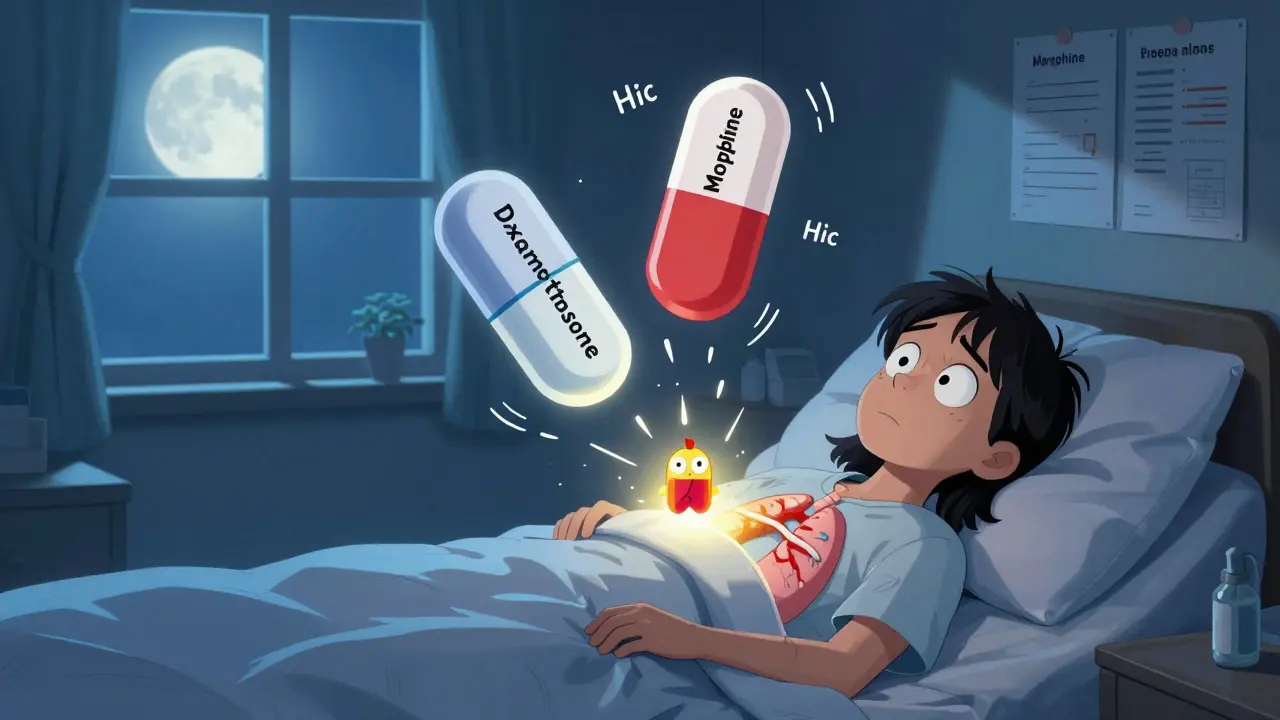
It’s not just one drug. It’s a whole group. Dexamethasone - often given with chemotherapy - causes hiccups in over 40% of patients in some studies. Benzodiazepines like midazolam, used before surgery, trigger them in 8-12% of people. Even common painkillers like morphine can do it in 5-7% of chronic pain users.
Top Medications That Cause Hiccups
Not all drugs are equal when it comes to hiccups. Some are far more likely to trigger them than others. Here’s what the data shows:
| Medication Class | Example Drugs | Estimated Incidence | Typical Dose Linked |
|---|---|---|---|
| Corticosteroids | Dexamethasone, Prednisone | 41.2% (with cisplatin) | 4-8 mg daily |
| Benzodiazepines | Midazolam, Lorazepam | 8-12% | Surgical doses |
| Opioids | Morphine, Oxycodone | 5-7% | Chronic use |
| Chemotherapy Agents | Cisplatin | 20-30% | 50-100 mg/m² |
| Antibiotics | Azithromycin, Moxifloxacin | 0.5-2% | Standard doses |
Dexamethasone stands out. When combined with cisplatin (a common chemo drug), nearly half of patients get hiccups. In one 2012 study, 97% of those affected were men. Why? No one’s sure. But the pattern is clear.
Even drugs you wouldn’t expect can do it. A 2023 case report documented hiccups starting after a single dose of moxifloxacin - an antibiotic usually considered safe. The takeaway? If a new drug started right before the hiccups began, it’s worth considering.
Why This Gets Missed
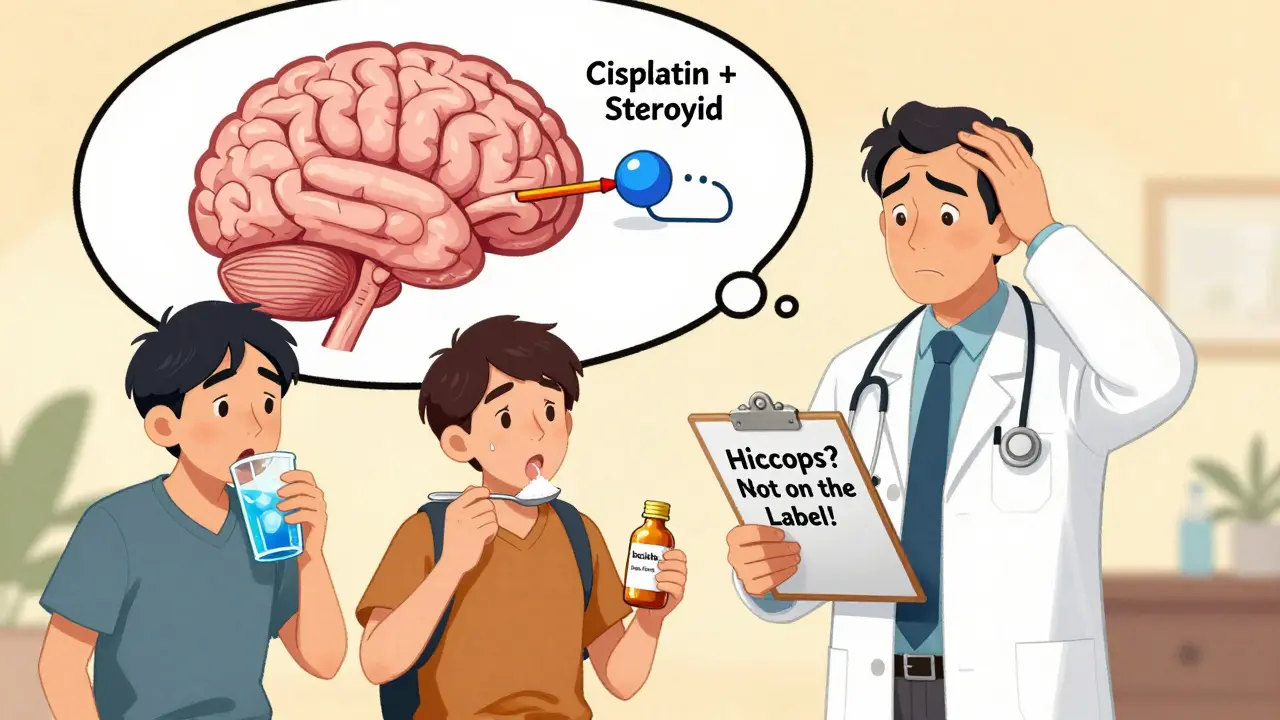
Here’s the frustrating part: most drug labels don’t list hiccups as a side effect. If you look at the package insert for dexamethasone, you’ll see nausea, insomnia, mood changes - but not hiccups. Not until 2021 did the FDA update its label to include it as a "clinically significant adverse reaction."
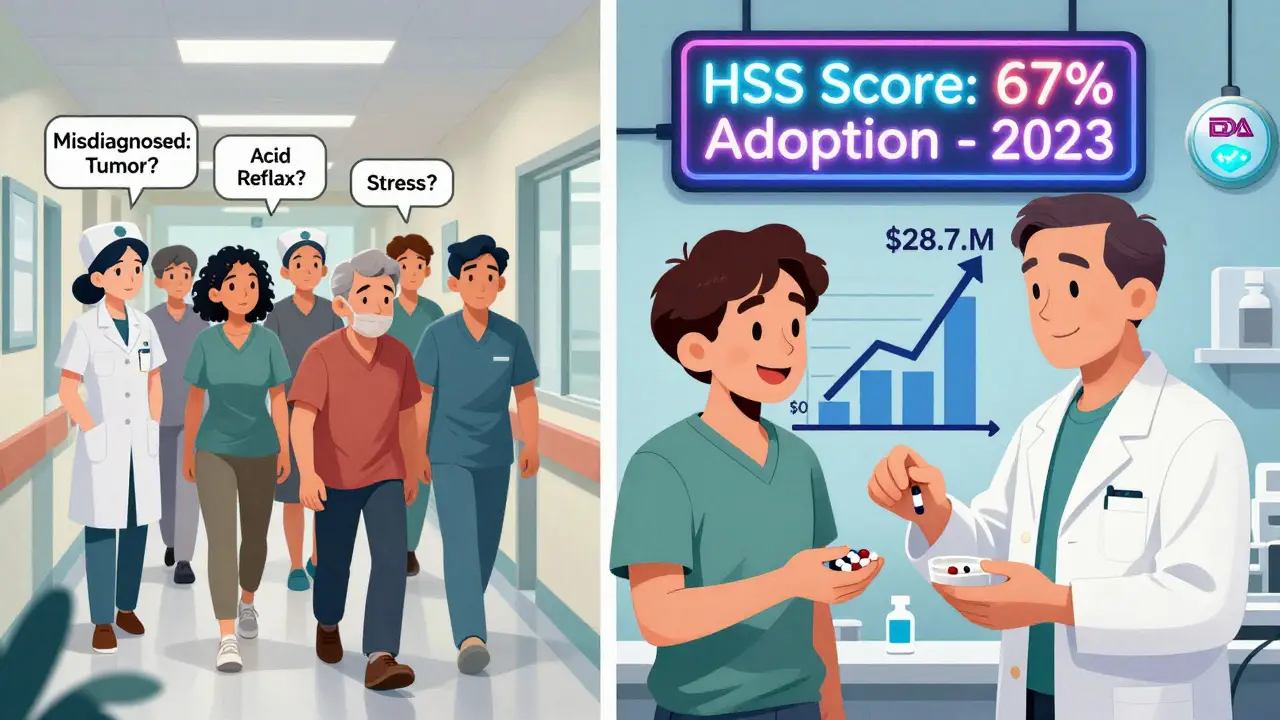
That means doctors often miss it. A 2019 study found that 35% of patients with medication-induced hiccups were misdiagnosed. One man was sent for brain scans because his doctors thought he had a tumor. Another woman was told she had acid reflux - even though she wasn’t having heartburn.
Patients themselves often don’t connect the dots. On Reddit, someone wrote: "My hiccups lasted 72 hours after my dexamethasone dose. No one asked if I’d started a new drug." That’s not unusual. Hiccups aren’t on the radar.
What to Do When Hiccups Won’t Stop
If you’ve had hiccups for more than 48 hours and started a new medication, don’t wait. Talk to your doctor. Here’s what works - and what doesn’t.
First, Try These Non-Drug Fixes
Before you reach for more pills, try these simple, evidence-backed tricks:
- Swallow a teaspoon of granulated sugar - this works in 72% of cases. It’s thought to stimulate the vagus nerve and reset the reflex.
- Gargle ice water - the cold shock to your throat can interrupt the signal. Success rate: 65%.
- Hold your breath - take a deep breath, hold it for 10-15 seconds, then exhale slowly. Repeat 3 times. Works for 58% of people.
These aren’t myths. A 2021 study in JAMA Internal Medicine confirmed sugar’s effectiveness. One woman in the study said: "I’d had hiccups for 10 days. One spoon of sugar - gone in 30 seconds."
When You Need Medication
If the hiccups persist, your doctor may recommend one of these:
- Baclofen - a muscle relaxant that acts on GABA-B receptors. It’s now the go-to first-line drug. Studies show 60-70% success with doses of 5mg three times a day. It’s especially effective for steroid-induced hiccups.
- Chlorpromazine - the only FDA-approved drug for hiccups (brand name Thorazine). But it has serious side effects: drowsiness, low blood pressure, tremors. Used only when others fail.
- Prophylactic baclofen - for cancer patients on dexamethasone + cisplatin, taking 5mg twice daily before treatment cuts hiccup risk from 41% to under 13%.
A 2023 FDA breakthrough designation was given to a new GABA-B agonist called GBX-204. Phase 3 trials showed 82% of patients stopped hiccuping within days. It’s not available yet - but it’s coming.
Real Stories, Real Impact
On Drugs.com, dexamethasone has a 2.3 out of 5 rating - mostly because of hiccups. One review says: "I couldn’t sleep for three nights. My wife said I sounded like a broken record."
Another patient on Patient.info wrote: "Switching from dexamethasone to ondansetron stopped my hiccups in two hours. My doctor didn’t even know the two were connected."
And then there’s the Amazon review: "$5 bottle of chlorpromazine stopped 11 days of hiccups after prednisone." That’s the power of knowing what to do.
What’s Changing Now
Things are improving. In January 2024, the American Medical Association gave medication-induced hiccups its own ICD-10 code: R09.2-MIH. That means doctors can now track it properly. Insurance claims, research, and drug safety reports will finally reflect how common this really is.
The FDA and EMA now require hiccup data for all new corticosteroids and CNS drugs. Cancer centers are using a new tool called the Hiccup Symptom Score (HSS) to rate severity - up from 12% adoption in 2019 to 67% in 2023.
And the economic impact? A 2022 analysis estimated that better management of medication-induced hiccups could save the U.S. healthcare system $28.7 million a year - by cutting unnecessary scans, ER visits, and hospital stays.
When to Worry
Hiccups that last less than 48 hours? Usually harmless. But if they:
- Last longer than 2 days
- Start right after a new drug
- Make it hard to eat, sleep, or breathe
- Are accompanied by weight loss or fatigue
- then it’s time to investigate. Don’t assume it’s just "bad luck." Ask: "What did I start taking?" And if your doctor brushes it off, ask again.
Can over-the-counter remedies help with medication-induced hiccups?
Yes - but only for short-term relief. Swallowing sugar, gargling ice water, or holding your breath can interrupt the reflex. But if the hiccups are caused by a drug, these won’t fix the root problem. They just buy you time until you can adjust your medication.
Why do some people get hiccups from dexamethasone and others don’t?
It’s not fully understood. Genetics, age, gender, and other medications likely play a role. One study found 97% of dexamethasone-induced hiccup cases were male - but we don’t know why. Some people’s nervous systems are more sensitive to the drug’s effect on dopamine and GABA pathways.
Can stopping the drug stop the hiccups?
Often, yes - but not always. If the drug was taken for a short time, hiccups usually stop within hours or days after stopping. But if the drug was used for weeks, the nervous system may have adapted. In those cases, baclofen or chlorpromazine may be needed to reset the reflex.
Are hiccups from medication dangerous?
Not directly - but they can lead to serious problems. Long-lasting hiccups can cause dehydration, weight loss, exhaustion, and even rib fractures from constant spasms. In cancer patients, they can interfere with treatment. If hiccups last more than 48 hours, they’re not just annoying - they’re a medical signal.
Is there a way to prevent medication-induced hiccups?
Yes - for high-risk cases. If you’re on dexamethasone with cisplatin, your oncologist can prescribe baclofen (5mg twice daily) before treatment. Studies show this cuts hiccup risk from over 40% to under 13%. It’s not routine yet - but it should be.
Medication-induced hiccups aren’t a curiosity. They’re a real, documented, and often preventable side effect. If you’re stuck in a cycle of hiccups and you’re on a new drug - don’t suffer in silence. Ask the question. You might just save yourself weeks of sleepless nights.