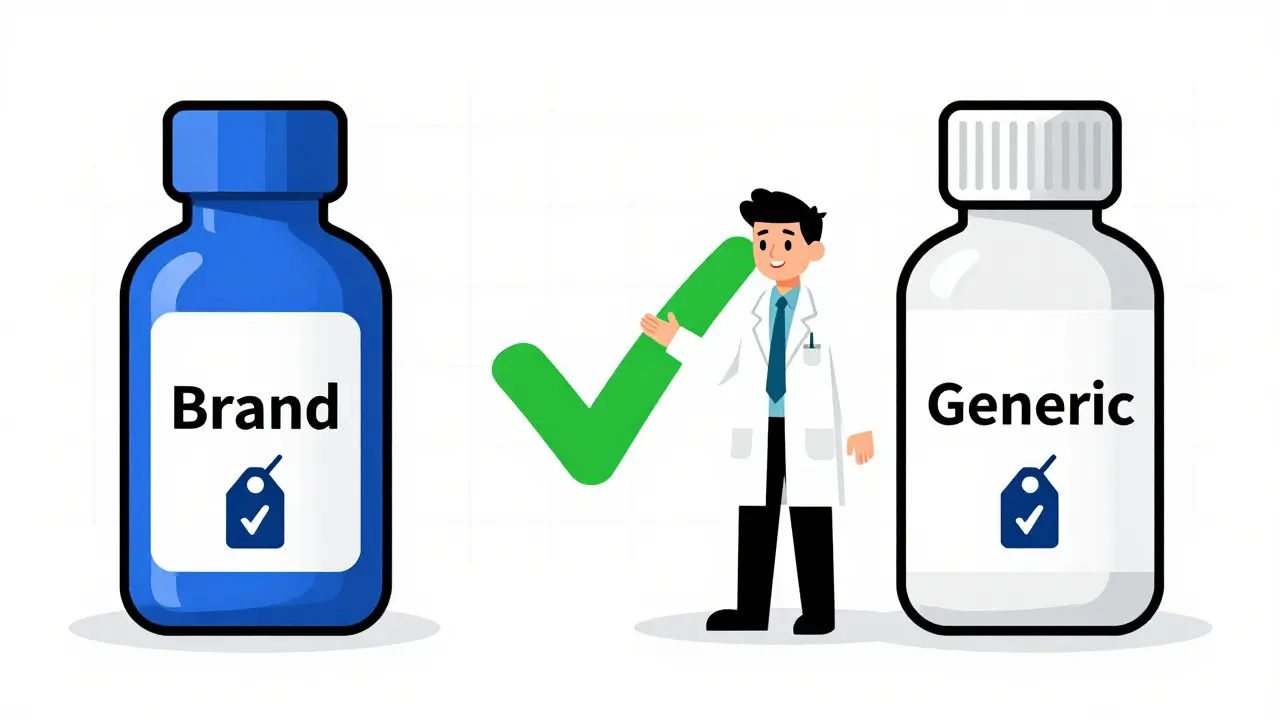
Have you ever picked up a prescription, looked at the bottle, and noticed it wasn't the exact brand your doctor wrote down? You might have wondered if this "generic" version is just as good. The answer lies in a term that sounds scientific but affects almost every patient: bioequivalence. It’s not just a buzzword used by pharmacists to justify lower prices. It is a rigorous legal and scientific standard designed to ensure that when you switch from a brand-name drug to a generic one, your body reacts in the same way.
Understanding what bioequivalence really means can help you feel more confident about your medication choices. It bridges the gap between the chemistry of a pill and how it actually works inside your bloodstream. Let's break down the science, the regulations, and the real-world implications without the jargon.
The Science Behind Bioequivalence
To understand bioequivalence, we first need to look at what happens when you swallow a pill. The active ingredient-the chemical that fights the infection or lowers the blood pressure-is only part of the story. How fast that ingredient dissolves, how quickly it enters your bloodstream, and how long it stays there are equally important. This process is called pharmacokinetics.
Bioequivalence is a precise pharmacokinetic measure defined by regulatory agencies to assess whether two drug formulations perform similarly in the human body. According to the U.S. Food and Drug Administration (FDA), two products are bioequivalent if there is no significant difference in the rate and extent to which the active ingredient becomes available at the site of action. In simpler terms, does the generic drug hit your system at the same speed and reach the same concentration as the brand-name drug?
This concept was formalized with the passage of the Drug Price Competition and Patent Term Restoration Act of 1984, commonly known as the Hatch-Waxman Act. This legislation created the modern pathway for approving generic drugs in the United States. Before this act, proving a new drug worked required massive, expensive clinical trials involving thousands of patients. Bioequivalence allows manufacturers to skip those large-scale efficacy trials because they are using an already-proven active ingredient. Instead, they prove that their version delivers the ingredient just as effectively as the original.
The World Health Organization (WHO) defines it similarly, focusing on the similarity of bioavailabilities in terms of rate and extent of absorption. When these metrics are similar enough, we can expect the therapeutic effects to be essentially the same. This doesn't mean the pills are chemically identical in every single component-inactive ingredients like fillers and dyes may differ-but their performance in your body is statistically indistinguishable.
How Regulators Measure Equivalence
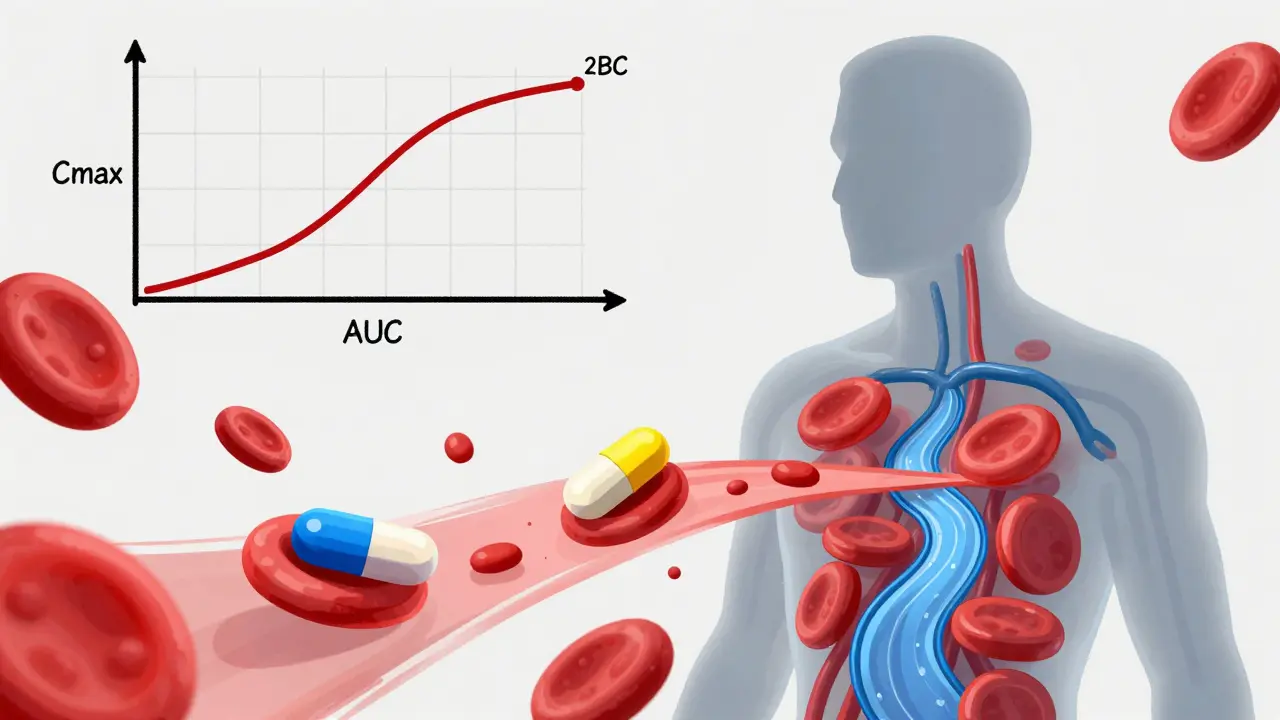
You might wonder how regulators decide if two drugs are equivalent. They don't guess; they use specific mathematical boundaries. The key metrics measured in human studies are:
- Cmax (Maximum Plasma Concentration): The highest level of the drug in your blood.
- tmax (Time to Reach Maximum Concentration): How long it takes to hit that peak.
- AUC (Area Under the Curve): A measure of total drug exposure over time, representing how much of the drug your body absorbs overall.
The FDA requires that for two products to be considered bioequivalent, the 90% confidence interval of the relative mean Cmax and AUC of the generic formulation compared to the brand-name reference must fall within 80% to 125%. This range often confuses people. Why allow a 20% difference? It isn't arbitrary. Statistically, this range ensures that any variation is unlikely to be clinically significant for most medications. If a generic drug delivered only 75% of the active ingredient, it might fail to treat your condition. If it delivered 130%, it could cause side effects. The 80-125% window keeps the drug safe and effective.
| Parameter | What It Measures | Why It Matters |
|---|---|---|
| Cmax | Peak drug level in blood | Ensures the drug reaches effective levels quickly enough to work. |
| tmax | Time to reach peak level | Indicates how fast the drug starts working after ingestion. |
| AUC | Total drug exposure over time | Confirms the body absorbs the correct total amount of medication. |
These studies typically involve 24 to 36 healthy volunteers who take both the brand-name and generic versions under controlled conditions. For most drugs, this is done under fasting conditions. However, for certain complex products, additional testing may be required.
Narrow Therapeutic Index Drugs: The Exception
While the 80-125% rule works for the vast majority of medications, some drugs are less forgiving. These are known as Narrow Therapeutic Index (NTI) drugs. With NTI drugs, the difference between a dose that helps you and a dose that harms you is very small. Examples include levothyroxine (for thyroid issues), warfarin (a blood thinner), and certain antiepileptic drugs.
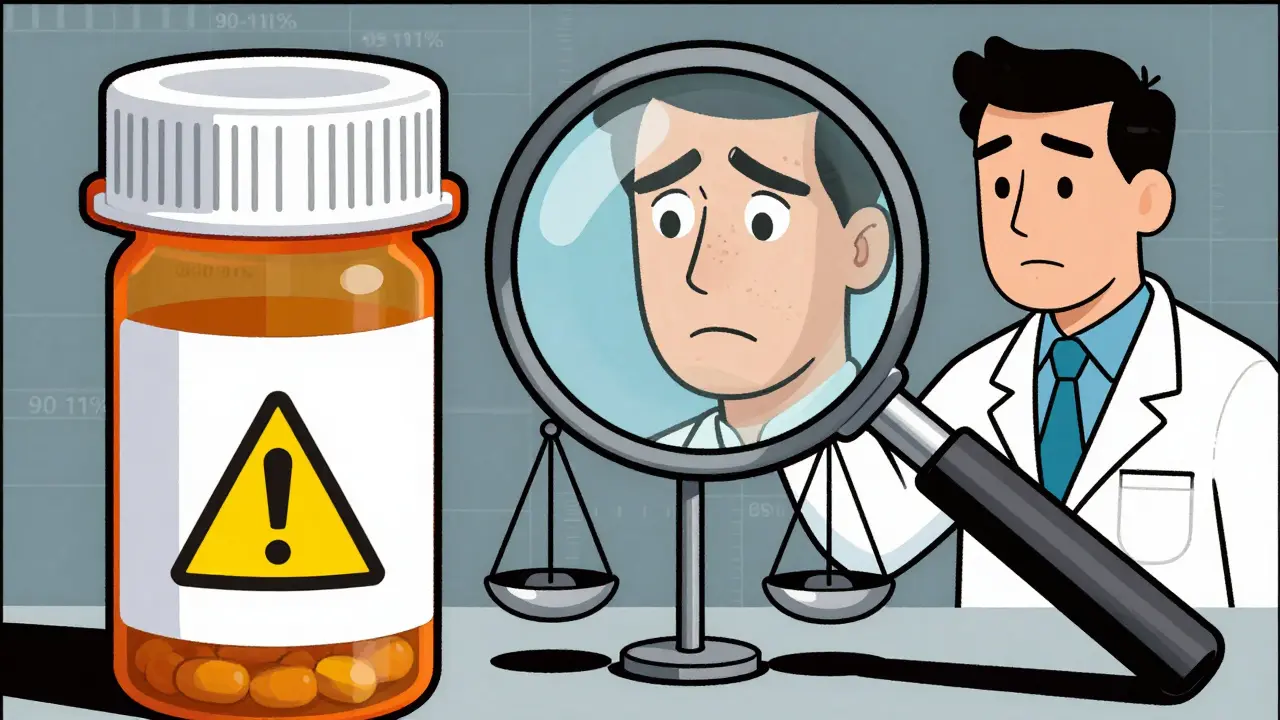
For these medications, the FDA may require tighter equivalence limits, such as 90-111%. This stricter standard minimizes the risk of slight variations affecting patient health. Dr. Randall Stafford of Stanford University published research in JAMA Internal Medicine showing that a small percentage of patients switching from brand to generic antiepileptics experienced breakthrough seizures. While rare, these cases highlight why NTI drugs get special attention. Many states now have laws requiring pharmacists to keep patients on the same generic manufacturer once treatment has started, to avoid unnecessary fluctuations.
Bioequivalence vs. Pharmaceutical and Therapeutic Equivalence
It is easy to mix up terms like pharmaceutical equivalence and therapeutic equivalence, but they mean different things in the regulatory world.
Pharmaceutical equivalence means two products contain the same active ingredient, in the same dosage form (like a tablet or capsule), and meet the same quality standards. They might look different due to inactive ingredients, but chemically, the core medicine is the same.
Therapeutic equivalence goes a step further. It requires both pharmaceutical equivalence and bioequivalence. The FDA assigns therapeutic equivalence codes to approved generics. An 'AB' rating indicates that the generic has demonstrated bioequivalence through pharmacokinetic studies and can be substituted with the expectation of identical clinical effect and safety. You can find these ratings in the FDA's Orange Book, a comprehensive database of approved drug products.
For non-systemic products, like topical creams or nasal sprays, bioequivalence might be demonstrated through comparative clinical endpoint studies rather than blood tests, since the drug doesn't enter the bloodstream in the same way. The FDA has issued specific guidance for these complex products, ensuring that even local treatments meet high standards.
The Economic Impact of Generic Substitution
Why does all this matter beyond your personal health? Because bioequivalence drives down healthcare costs significantly. Generic drugs account for approximately 90% of all prescriptions dispensed in the United States. Without the ability to substitute cheaper, bioequivalent generics, the cost of healthcare would skyrocket.
The average cost to develop a generic drug, including bioequivalence studies, is around $2.2 million. Compare that to the billions spent on developing a new brand-name drug from scratch. The Hatch-Waxman framework has saved the U.S. healthcare system an estimated $2.2 trillion over the past decade. For individual patients, the savings are tangible, with generics saving approximately $313 per prescription on average according to the AARP Public Policy Institute.
The global generic pharmaceuticals market was valued at $400.3 billion in 2022 and is projected to grow to $591.6 billion by 2028. This growth relies entirely on the trust placed in bioequivalence standards. If patients or doctors didn't trust that generics performed the same as brands, the market would collapse, and prices would rise again.
User Experiences and Real-World Data
Despite the strong scientific backing, some patients report feeling differences when switching from brand to generic. Is this placebo, or is there something else going on? Data suggests that for most drugs, the experience is neutral. A 2022 survey by the National Community Pharmacists Association found that 87% of independent pharmacists reported no clinically significant differences between brand and generic medications for most therapeutic classes.
However, Consumer Reports' 2023 medication satisfaction survey showed a slight gap: 78% of patients were satisfied with generics compared to 82% for brand-name drugs. The largest dissatisfaction gap occurred with antiepileptic drugs, aligning with the concerns about NTI medications mentioned earlier. On online forums like Reddit, users frequently discuss issues with levothyroxine generics, noting changes in energy levels or weight. These anecdotes, while valuable, represent a small fraction of users. The FDA's Adverse Event Reporting System data from 2022 showed that reports of problems with generic drugs accounted for only 0.3% of all medication reports, proportional to their market share.
Dr. Lawrence Yu, former Deputy Director of the FDA's Office of Pharmaceutical Quality, noted that the 80-125% confidence interval approach has been validated through decades of use and real-world evidence. The vast majority of patients do not notice a difference because the statistical variation is too small to impact clinical outcomes.
Future Directions and Complex Generics
The field of bioequivalence is evolving. As drug delivery mechanisms become more complex-think inhalers, patches, or extended-release capsules-the old rules sometimes need updating. The FDA launched the Complex Generic Drug Products program in 2020 to address these challenges. By November 2023, they had issued 27 guidance documents specifically for complex products.
Recent developments include draft guidance on bioequivalence considerations for drug products with local activity, such as nasal sprays. The agency is also investing $25 million through 2027 in research for new bioequivalence methodologies. Some experts propose moving toward individualized bioequivalence thresholds based on pharmacometric modeling, though this remains theoretical for now.
Regulatory differences between countries also play a role. The European Medicines Agency (EMA) accepts wider ranges for highly variable drugs under certain conditions (75-133%), while the FDA maintains stricter controls for most products. Understanding these nuances helps manufacturers navigate global markets and ensures patients worldwide receive safe, effective treatments.
Are generic drugs always exactly the same as brand-name drugs?
No, they are not chemically identical in every aspect. Generic drugs must contain the same active ingredient in the same strength and dosage form, but they can have different inactive ingredients (like fillers, colors, or flavors). However, they must be bioequivalent, meaning they perform similarly in the human body in terms of absorption rate and extent.
What does the 80-125% bioequivalence range mean?
This range refers to the statistical confidence interval for the ratio of the generic drug's absorption compared to the brand-name drug. It means that the generic drug's performance falls within 80% to 125% of the brand-name drug's performance. This variation is considered statistically insignificant for most medications, ensuring safety and efficacy without being overly restrictive.
Should I worry about switching to generic narrow therapeutic index drugs?
For narrow therapeutic index (NTI) drugs like levothyroxine or warfarin, there is more scrutiny. The FDA often requires tighter bioequivalence limits (90-111%) for these drugs. While generally safe, some patients may be sensitive to small variations. It is advisable to consult your doctor or pharmacist, and many states recommend staying with the same generic manufacturer once treatment begins.
Do generic drugs save money?
Yes, significantly. Generic drugs cost far less to develop and produce because they bypass the need for large-scale clinical efficacy trials. On average, generics save patients approximately $313 per prescription. Over the last decade, generic substitution has saved the U.S. healthcare system an estimated $2.2 trillion.
How are bioequivalence studies conducted?
Bioequivalence studies typically involve 24 to 36 healthy volunteers who take both the brand-name and generic versions of a drug under controlled conditions. Researchers measure blood samples to determine pharmacokinetic parameters like Cmax (peak concentration) and AUC (total exposure). The results are analyzed to ensure the generic falls within the accepted statistical range compared to the brand.