
Allergic rhinitis isn’t just a stuffy nose or a few sneezes. For millions, it’s a daily battle that disrupts sleep, drains energy, and makes outdoor life feel like a trap. Whether you’re choking on pollen every spring or struggling with year-round congestion from dust mites, this condition is more than inconvenient-it’s exhausting. And yet, most people treat it like a minor annoyance instead of a medical issue that can be controlled. The truth? You don’t have to live like this.
What’s Really Going On in Your Nose?
Allergic rhinitis happens when your immune system overreacts to harmless substances like pollen, pet dander, or mold. It’s not a cold. It’s not a sinus infection. It’s an IgE-driven inflammatory response that floods your nasal passages with histamine and other chemicals. The result? Sneezing, itching, runny nose, and that heavy, blocked feeling that makes breathing feel like a chore. There are two main types. Seasonal allergic rhinitis shows up when the weather warms up. Tree pollen hits in spring, grasses peak in summer, and ragweed takes over in fall. In Bristol, where I live, late April to early June is when the parks turn into pollen bombs. Perennial allergic rhinitis sticks around all year. Dust mites in your bedding, pet hair clinging to your sofa, mold growing behind the bathroom tiles-these are the silent culprits. You might not notice it’s allergies until you realize you’ve had a runny nose for 12 months straight.First-Line Treatment: Intranasal Corticosteroids
If you’ve tried antihistamines and they didn’t do much for your congestion, you’re not alone. Oral meds like cetirizine or loratadine are great for itching and sneezing, but they barely touch nasal blockage. That’s where intranasal corticosteroids come in. These sprays-fluticasone, mometasone, budesonide-are the most effective treatment for moderate to severe symptoms, backed by over 40 clinical trials involving more than 12,000 people. They work by calming inflammation deep in the nasal lining. Unlike antihistamines, they don’t give instant relief. You need to use them daily for a few days before you feel the difference. That’s why so many people quit after a week. But if you stick with it, studies show up to 50% fewer symptoms. One trial found mometasone reduced symptoms 27% more than placebo. That’s not a small win-it’s life-changing. Here’s the catch: technique matters. Sixty to seventy percent of people spray straight up into the septum, which causes nosebleeds and wastes the medicine. The right way? Tilt your head slightly forward, aim the spray toward the outer wall of your nostril (not the middle), and breathe in gently as you press. Don’t sniff hard. Don’t blow your nose for 15 minutes after. Do this right, and you’ll get the full benefit.When Antihistamines Still Have a Role
Oral antihistamines aren’t useless. If your main problem is itchy eyes, sneezing fits, or a runny nose without much blockage, second-generation options like fexofenadine or cetirizine work fast-within an hour. They’re also less likely to make you sleepy than old-school ones like diphenhydramine. You can buy them over the counter, and they’re cheap. But if congestion is your biggest headache, don’t rely on them alone. They’re about 20-30% less effective than nasal steroids for that symptom. The best combo? Use a nasal steroid daily for long-term control, and keep an antihistamine on hand for sudden flare-ups.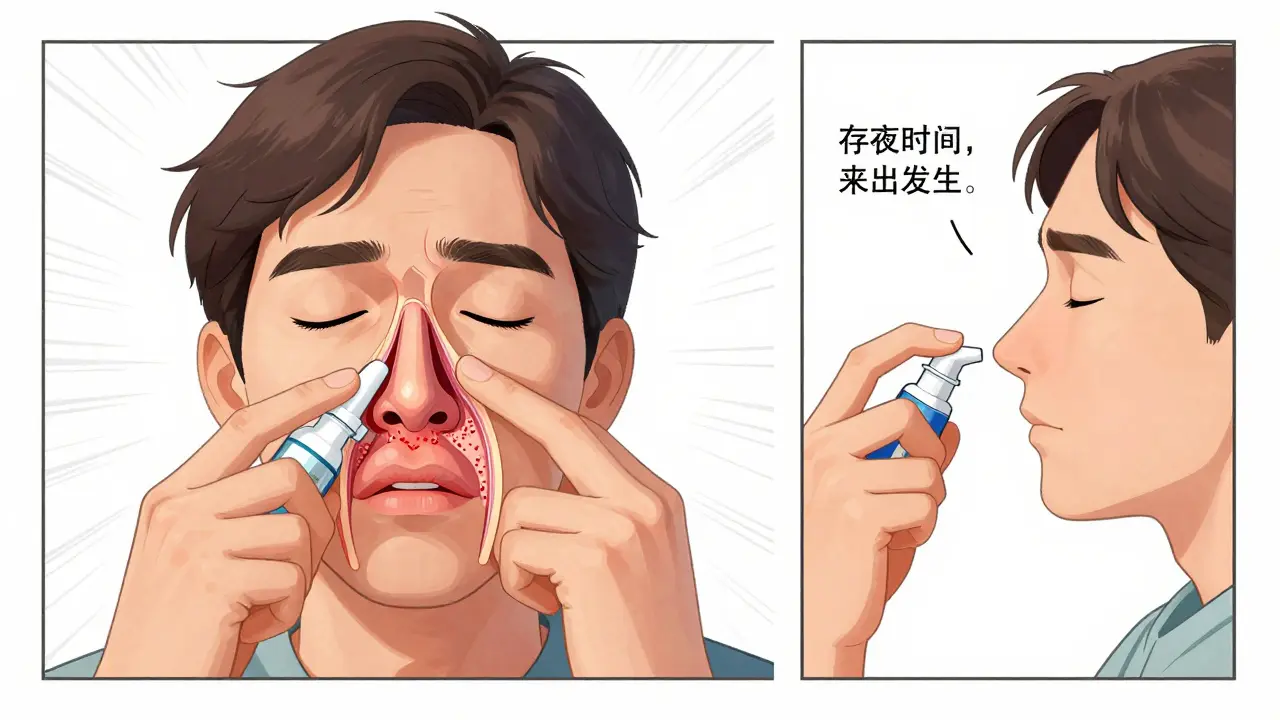
Decongestants: Use with Caution
That instant relief from a decongestant spray? It’s a trap. Oxymetazoline (like Afrin) gives you a quick clear nose-but only for three days. After that, your body gets hooked. You start needing more to get the same effect, and when you stop, your nose gets even more blocked. This is called rhinitis medicamentosa, and it’s harder to fix than the original allergy. Oral decongestants like pseudoephedrine (Sudafed) are safer for short-term use-no more than 3 to 7 days. But they can raise your blood pressure and make you jittery. If you have heart issues or high blood pressure, skip them entirely.Immunotherapy: The Only Cure
If you’ve tried everything and still can’t breathe, it’s time to think about immunotherapy. This isn’t a quick fix-it’s a long-term reset of your immune system. There are two ways: shots and tablets. Subcutaneous immunotherapy (SCIT) means weekly shots at first, then monthly for 3 to 5 years. It’s 35-45% effective at reducing symptoms, but carries a small risk of anaphylaxis (0.2% per shot). Sublingual immunotherapy (SLIT) is newer and easier. You put a tablet under your tongue daily. It’s 30-40% effective, with a lower risk (0.07% per dose). The FDA approved the first SLIT tablets in 2014, and since then, they’ve grown 12% a year. Most people prefer tablets because they’re done at home. But 32% quit in the first year because of mouth itching or the rule: no eating or drinking for 5 minutes after. And yes, the first dose must be given in a clinic with an epinephrine auto-injector nearby. You’ll need to carry one at all times during treatment. The real bonus? Immunotherapy doesn’t just help your nose. A major study showed kids who got 3 years of allergy shots had a 67% lower chance of developing asthma later. That’s prevention, not just symptom control.Environmental Control: What Actually Works
You can’t avoid pollen entirely, but you can reduce exposure. Keep windows closed when pollen counts are above 9.7 grains per cubic meter. Check the National Allergy Bureau’s daily forecast. Wear wraparound sunglasses outside-they cut eye symptoms by 35%. Shower and change clothes after being outdoors. Pollen sticks to hair and fabric like glue. For perennial allergens, the fixes are simpler but require consistency. Wash bedding every week in water hotter than 130°F (54°C). Use allergen-proof covers on your mattress and pillows-this reduces dust mite exposure by 83%. Keep indoor humidity below 50% with a dehumidifier. Mold thrives in damp air. Fix leaks. Clean bathrooms regularly. Pets? If you’re allergic, keep them out of the bedroom. Wash them weekly. Use a HEPA filter in your main living area. It won’t eliminate the problem, but it helps.
The Rise of New Treatments
In October 2023, the FDA approved tezepelumab, the first biologic for allergic rhinitis. It targets a protein called TSLP that kicks off the allergic chain reaction. Early results show a 42% drop in symptoms. It’s still expensive and reserved for severe cases, but it’s a sign of where things are headed. Another breakthrough? Dual-action nasal sprays. Now you can get a spray that combines fluticasone and azelastine in one bottle. It works faster than steroids alone (within 30 minutes) and is 15-20% more effective. If you’ve struggled with delayed relief from steroids, this might be your answer.Why So Many People Fail
Here’s the ugly truth: most people with allergic rhinitis don’t get proper care. Sixty percent start with OTC meds and wait over three years before seeing a specialist. By then, their symptoms are chronic, their sleep is wrecked, and their productivity is down. Studies show that when patients get proper instruction on how to use nasal sprays, their symptom control improves by 25%. And adherence? Only 30-50% of people keep using their steroid spray after a year. Why? They expect instant results. They’re scared of steroids. They think it’s unsafe. But here’s what no one tells you: the dose in a nasal spray is tiny. Less than 1% gets into your bloodstream. It’s not the same as oral steroids. No weight gain. No bone loss. Just a clean nose and better sleep.What to Do Next
If you’re tired of living with allergies, start here:- Track your symptoms for a week. When do they get worse? Outdoors? At night? After petting your cat?
- Try a daily intranasal corticosteroid for 4 weeks. Use it correctly-aim away from the septum, breathe gently.
- If congestion doesn’t improve, add a second-generation antihistamine for itching and sneezing.
- If you’re still struggling after 6 weeks, see an allergist. Ask about allergy testing and immunotherapy.
- Start environmental controls now: wash bedding weekly, use pillow covers, run a dehumidifier.
Can allergic rhinitis turn into asthma?
Yes, especially in children. Allergic rhinitis and asthma are part of the same allergic chain reaction. Studies show that kids with untreated allergic rhinitis are more likely to develop asthma later. But starting immunotherapy early can cut that risk by 67%. Controlling nasal inflammation may protect your lungs.
Are nasal steroids safe for long-term use?
Yes. The dose in nasal sprays is so low that less than 1% enters your bloodstream. Long-term studies over 10 years show no significant side effects like weight gain, bone thinning, or high blood pressure. The biggest risk is nosebleeds-which happen mostly from incorrect spray technique, not the medicine itself.
What’s better: allergy shots or pills under the tongue?
Allergy shots (SCIT) are slightly more effective, reducing symptoms by 35-45% versus 30-40% for sublingual tablets (SLIT). But SLIT is safer, easier, and done at home. Most people prefer tablets because they avoid needles and clinic visits. Choose based on your comfort level and lifestyle. Both work if you stick with them for 3+ years.
Can I use saline rinses instead of medication?
Saline rinses won’t replace medication, but they help. A 2022 survey found 62% of users felt better when rinsing twice daily alongside their other treatments. It clears out pollen and mucus, reduces irritation, and may improve how well nasal sprays work. Use distilled or boiled water. Don’t use tap water-it can carry dangerous microbes.
Why do my symptoms get worse at night?
Nighttime worsening is classic for perennial allergies. Dust mites live in your bedding. Pet dander accumulates on pillows. Gravity makes nasal congestion worse when you lie down. If your symptoms spike at night, focus on allergen-proof covers, washing bedding weekly, and keeping pets out of the bedroom.




steve rumsford on 6 January 2026, AT 21:51 PM
Just tried the nasal spray technique you described. I was spraying straight up like an idiot for years. Now I tilt forward and aim sideways. My nose hasn’t felt this clear since 2019. Game changer.