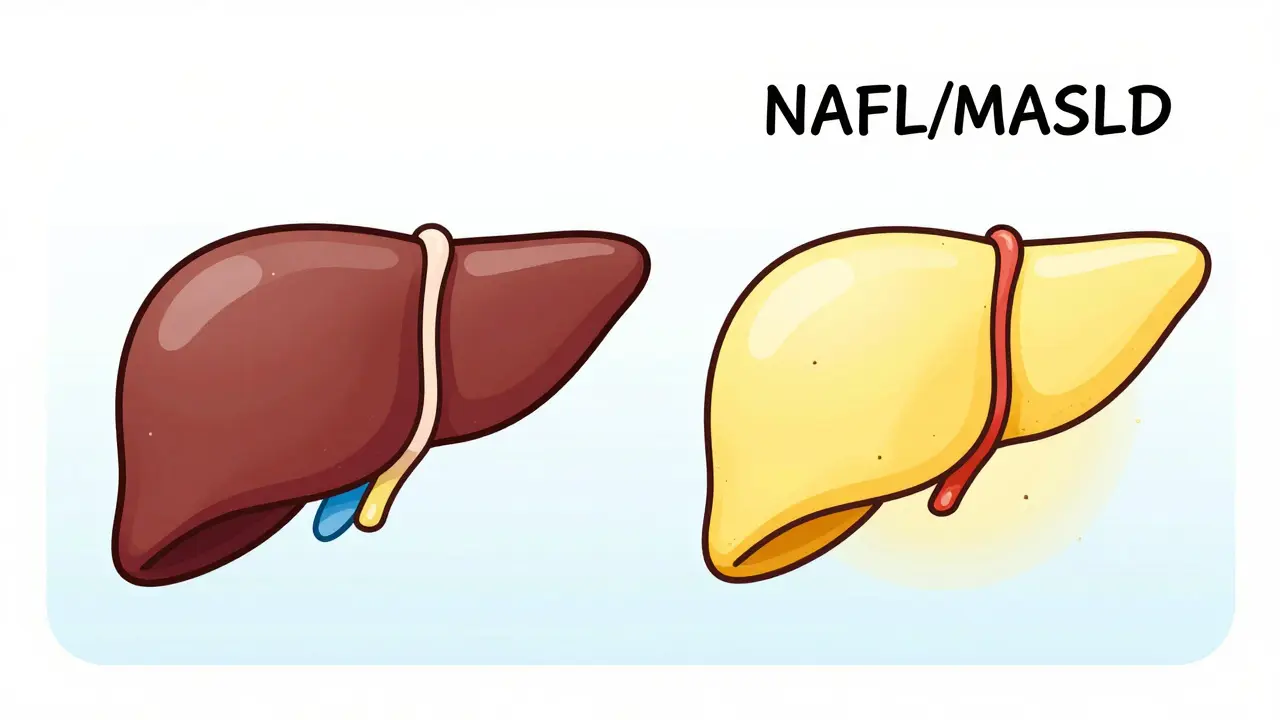
To start, let's clear up the names. You might hear your doctor use the term NAFLD (Non-Alcoholic Fatty Liver Disease). This is an umbrella term. Underneath it, there are two main players: NAFL (Non-Alcoholic Fatty Liver), which is the "simple" version, and NASH (Non-Alcoholic Steatohepatitis), which is the aggressive version. Recently, the medical world decided these names were a bit outdated and stigmatizing. In June 2023, major health societies introduced new terms: MASLD (Metabolic Dysfunction-Associated Steatotic Liver Disease) and MASH. Essentially, they're just swapping "non-alcoholic" for "metabolic dysfunction" to better reflect that this is often tied to diabetes and obesity. Whether your doctor calls it NAFLD or MASLD, the core problem remains the same: too much fat in the liver.
Simple Fat vs. Active Inflammation
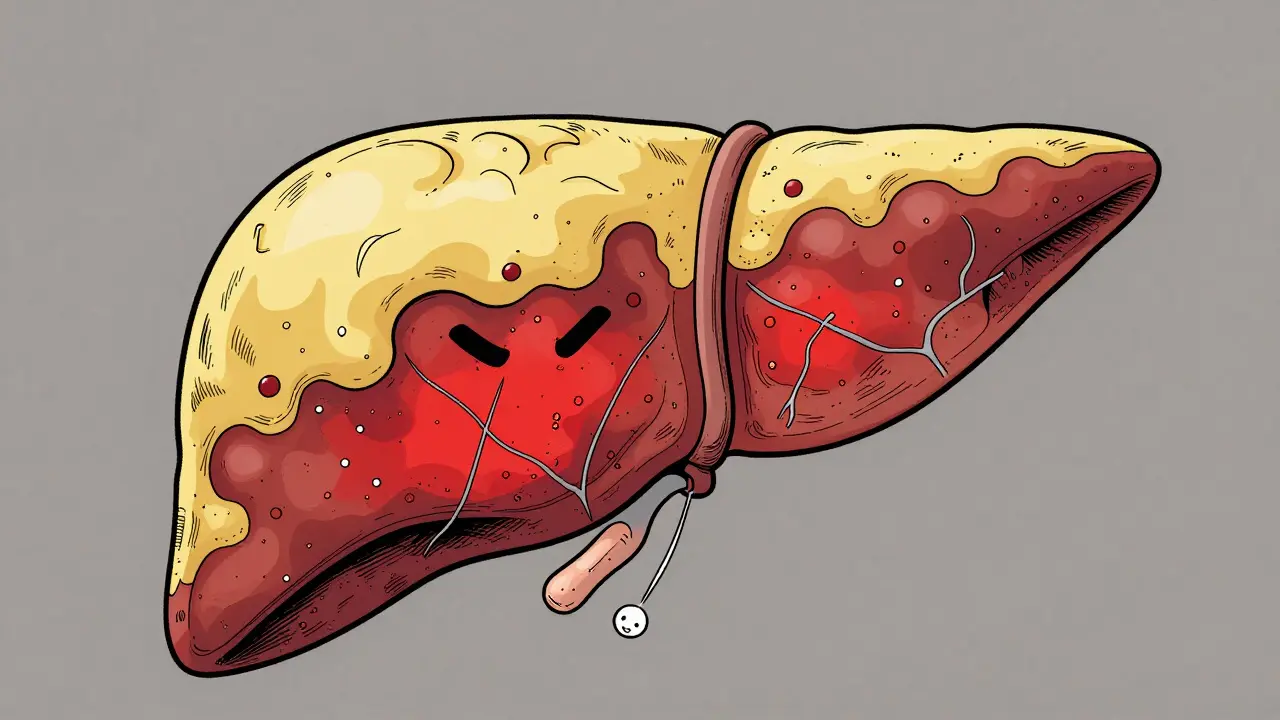
So, what actually separates a "simple" fatty liver from the more dangerous version? It comes down to two things: inflammation and cell damage. With NAFL, you have what's called steatosis. This just means 5% or more of your liver is made up of fat. For most people, this is an "indolent" condition, meaning it stays quiet and doesn't do much damage. In fact, a long-term study tracking over 1,200 patients showed that only about 12% of people with simple NAFL developed significant scarring over 15 years. NASH is a different beast. In NASH, you still have the fat, but you also have inflammation and "hepatocyte ballooning"-which is a fancy way of saying your liver cells are swelling and dying. This is the "tipping point." Once inflammation starts, the liver tries to heal itself by creating scar tissue. This is where things get risky because while fat can be burned off, deep scar tissue is much harder to reverse.
The Roadmap of Liver Fibrosis
When doctors talk about the risk of NASH, they aren't just looking at the fat; they're looking at fibrosis. Fibrosis is the medical term for scarring. Think of it like a skin scar, but inside your organ, blocking the flow of blood and bile. Liver scarring is measured on a scale from 0 to 4. Understanding where you sit on this scale is the most important part of your prognosis:
- Stage 0: No fibrosis. The liver is fatty, but there's no scarring.
- Stage 1: Minimal scarring around the portal areas of the liver.
- Stage 2: The scarring is more established but still localized.
- Stage 3: "Bridging" fibrosis. The scars are starting to connect, forming bridges across the liver tissue. This is a serious warning sign.
- Stage 4: Cirrhosis. The liver is heavily scarred and shrunken, which can lead to liver failure or liver cancer.
How Doctors Spot the Danger
One of the biggest frustrations for patients is that fatty liver is often a "silent" disease. You can't usually feel your liver becoming scarred. Many people only find out when their blood work looks slightly off or they have a random ultrasound for something else. Doctors use a combination of tools to figure out if you have simple fat or progressive NASH. First, they check liver enzymes like ALT (Alanine Aminotransferase) and AST (Aspartate Aminotransferase). If these are high, it suggests the liver cells are leaking enzymes because they are damaged. However, blood tests aren't a perfect map. To get a better picture, doctors use non-invasive scores like the FIB-4, which uses your age and blood markers to estimate scarring. They might also order a FibroScan, which is essentially a specialized ultrasound that measures the "stiffness" of your liver. The stiffer the liver, the more scar tissue is likely present. Despite these tools, the "gold standard" is still a liver biopsy-taking a tiny piece of tissue with a needle. It's the only way to be 100% sure about a NASH diagnosis, but because it's invasive, doctors usually save it for cases where the risk of advanced disease is high.
| Feature | NAFL (Simple Fatty Liver) | NASH (Steatohepatitis) |
|---|---|---|
| Fat accumulation (Steatosis) | Present (>5%) | Present (>5%) |
| Liver Inflammation | Absent | Present |
| Cell Damage (Ballooning) | Absent | Present |
| Progression to Cirrhosis | Very Low Risk | Moderate to High Risk |
| Primary Driver | Metabolic factors | Metabolic factors + Inflammation |
Who is at Highest Risk?
NASH doesn't happen at random. It is heavily tied to metabolic syndrome. If you have a cluster of the following issues, your risk of progressing from simple fat to NASH jumps significantly:
- Obesity: Especially visceral fat (belly fat). Around 70-90% of NASH cases involve a BMI of 30 or higher.
- Type 2 Diabetes: Insulin resistance is a primary driver of fat buildup in the liver.
- Hypertension: High blood pressure often goes hand-in-hand with liver dysfunction.
- Sleep Apnea: There is a strong correlation between obstructive sleep apnea and the severity of liver scarring.
Can You Reverse the Damage?
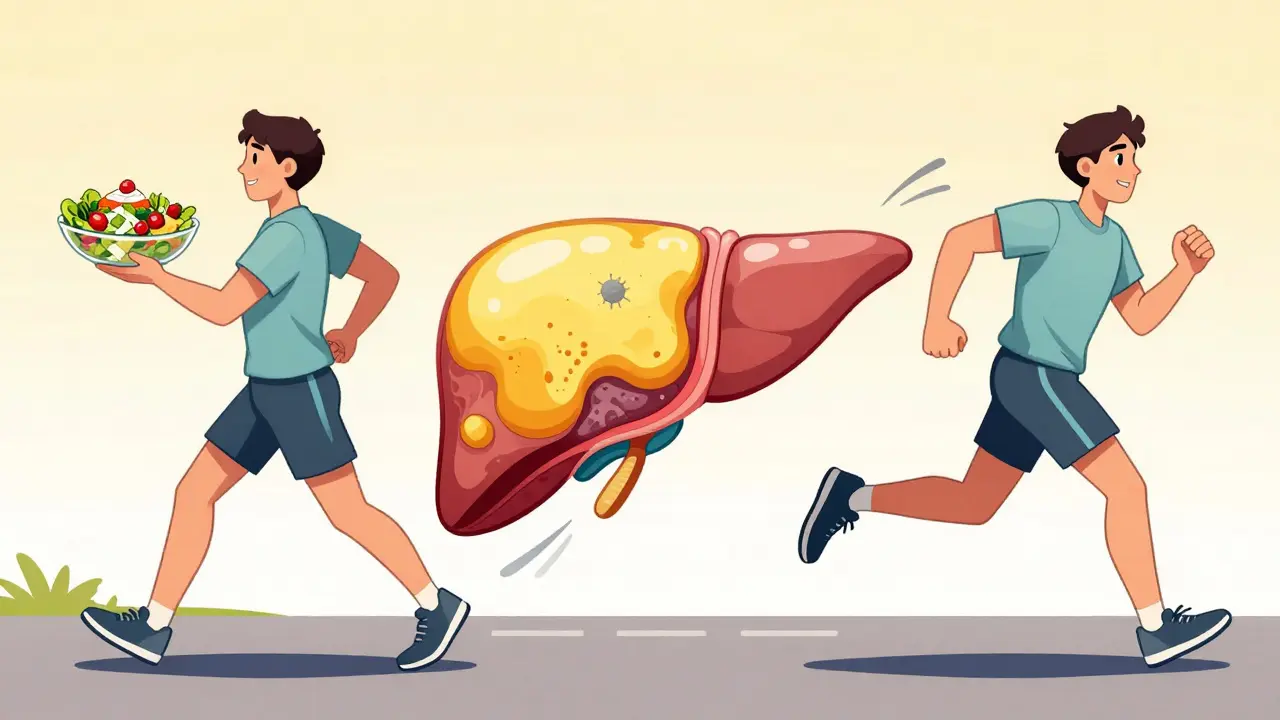
The most encouraging news is that the liver is incredibly resilient. Unlike the heart or brain, the liver can actually regenerate and heal-if you catch it in time. For those with simple NAFL, the goal is prevention. For those with NASH, the goal is regression. The most powerful tool we have right now isn't a pill, but weight loss. Data from the International NASH Registry shows that patients who achieve a 7-10% reduction in body weight saw a 90% regression from NASH back to simple fatty liver. Even more impressive, 85% of those patients saw an improvement in their fibrosis (scarring). For a long time, there were no FDA-approved drugs for this. However, the landscape is changing. In March 2023, the FDA approved Resmetirom (brand name Rezdiffra), the first medication specifically targeting NASH in patients with moderate to advanced fibrosis. This represents a huge shift from "just lose weight" to a combined medical and lifestyle approach.
What is the difference between NAFLD and NASH?
NAFLD is the overall category of fatty liver disease. NAFL (simple fatty liver) is just fat accumulation without inflammation. NASH is the more severe version where fat is accompanied by liver cell inflammation and damage, which can lead to permanent scarring (fibrosis).
Can fatty liver be cured?
Yes, especially in the early stages. Simple steatosis and even early-stage NASH can often be reversed through significant weight loss (typically 7-10% of body weight) and managing metabolic conditions like diabetes. While advanced cirrhosis (Stage 4) is harder to reverse, early intervention can stop the progression and improve liver function.
Do I need a biopsy to diagnose NASH?
A liver biopsy is the only way to definitively confirm a NASH diagnosis and accurately stage fibrosis. However, because it is invasive, doctors often use non-invasive alternatives first, such as FibroScan, the FIB-4 score, and blood tests for ALT/AST enzymes.
What are the symptoms of NASH?
Most people with fatty liver or NASH have no symptoms until the disease is advanced. When symptoms do occur, they are often vague, such as chronic fatigue, mild abdominal discomfort in the upper right side, or unexplained weight loss. This is why regular screening for high-risk individuals is critical.
What is the new terminology MASLD and MASH?
Medical societies updated the terms in 2023 to remove the phrase "non-alcoholic," which was seen as stigmatizing. NAFLD became MASLD (Metabolic Dysfunction-Associated Steatotic Liver Disease) and NASH became MASH (Metabolic Dysfunction-Associated Steatohepatitis) to emphasize the metabolic drivers of the disease.
Next Steps for Your Liver Health
If you've been told you have a fatty liver, don't panic, but don't ignore it. Your next steps depend on where you are in the spectrum. If you have simple fatty liver (NAFL/MASLD), focus on the "preventative shield." This means stabilizing your blood sugar, reducing processed sugars (especially fructose), and maintaining a consistent exercise routine. If you have suspected NASH/MASH, you need a closer relationship with a hepatologist. Ask your doctor about your FIB-4 score or if you qualify for a FibroScan. If you are in the advanced stages of fibrosis (Stage 3 or 4), medical intervention becomes the priority. This may include the new targeted therapies like Resmetirom or strict clinical management of your metabolic health to prevent the transition to full liver failure.



Emily Wheeler on 11 April 2026, AT 01:04 AM
It is truly fascinating to consider how our physical bodies act as a mirror for our internal state, and while the clinical definitions of MASLD and MASH provide a necessary framework for treatment, I believe we should also look at the holistic journey of the patient, because the act of changing one's lifestyle is not just about a number on a scale but about a fundamental shift in how we perceive our relationship with sustenance and the energy we put into the world, which is why seeing a 90% regression rate is so incredibly motivating for anyone feeling lost in their health journey.