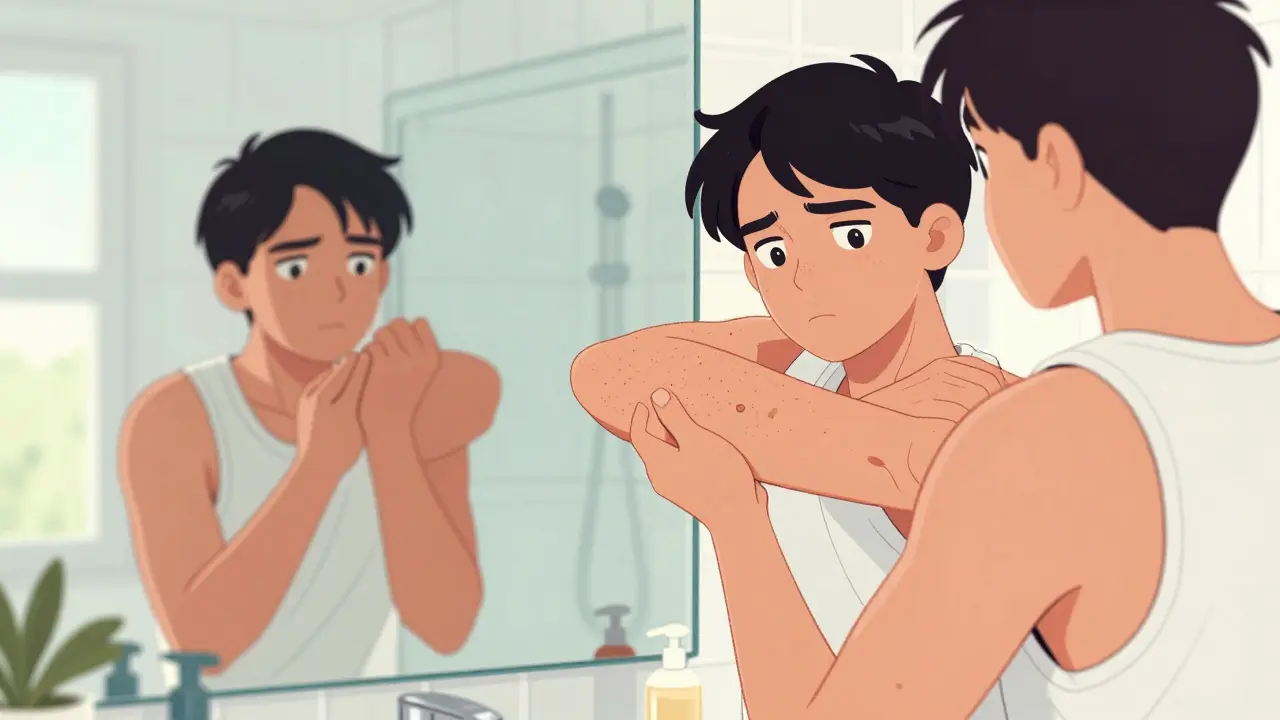
You wake up, look in the mirror, and notice those tiny, sandpaper-like bumps on the back of your arms or thighs. They aren't itchy, they don't hurt, but they make your skin feel rough and look like plucked chicken skin. If this sounds familiar, you're likely dealing with Keratosis Pilaris is a common, benign skin condition where keratin plugs the hair follicles, creating small, rough bumps. Also known as KP or "chicken skin," it affects up to 70% of teenagers and about 40% of adults. The good news? While there isn't a permanent "cure," you can absolutely smooth those bumps out with the right routine.
What Exactly Is Keratosis Pilaris?
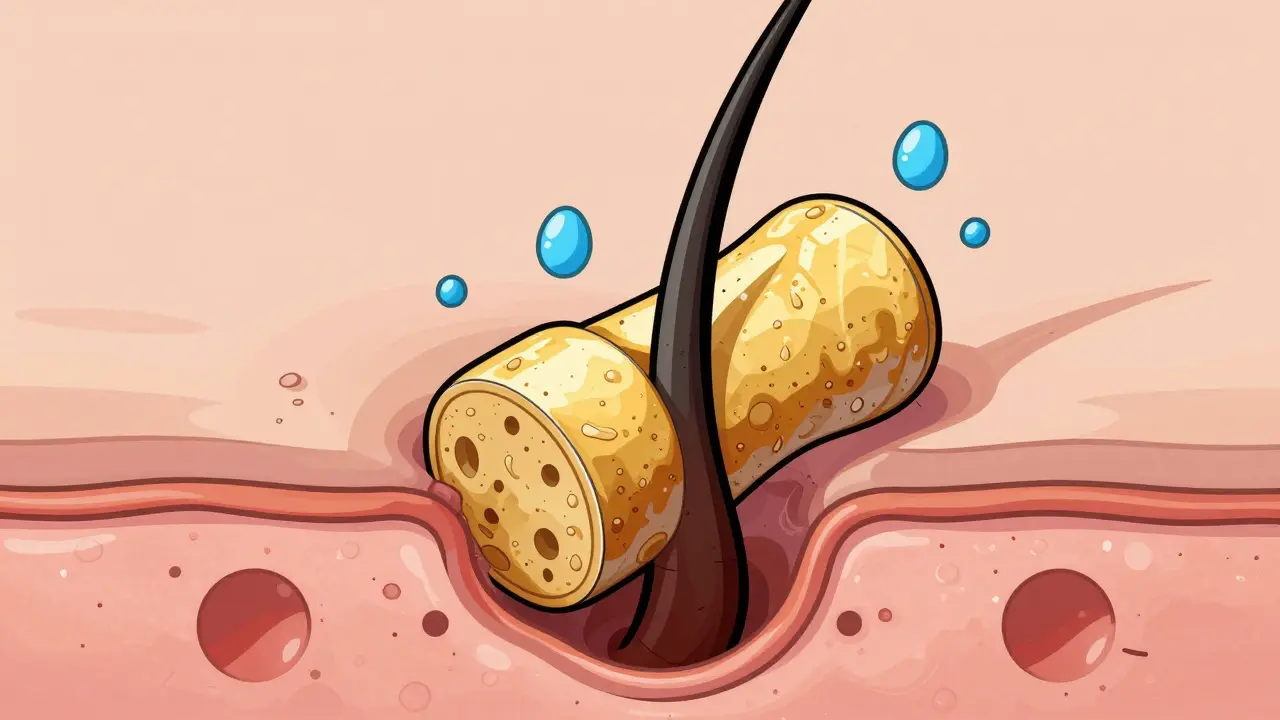
Think of your skin as a self-cleaning oven. Normally, dead skin cells flake off naturally. But with KP, your body produces too much Keratin, which is a tough, protective protein that makes up your hair, nails, and outer skin layer. Instead of shedding, this protein builds up and forms a hard plug in your hair follicle. This plug is what creates those little bumps.
It usually shows up on the outer parts of the upper arms, thighs, and sometimes the buttocks or cheeks. For many people, it's genetic. In fact, it's often linked to mutations in the Filaggrin gene, which helps maintain the skin's moisture barrier. If your barrier is leaky, your skin dries out more easily, making the plugs harder and more noticeable. You'll often notice things get worse in the winter because the air is drier, which sucks moisture out of your skin and makes those bumps feel even rougher.
How to Tell if It's KP or Something Else
It's easy to mistake KP for acne or a rash, but they are fundamentally different. Unlike acne, KP isn't caused by bacteria or oil overproduction. Unlike eczema, it's not typically an inflammatory "flare-up" that itches uncontrollably, though you can have both. Dr. Adam Friedman, a leading dermatologist, points out that KP is a follicular disorder, meaning it's all about the pore, not an infection.
| Feature | Keratosis Pilaris | Acne | Eczema |
|---|---|---|---|
| Texture | Sandpaper-like, small bumps | Pustules, cysts, or blackheads | Scaly, thickened patches |
| Primary Cause | Keratin buildup (Genetic) | Oil, bacteria, hormones | Immune response, barrier loss |
| Sensation | Usually painless | Can be painful or tender | Intense itching |
| Common Areas | Arms, thighs, cheeks | Face, chest, back | Elbow creases, knees, face |
The Best Ingredients for Smoothing Bumps
Since the problem is a "plug" of protein, the goal is to dissolve that plug and keep the skin hydrated so new ones don't form. You want chemical exfoliants, not physical scrubs. Using a harsh loofah or grainy scrub often backfires-about 68% of people who scrub too hard actually end up with more inflammation and dark spots.
Instead, look for these specific active ingredients:
- Lactic Acid: This is an Alpha-Hydroxy Acid (AHA) that gently dissolves the "glue" holding the plugs together. Creams with 10-12% lactic acid are gold standards, often showing significant improvement in 4 to 6 weeks.
- Urea: A powerful humectant that not only hydrates but also breaks down the keratin. Concentrations of 10-20% are most effective for those with very thick, scaly skin.
- Salicylic Acid: A Beta-Hydroxy Acid (BHA) that can get inside the pore to clear out the debris. It's great for the oilier types of KP.
- Retinoids: These speed up cell turnover. Tretinoin is highly effective but can be irritating. It takes longer to work-usually 3 to 6 months-but it often provides the smoothest results for stubborn cases.
- Ceramides: These aren't exfoliants, but they are essential. They rebuild the skin barrier, preventing the moisture loss that makes KP worse.
Your Step-by-Step Smoothing Routine
Consistency is everything. If you stop your routine for a few weeks, the bumps usually come right back. Here is the professional protocol for managing KP:
- Lukewarm Showers: Avoid hot water. Hot water strips your skin of natural oils, which makes the keratin plugs harder. Using lukewarm water can reduce flare-ups by nearly 45%.
- The 3-Minute Rule: Pat your skin dry very gently, leaving it slightly damp. Within 3 minutes of exiting the shower, apply your treatment. This is when your skin is most permeable, allowing ingredients like lactic acid to penetrate deeper.
- Apply Your Exfoliant: Use your AHA or urea-based lotion once daily in the evening. If you're using a strong retinoid, start every other night to avoid irritation.
- Layer Your Moisturizer: Follow up with a ceramide-rich cream. This "locks in" the exfoliant and protects the skin barrier. Experts suggest that using ceramides alongside exfoliants is 30% more effective than using exfoliants alone.
- Sun Protection: Many chemical exfoliants (especially AHAs) make your skin more sensitive to the sun. If you're treating your arms or face, use a sunscreen during the day to avoid sunspots.
Advanced Treatments and Professional Options
If over-the-counter lotions aren't cutting it, there are a few professional routes you can take. Pulsed-Dye Laser treatment is often used to target the redness (erythema) associated with KP. It doesn't remove the bumps themselves, but it can reduce the red color by 50-75% over a few sessions. However, keep in mind that this is usually a cosmetic expense and rarely covered by insurance.
New research is also looking into microbiome-balancing treatments and LED light therapy to reduce follicular plugging. While exciting, most of these are still in trial phases or are less accessible than a good quality lotion. The reality is that for about 70% of people, a dedicated home skincare routine is the most sustainable path.
Common Pitfalls to Avoid
Many people get frustrated because they don't see results overnight. You have to play the long game with KP. One common mistake is "over-treating." Using a 12% lactic acid lotion, a salicylic acid wash, and a retinoid all at once will likely burn your skin barrier, leading to more redness and irritation.
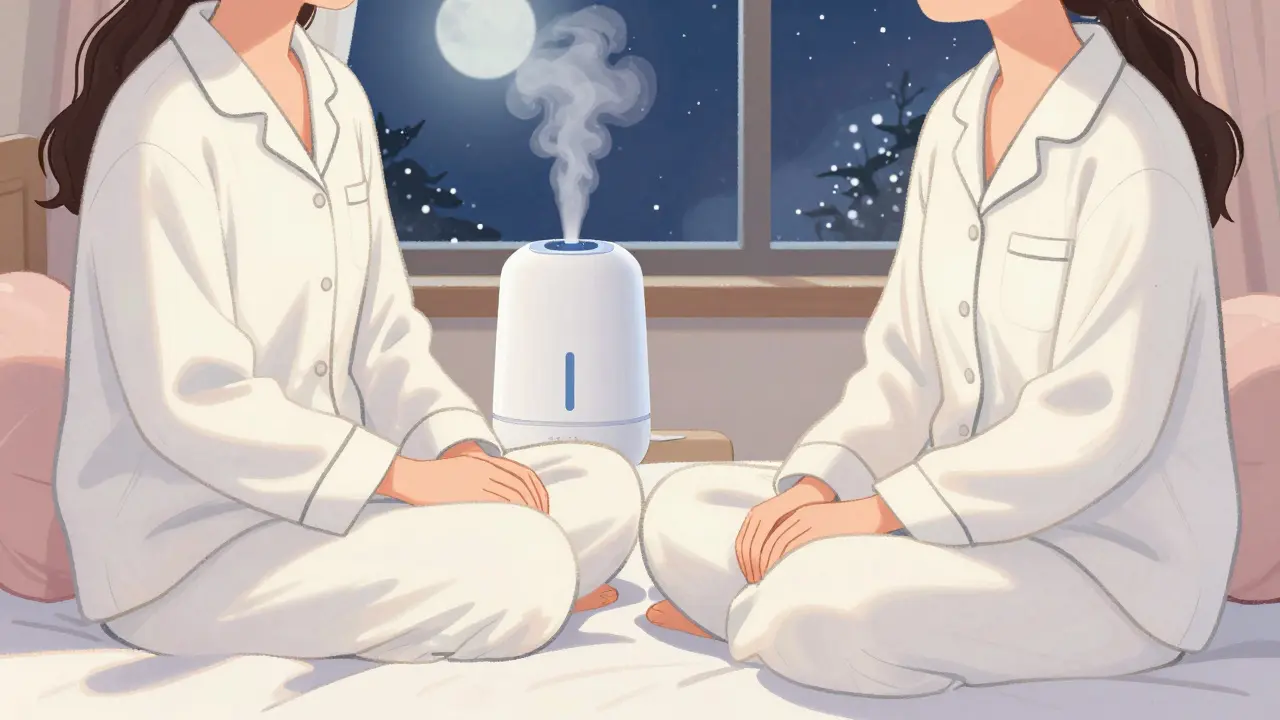
Another mistake is ignoring the environment. If you live in a place with harsh winters, a humidifier in your bedroom can be a game-changer. Keeping your indoor humidity around 40-50% can decrease winter flare-ups by up to 60%. Also, stick to loose cotton clothing. Tight, synthetic fabrics create friction against the bumps, which can irritate the follicles and make them look redder.
Can Keratosis Pilaris be cured permanently?
No, there is no permanent cure for KP because it is largely genetic. However, it often improves or disappears on its own by age 30. Until then, it is a management game-consistent exfoliation and moisturizing keep the skin smooth, but the bumps will return if you stop the routine for a few weeks.
Will scrubbing the bumps away with a loofah help?
Actually, no. Aggressive physical scrubbing can damage the skin barrier and cause inflammation, which often makes the bumps look redder and more prominent. Chemical exfoliation with acids like lactic or salicylic acid is much safer and more effective.
How long does it take to see results from KP treatments?
Patience is key. Most users see a noticeable improvement in skin texture after 4 to 8 weeks of consistent daily use. Retinoids may take even longer-up to 3 to 6 months-to show full results.
Is KP contagious?
Not at all. Keratosis Pilaris is a genetic skin condition, not an infection. You cannot catch it from someone else, and you cannot spread it to other people.
Does diet affect Keratosis Pilaris?
There is no strong clinical evidence that specific foods cause or cure KP. However, staying hydrated and maintaining a healthy skin barrier through Omega-3 fatty acids may help your skin's overall resilience.
Next Steps for Your Skin Journey
If you're just starting out, pick one active ingredient-either a lactic acid lotion or a urea-based cream-and commit to it for 8 weeks. Don't switch products every few days, or you'll never know what's actually working. If you experience intense stinging, scale back to every other day until your skin adjusts.
For those with severe redness or bumps that seem to be getting infected (becoming painful or oozing), it's time to see a dermatologist. They can provide prescription-strength retinoids or professional laser treatments that go beyond what you can buy at a drugstore. Remember, the goal isn't necessarily flawless skin, but skin that feels comfortable and smooth to the touch.


Sue Stoller on 21 April 2026, AT 18:56 PM
You guys can totally do this! Just stay consistent and your skin will be glowing in no time! ✨💖 Remember that every skin journey is different, so just be patient with yourself! 🌈💪