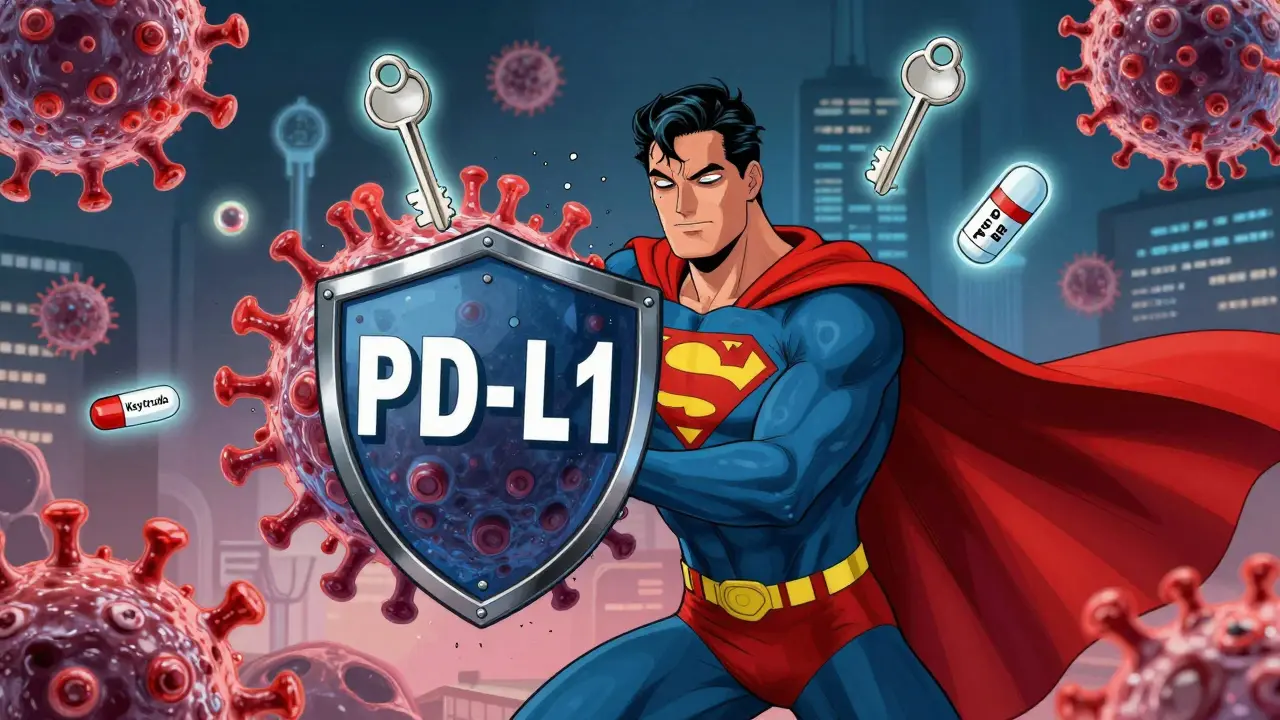
When your body’s immune system fails to stop cancer, modern medicine has a bold answer: immunotherapy. Two breakthroughs - checkpoint inhibitors and CAR-T cell therapy - are changing how we treat cancers that once had no real hope. They don’t just attack tumors. They teach your own immune system to fight back. But they work in completely different ways, and neither is perfect. Understanding how they differ - and how they might work together - could mean the difference between survival and more treatment.
Checkpoint Inhibitors: Releasing the Brakes on Your Immune System
Your immune system has natural brakes. These are called immune checkpoints - proteins like PD-1 and CTLA-4 that keep T cells from overreacting and damaging healthy tissue. Cancer cells are sneaky. They hijack these checkpoints, turning them into shields. By expressing PD-L1, a cancer cell can tell a T cell: "I’m not a threat." And the T cell stands down.
Checkpoint inhibitors are monoclonal antibodies designed to block this signal. Drugs like pembrolizumab (Keytruda) and nivolumab (Opdivo) block PD-1. Ipilimumab (Yervoy) blocks CTLA-4. When these brakes are released, T cells wake up and start attacking the tumor. The first FDA-approved checkpoint inhibitor, ipilimumab, came in 2011 for melanoma. Since then, these drugs have become standard for lung, kidney, bladder, and several other cancers.
But they don’t work for everyone. Response rates range from 20% to 40% in cancers where they’re used. Why? Many tumors lack the immune cells needed to respond. If there are no T cells in the tumor to begin with, releasing the brakes does nothing. That’s where CAR-T therapy comes in.
CAR-T Cell Therapy: Engineering Your Own Living Drug
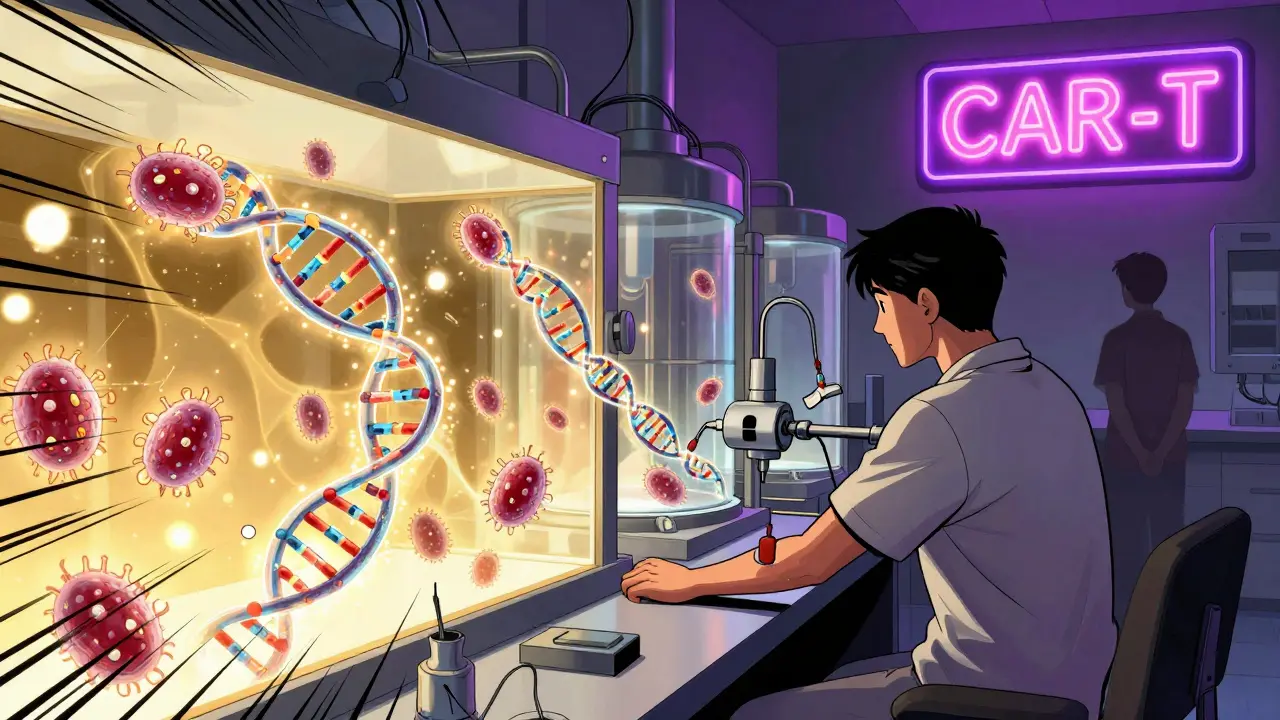
CAR-T cell therapy is not a drug you swallow or receive in an IV. It’s a personalized living treatment made from your own cells. The process starts with a simple blood draw - a procedure called leukapheresis. Your T cells are collected, sent to a lab, and genetically modified. A new receptor is added: a chimeric antigen receptor (CAR). This CAR is designed to recognize a specific protein on cancer cells - like CD19 on B-cell leukemia.
Once modified, the CAR-T cells are multiplied in bioreactors until there are hundreds of millions. Then, after a round of chemotherapy to clear space in the immune system, they’re infused back into you. These engineered cells now hunt down cancer like guided missiles. In some cases, they don’t just shrink tumors - they wipe them out.
For children and young adults with relapsed or refractory B-cell acute lymphoblastic leukemia (ALL), CAR-T therapy has achieved complete response rates of 60% to 90%. It’s one of the most dramatic advances in pediatric oncology in decades. The first FDA-approved CAR-T therapy, tisagenlecleucel (Kymriah), came in 2017. Since then, others like axicabtagene ciloleucel (Yescarta) have followed for lymphoma and multiple myeloma.
But CAR-T isn’t a magic bullet. It only works well in blood cancers. In solid tumors - like lung, breast, or colon cancer - success rates are under 10%. Why? The tumor environment is hostile. It’s filled with signals that shut down T cells, physical barriers that block them, and other immune suppressors. CAR-T cells often get tired or stuck before they reach the cancer.
Side Effects: What You Need to Know
Both therapies come with serious risks - but they’re different.
Checkpoint inhibitors cause immune-related side effects because they unleash immune activity everywhere. Common issues include fatigue (affecting 35-50% of patients), rash (30-40%), and diarrhea from colitis (10-15%). More serious but rarer are thyroid problems (hypothyroidism in 5-10%) or lung inflammation (pneumonitis). These are managed with steroids and careful monitoring.
CAR-T therapy has its own dangerous side effects. Nearly 50-70% of patients experience cytokine release syndrome (CRS) - a flood of immune signals that causes high fever, low blood pressure, and trouble breathing. About 20-40% develop immune effector cell-associated neurotoxicity syndrome (ICANS), which can lead to confusion, seizures, or even coma. These require ICU-level care and specific drugs like tocilizumab.
Both can cause long-term fatigue and increased infection risk. But while checkpoint inhibitor side effects are often manageable with outpatient care, CAR-T complications usually demand hospitalization. That’s why only specialized centers - often academic hospitals - are equipped to give CAR-T therapy. In the U.S., 87% of CAR-T treatments happen in just 15% of cancer centers.
Why Access Isn’t Equal
CAR-T therapy costs between $373,000 and $475,000 per treatment. That’s not just expensive - it’s a barrier. Insurance approval can take weeks. Manufacturing takes 3 to 5 weeks. By then, a patient’s condition may have worsened. Checkpoint inhibitors, by contrast, are "off-the-shelf". They’re stored in pharmacies, prescribed like any other drug, and given in minutes.
But access isn’t just about cost. Studies show Black patients are 31% less likely to receive CAR-T therapy than White patients. Medicaid patients are 23% less likely to get checkpoint inhibitors. These aren’t random gaps. They reflect deeper problems: lack of specialist referrals, transportation barriers, distrust in medical systems, and under-resourced clinics. A patient in rural Alabama or inner-city Detroit may never even be told these options exist.
The Future: Combining Forces
The most promising path forward isn’t choosing between checkpoint inhibitors and CAR-T. It’s putting them together.
Researchers are now engineering CAR-T cells that don’t just hunt cancer - they also fight the tumor’s defenses. One approach: CAR-T cells modified to secrete their own PD-1-blocking antibodies right at the tumor site. This avoids the toxic side effects of systemic checkpoint drugs. In mouse studies, this cut immune pneumonitis by 42% while boosting tumor killing. It’s like giving your T cells a built-in weapon against the cancer’s shield.
Other innovations are underway. "Armored" CAR-T cells that release IL-12 to attract more immune cells. "Off-the-shelf" CAR-T from donor cells, cutting wait times from weeks to days. Drugs targeting new checkpoints like LAG-3 and TIM-3. Even drugs blocking PTP1B - an internal brake inside T cells - have doubled tumor-fighting T cells in breast cancer models when paired with CAR-T.
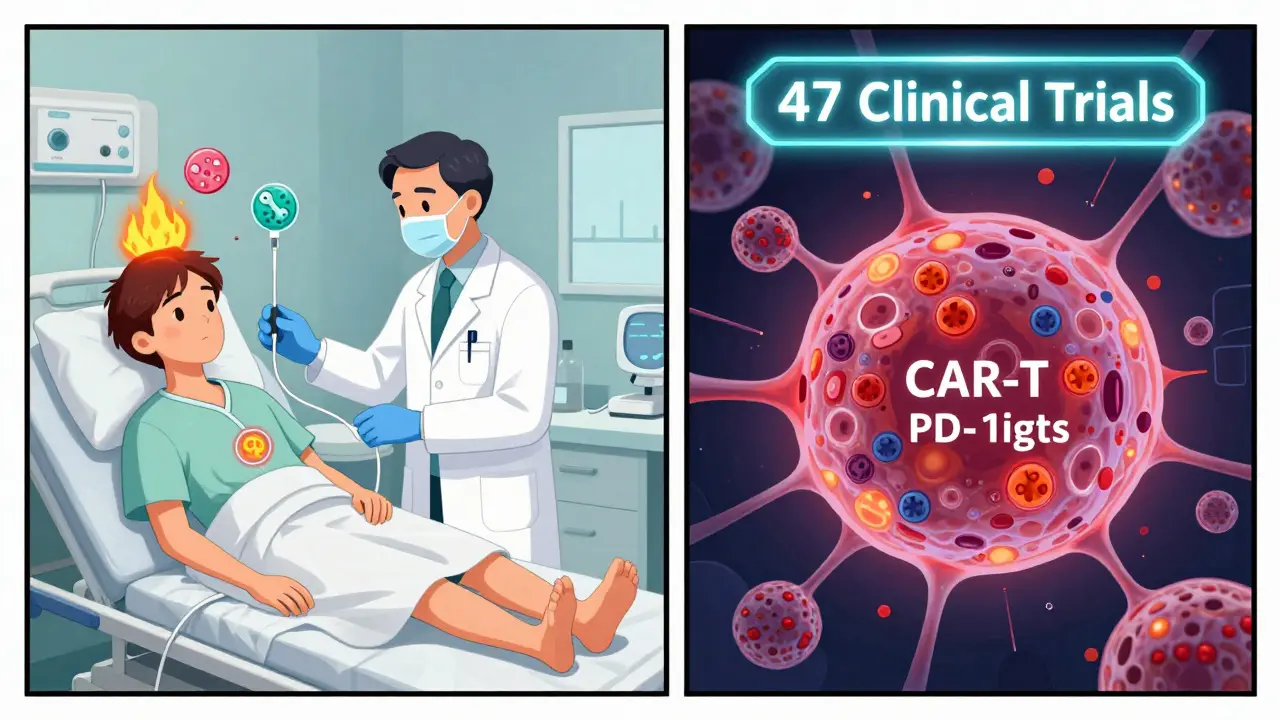
As of March 2024, there are 47 active clinical trials combining CAR-T with checkpoint inhibitors. Sixty-eight percent of them are focused on solid tumors. That’s where the biggest challenge - and biggest opportunity - lies.
What This Means for Patients
If you or someone you love is facing cancer, ask: Are you a candidate for immunotherapy? Not all cancers respond. But if you have melanoma, lung cancer, or certain blood cancers, these treatments may offer years of life where none were expected. Talk to your oncologist about tumor testing - for PD-L1 expression, tumor mutational burden, or specific antigens like CD19. These tests determine if you’re likely to benefit.
And if CAR-T is suggested, ask about access. Where is the nearest certified center? What’s the timeline? Can you get financial support? These therapies aren’t just science - they’re systems. And systems have gaps. Knowing the landscape helps you navigate it.
Immunotherapy isn’t a cure-all. But it’s the first time in decades that cancer has been treated with a strategy that doesn’t just poison cells - it empowers the body’s own defenses. That’s a revolution. And it’s still unfolding.
How do checkpoint inhibitors differ from CAR-T cell therapy?
Checkpoint inhibitors are IV drugs that block signals cancer uses to hide from immune cells. They work systemically and are given to many patients with the same drug. CAR-T therapy is personalized: your T cells are removed, genetically changed to target cancer, multiplied, and reinfused. It’s a one-time treatment made just for you.
Which cancers respond best to checkpoint inhibitors?
Checkpoint inhibitors work best in cancers with high mutation rates or strong immune signals - like melanoma, non-small cell lung cancer, kidney cancer, bladder cancer, and some head and neck cancers. Response depends on biomarkers like PD-L1 levels and tumor mutational burden.
Why doesn’t CAR-T therapy work well for solid tumors?
Solid tumors create a hostile environment: physical barriers block T-cell entry, immune-suppressing signals shut them down, and cancer cells often lose the target antigens CAR-T cells are designed to recognize. Blood cancers like leukemia have fewer of these defenses, making them easier targets.
What are the biggest side effects of CAR-T therapy?
The most serious are cytokine release syndrome (CRS), which causes high fever and low blood pressure, and immune effector cell-associated neurotoxicity syndrome (ICANS), which can lead to confusion, seizures, or loss of speech. Both require immediate medical care. Fatigue and infections are also common.
Is immunotherapy covered by insurance?
Most major insurers cover checkpoint inhibitors for FDA-approved uses. CAR-T therapy is covered too, but approval can take weeks due to high cost and complexity. Patients often need prior authorization, and some may need to appeal. Financial assistance programs are available through hospitals and drug manufacturers.
Can checkpoint inhibitors and CAR-T be used together?
Yes - and it’s one of the most promising areas in cancer research. Combining them helps overcome the weaknesses of each: CAR-T brings immune cells to the tumor, and checkpoint inhibitors help those cells stay active. Early trials show better responses, especially in solid tumors. Some new CAR-T therapies are even engineered to produce checkpoint-blocking proteins right at the tumor site.



rebecca klady on 24 March 2026, AT 07:31 AM
I had a cousin go through checkpoint inhibitors for stage IV melanoma. It wasn’t a miracle, but it bought her three extra years - years she got to spend gardening, traveling, and finally meeting her granddaughter. The fatigue was brutal, but honestly? Worth it. I never thought I’d see someone come back from that kind of diagnosis.