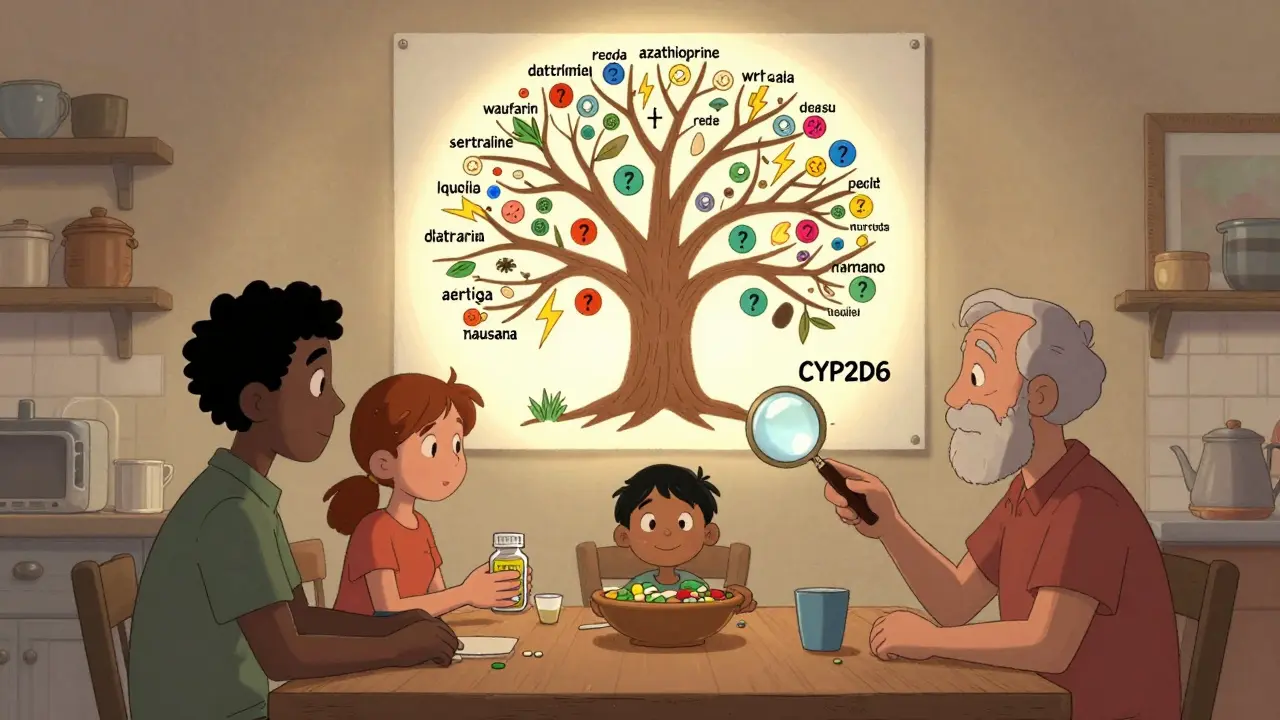
When you switch to a generic drug, you expect the same results as the brand-name version. But what if your body doesn’t respond the same way - not because the drug is weaker, but because of your genes? This isn’t rare. It’s happening to thousands of people every day, often without anyone realizing why.
Why Your Family’s Medical History Matters More Than You Think
If your parent had a bad reaction to a common painkiller, or if your sibling needed a much higher dose of an antidepressant to feel any effect, that’s not just coincidence. It’s likely your family shares genetic traits that affect how drugs are processed in your body. These traits are passed down - just like eye color or height. The science behind this is called pharmacogenetics. It looks at how small differences in your DNA change how your body breaks down medicines. Some people are fast metabolizers - they clear drugs too quickly, so the medicine doesn’t work. Others are slow metabolizers - drugs build up in their system, causing side effects. Both can happen with the same generic drug, depending on your genes. For example, if your mother had severe nausea from a generic version of the antidepressant sertraline, you might carry the same CYP2D6 gene variant that slows down its breakdown. That same variant affects about 7% of people of European descent and up to 20% of people of East Asian descent. A generic version of sertraline is chemically identical to the brand name - but your body treats it differently because of your genes.Genes That Control How Your Body Handles Drugs
Your liver has a team of enzymes that break down most medications. The most important ones come from genes like CYP2D6, CYP2C9, and CYP2C19. These genes have dozens of versions - called variants - that change how well the enzymes work. CYP2D6 is involved in processing about one in four prescription drugs, including common antidepressants, beta-blockers, and painkillers like codeine. If you have two copies of a slow-acting variant, you might get sick from a standard dose. If you have two copies of a super-fast variant, the drug might not work at all. This is why some people say, “I took the same pill as my friend and it didn’t do anything for me.” CYP2C9 and VKORC1 affect warfarin, a blood thinner. African Americans often need higher doses than white patients - not because of weight or diet, but because of common genetic differences. Before 2010, doctors guessed the right dose. Now, testing for these genes can cut the risk of dangerous bleeding by nearly half. Then there’s TPMT. If you’re being treated for leukemia or autoimmune disease with drugs like azathioprine, your doctor should test your TPMT gene first. If you have two inactive copies, even a normal dose can destroy your bone marrow. That’s not a side effect - it’s a genetic trap. Testing prevents this. In pediatric cancer units, preemptive testing has cut severe side effects by 90%.Why Generic Drugs Aren’t Always the Same for Everyone
Generic drugs are required to be bioequivalent to brand names - meaning they release the same amount of active ingredient into your bloodstream over time. But that doesn’t mean your body will process them the same way. Think of it like this: two identical cars might have the same engine, but if one has a faulty fuel injector, it won’t run well. Your genes are like the fuel injector. A generic drug might be chemically perfect, but if your body can’t metabolize it properly, it won’t work - or worse, it could hurt you. Take 5-fluorouracil, a chemotherapy drug. About 5% of people have a variant in the DPYD gene that stops them from breaking it down. Without testing, they get life-threatening toxicity - mouth sores, infections, even death. In the UK, testing for DPYD before chemo became standard in 2022. Many patients who switched to generics after this change saw their side effects drop dramatically. The problem? Most doctors don’t ask about family history before prescribing generics. And most patients don’t know to mention it. If your uncle died from a bad reaction to a generic statin, that’s not just a family story - it’s a warning sign.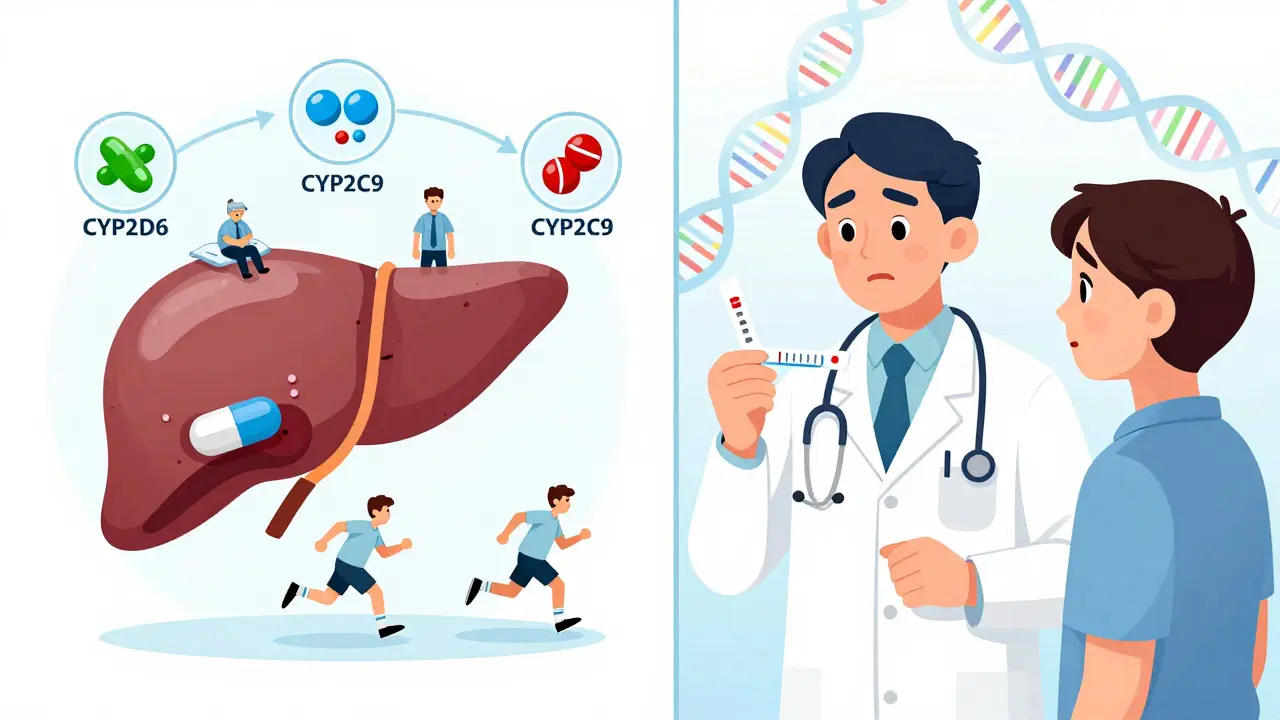
Population Differences Are Real - And They Matter
Your ancestry plays a bigger role than you might think. For example, 15-20% of East Asians are poor metabolizers of proton pump inhibitors (PPIs) like omeprazole - a common generic for heartburn. That means the drug stays in their system longer, increasing the risk of long-term side effects like low magnesium or bone fractures. Meanwhile, in African populations, a variant in the HMGCR gene makes pravastatin - a generic cholesterol drug - less effective. That same variant is rare in Europeans. So a one-size-fits-all generic dosing strategy doesn’t work across populations. This isn’t about race. It’s about genetic ancestry. People of African descent are underrepresented in clinical trials - which means most dosing guidelines were built on data from white, European populations. That’s why a generic drug that works fine for your neighbor might cause you serious harm.What You Can Do Right Now
You don’t need a fancy genetic test to start protecting yourself. Here’s what works:- Write down your family’s drug reactions. Did anyone have severe nausea, rashes, dizziness, or unexplained fatigue after taking a medication? Note the drug name and the reaction.
- Ask your pharmacist or doctor about pharmacogenetics. Say: “I’ve had bad reactions to meds before - could my genes be a factor?”
- Request testing for high-risk drugs. If you’re starting warfarin, clopidogrel, certain antidepressants, or chemotherapy, ask if genetic testing is available. Many NHS clinics now offer this for free.
- Use reliable resources. The Clinical Pharmacogenetics Implementation Consortium (CPIC) has free, evidence-based guidelines for doctors. Ask if they’re using them.
What’s Changing - And When It Will Reach You
The NHS and major UK hospitals are starting to integrate pharmacogenetic testing into routine care. Mayo Clinic in the US has tested over 167,000 patients preemptively - meaning they test your genes before you even need a drug. If you later need a medication that interacts with your genes, your record already has the answer. In 2023, the FDA approved the first antidepressant selection tool based on genetic testing. Genomind’s PGx Express test is now available in the UK through private providers and some NHS pilot programs. Costs range from £150 to £300 - but many insurers are starting to cover it for high-risk patients. The big shift? Moving from “trial and error” to “test and treat.” It’s no longer about waiting for side effects - it’s about preventing them before they start.
Why Most Doctors Still Don’t Talk About This
Even though over 300 drug labels now include pharmacogenetic info, most GPs haven’t been trained to use it. A 2022 survey found only 32% of UK primary care doctors felt confident interpreting genetic test results. Many say they don’t have time. Others say they don’t know where to start. But that’s changing. The University of Bristol and Imperial College London are now training GPs in pharmacogenomics. Epic EHR systems used in UK hospitals now include alerts for high-risk gene-drug combinations - like warning a doctor if a patient with a CYP2C19 poor metabolizer status is prescribed clopidogrel. The barrier isn’t science. It’s systems. And those systems are slowly catching up.Real Stories - What Happens When You Listen to Your Genes
One woman in Manchester switched from a brand-name antidepressant to a cheaper generic. Within weeks, she felt worse - anxious, nauseous, unable to sleep. Her GP thought she was “non-compliant.” She didn’t mention her father’s history of serotonin syndrome until she found a genetic testing service online. Her test showed she was a CYP2D6 poor metabolizer. Her doctor switched her to a drug that doesn’t rely on that enzyme. Within two weeks, she felt like herself again. Another man in Leeds had colon cancer. His oncologist prescribed 5-FU. He got so sick he almost quit treatment. His sister insisted he get tested. He had a DPYD variant. His dose was cut by 30%. He finished chemo without hospitalization. These aren’t outliers. They’re the rule - if you know to look.What’s Next
In the next five years, pharmacogenetic testing will become as routine as blood pressure checks. The UK’s All of Us program is launching in 2025, offering free genetic testing to 1 million people - including drug response data. The goal isn’t to stop you from using generics. It’s to make sure you get the right one - the one your body can handle. Your genes don’t lie. Your family history isn’t just background noise. It’s a map. And if you ignore it, you’re taking your health on faith.Can my family history really predict how I’ll react to a generic drug?
Yes. If close relatives had severe side effects, poor response, or unexpected reactions to medications - especially antidepressants, blood thinners, or chemotherapy drugs - your genes may be similar. Genetic variants that affect drug metabolism are often inherited. A family history of adverse reactions is one of the strongest predictors of your own risk.
Are generic drugs less effective because of genetics?
No. Generic drugs are chemically identical to brand names. The issue isn’t the drug - it’s your body’s ability to process it. If your genes slow down how quickly your liver breaks down the medication, the drug builds up and causes side effects. If your genes speed up metabolism, the drug clears too fast and doesn’t work. The generic pill is fine. Your system isn’t.
Is pharmacogenetic testing covered by the NHS?
Currently, the NHS offers pharmacogenetic testing for specific high-risk drugs like warfarin, clopidogrel, and 5-fluorouracil in certain hospitals and cancer centers. Routine testing isn’t yet standard across all GP practices, but pilot programs are expanding. If you’re prescribed one of these drugs, ask your doctor if testing is available.
How accurate are genetic tests for drug response?
For key genes like CYP2D6, CYP2C9, TPMT, and DPYD, tests are over 99% accurate at identifying variants. The challenge isn’t accuracy - it’s interpretation. Not all variants have clear clinical guidelines. But for drugs like warfarin, thiopurines, and 5-FU, the evidence is strong enough that guidelines from CPIC and the FDA recommend testing.
Should I get tested before switching to a generic drug?
If you’ve had bad reactions to medications before, or if close family members have, yes. If you’re starting a high-risk drug like warfarin, clopidogrel, certain antidepressants, or chemotherapy, testing is strongly recommended. For common generics like ibuprofen or metformin, testing isn’t usually needed - unless you’ve had unusual side effects. Talk to your doctor about your history first.


Paul Barnes on 18 January 2026, AT 22:20 PM
Interesting piece, but let’s be real-most doctors don’t have time to interpret genetic data, and patients won’t remember their uncle’s reaction to Zoloft in 1998. This is science fiction wrapped in a white coat.
Also, why are we trusting corporations that make generic drugs to ‘be bioequivalent’ when they’re literally cut-rate knockoffs? The FDA’s standards are a joke.
And don’t get me started on how they test these genes-on mostly white populations. So now we’re supposed to trust a system built on biased data to save us from itself? Classic.
Next they’ll tell us to scan our DNA before buying aspirin. I’ll take my chances with the bottle.
Also, who pays for these tests? Me? My insurance? The government? Nobody’s answering that.
Meanwhile, my pharmacist still can’t tell me if my generic metformin is from India or Germany. I’m not sure I trust the pill at all anymore.