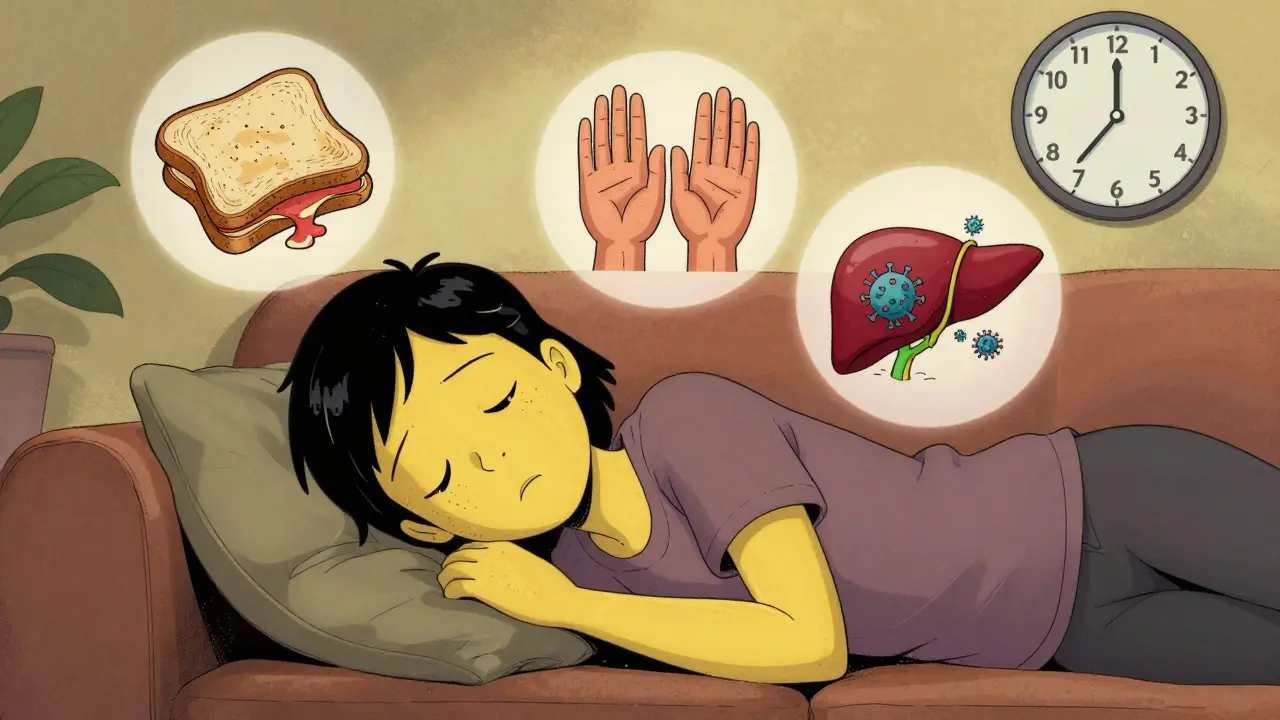
Most people who get hepatitis A don’t realize they’ve been infected until they start feeling awful. Fatigue hits hard. Your skin turns yellow. You can’t keep food down. And then, after weeks of feeling like you’re dragging through mud, you slowly start to feel like yourself again. But how long does that take? And more importantly-could you have avoided it altogether?
Hepatitis A isn’t just another bug. It’s a liver infection that spreads in quiet, sneaky ways: through a handshake, a contaminated sandwich, or even a toilet seat someone didn’t clean properly. The virus is tough. It can live on surfaces for weeks. It doesn’t care if you’re young or old, healthy or not. But here’s the good news: it’s one of the most preventable infections out there-and recovery, while slow, is almost always complete.
How Hepatitis A Hits Your Liver
The hepatitis A virus (HAV) is a simple thing: a tiny bit of RNA wrapped in protein. But it’s deadly efficient. Once you swallow it-usually through food or water tainted with feces-it travels straight to your liver. There, it starts copying itself inside liver cells. That’s when things go wrong.
Your immune system doesn’t take kindly to this invasion. It storms into the liver, trying to kill the virus. In the process, it damages the very cells it’s trying to save. That’s what causes the symptoms: inflammation, nausea, jaundice, and that crushing fatigue everyone talks about.
Unlike hepatitis B or C, hepatitis A doesn’t stick around. It doesn’t become chronic. Your body clears it completely. But that doesn’t mean it’s harmless. In adults over 50, or those with existing liver disease, it can trigger acute liver failure. It’s rare-but when it happens, it’s serious.
What Symptoms to Watch For
Symptoms don’t show up right away. The average time between exposure and feeling sick is 28 days. But it can be as short as 15 days or stretch out to 50. That delay is why people often don’t connect the dots-until it’s too late.
Early signs look like the flu: fever, tiredness, loss of appetite, nausea. Then, as the liver gets more damaged, you’ll notice darker urine, lighter stools, and that telltale yellowing of the skin and eyes-jaundice. About 70 to 80% of adults get jaundice. Kids under 6? Often none at all.
Here’s what most people experience:
- Jaundice: 40-80% of cases
- Dark urine: 68-94%
- Fatigue: 52-91%
- Loss of appetite: 42-90%
- Nausea and vomiting: 30-90%
- Abdominal pain: 40-70%
- Fever: 30-60%
And here’s the twist: symptoms can come back. About 1 in 10 people have a relapse-feeling better for a week or two, then crashing again. This can happen up to three times before full recovery. It’s not a sign the virus is still active. It’s your body finishing the cleanup.
How Long Does Recovery Actually Take?
Most people think, “If I’m not jaundiced anymore, I’m fine.” Not true.
The CDC says the median time to feel normal again is 8 weeks. But that’s just the start. For 85-90% of people, symptoms fade within 2 months. But liver enzymes? They take longer. Even if you’re eating, sleeping, and working, your liver might still be healing.
Here’s the real timeline:
- Weeks 1-4: Symptoms peak. You’re likely too sick to work or leave the house.
- Weeks 5-8: Energy returns slowly. Jaundice fades. Appetite comes back. But fatigue lingers.
- Weeks 9-12: Most people feel 80% back. Liver enzymes drop close to normal.
- Months 3-6: 95% of people have fully recovered. No more symptoms. No more restrictions.
One study found that adults over 50 lost an average of 15 workdays per infection. That’s more than three weeks of lost income, productivity, and peace of mind. And for some, recovery stretches to six months. Don’t rush back. Pushing too hard too soon can set you back.
How You Get It-and How to Stop It
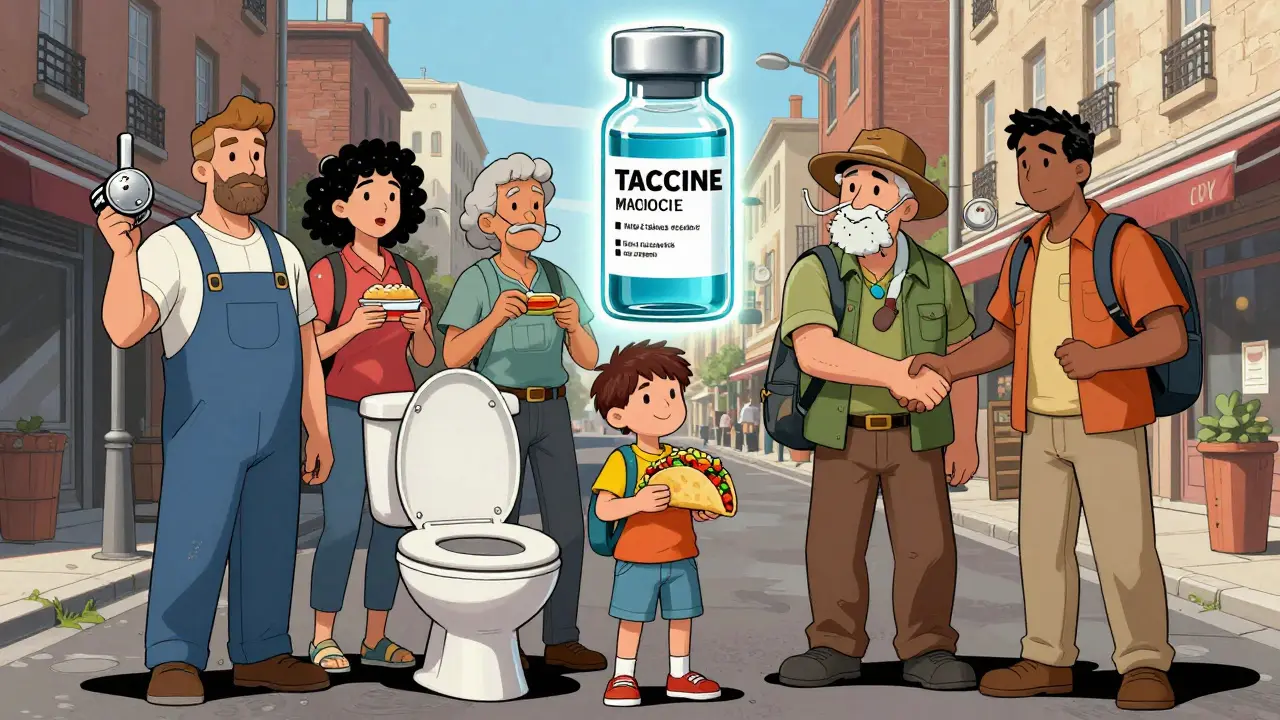
You don’t need to travel to a developing country to catch hepatitis A. In the U.S., outbreaks still happen. Mostly through food handled by infected workers. Or from close contact with someone who’s sick but doesn’t know it yet.
Here’s how it spreads:
- Eating food or drinking water contaminated with feces
- Touching something contaminated, then touching your mouth
- Sexual contact, especially oral-anal
- Living with or caring for someone who has it
And here’s the scary part: people are most contagious before they even feel sick. The virus peaks in stool two weeks before jaundice shows up. That’s why outbreaks are so hard to stop.
Prevention is simple, but it takes discipline.
- Vaccination: The hepatitis A vaccine is 95% effective after one dose and nearly 100% after two. The CDC recommends it for all children at age 1. Adults at risk-travelers, food workers, people with liver disease-should get it too.
- Handwashing: Soap and water for at least 20 seconds. Especially after using the bathroom, changing diapers, or before cooking. This alone cuts transmission by 30-50%.
- Sanitizing surfaces: Bleach solution (5-10 tablespoons per gallon of water) kills the virus in 2 minutes. Use it on doorknobs, toilets, sinks.
- Food safety: Wash produce. Avoid raw shellfish. Don’t eat food from street vendors if sanitation is questionable.
And if you’ve been exposed? Get the vaccine or immune globulin within 2 weeks. It’s 85-90% effective at stopping infection.
What to Do If You’re Infected
No antiviral drugs exist for hepatitis A. Treatment is all about support.
- Rest: Your body needs energy to heal. Don’t push through fatigue.
- Hydrate: Drink water, broth, electrolyte drinks. Vomiting and fever drain fluids fast.
- Eat small, low-fat meals: Your liver can’t process heavy foods. Stick to 1,800-2,200 calories a day. Avoid fried food, dairy, and alcohol.
- Avoid acetaminophen: Even small doses can stress a damaged liver. Use ibuprofen only if needed, and never exceed 2,000 mg daily.
- Stay home: You’re contagious until at least one week after jaundice appears. Return to work or school only after that-or with a doctor’s note.
Most people don’t need hospitalization. But if you’re vomiting constantly, confused, or have swelling in your belly, go to the ER. These are signs of liver failure.
Why Vaccination Works So Well
In 1995, hepatitis A was common in the U.S.-12 cases per 100,000 people. Today? Less than 1. Why? Vaccination.
When kids started getting the vaccine routinely, transmission dropped. Not just in kids-everyone. The virus couldn’t find enough hosts to spread. That’s herd immunity in action.
Studies show vaccinated children have a 99.8% safety rate. Side effects? Mild soreness at the injection site. Lasting less than two days.
And it’s not just for kids. If you’re over 40, have liver disease, use drugs, or work in food service, you’re at higher risk. The vaccine is safe, effective, and covered by most insurance.
Outbreaks still happen-mostly among homeless populations or people who use injection drugs. But targeted vaccination campaigns cut cases by 40% between 2019 and 2022. The goal? Eliminate hepatitis A as a public threat in high-income countries by 2030.
Myths vs. Reality
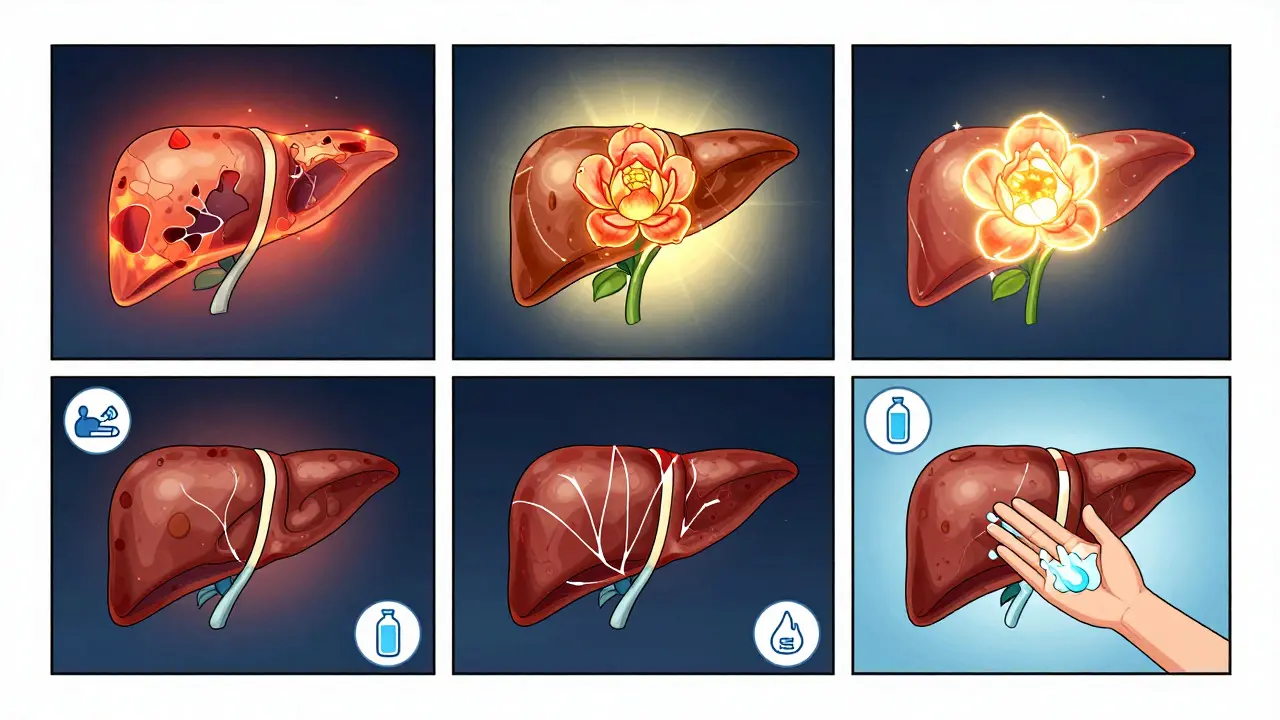
- Myth: Hepatitis A leads to liver cancer or cirrhosis. Reality: It never does. Your liver fully regenerates.
- Myth: You only get it from dirty water abroad. Reality: In the U.S., it’s often from food handled by infected workers.
- Myth: Once you’re better, you’re immune forever. Reality: Yes-you are. Natural infection or vaccination gives lifelong protection.
- Myth: You can’t get it twice. Reality: You can’t. Once you’ve had it, your body remembers.
One thing I’ve heard from dozens of people who’ve been through it: the hardest part isn’t the jaundice. It’s the fatigue that lingers. The feeling that you’re still sick, even when your blood tests look fine. Be patient. Your liver is healing. Give it time.
Can you get hepatitis A more than once?
No. Once you recover from hepatitis A, your body develops lifelong immunity. The same goes for vaccination-you won’t get infected again. This is why the vaccine is so effective: it trains your immune system to recognize and destroy the virus forever.
Is hepatitis A dangerous for children?
Usually not. About 70% of children under 6 show no symptoms at all. When they do, jaundice is rare. The infection is mild and rarely leads to complications. That’s why routine vaccination at age 1 is so important-it stops them from spreading the virus to others, like grandparents or teachers.
How long are you contagious after symptoms start?
You’re most contagious before symptoms appear. Once jaundice shows up, you’re still infectious for about a week. After that, the virus stops being shed in stool. Most health departments allow people to return to work or school one week after jaundice begins, as long as they’re no longer vomiting or having diarrhea.
Can you catch hepatitis A from kissing?
It’s very unlikely through casual kissing. But deep kissing, especially with oral-anal contact or if someone has an active infection and poor hygiene, can pose a risk. The virus spreads through fecal particles, so any contact with contaminated hands or surfaces increases risk. Handwashing before intimate contact is key.
Should I get tested if I think I was exposed?
Yes-if you were exposed within the last two weeks, getting the vaccine or immune globulin can prevent infection. After that, testing for antibodies can confirm if you’ve been infected. Blood tests check for IgM anti-HAV antibodies, which appear early in infection. If positive, you’ve got it. If negative and unvaccinated, get vaccinated.
What Comes Next
Recovery from hepatitis A isn’t a sprint-it’s a slow walk back to normal. You’ll feel better in weeks. But full healing takes months. Listen to your body. Skip the alcohol. Avoid risky foods. Get the vaccine if you haven’t already.
The virus is still out there. But it doesn’t have to win. Vaccination, handwashing, and awareness have already cut cases by 95% in the U.S. If you’ve had it, you’re now protected. If you haven’t-you still have time to prevent it.



Dylan Patrick on 13 March 2026, AT 04:13 AM
I got hepatitis A in college from a burrito. No joke. Three weeks of just lying on the couch, watching Netflix, and wondering if I was gonna die. Then it just... faded. Like a bad dream. Don't let anyone tell you it's 'just a virus'. It's a full-body reset.