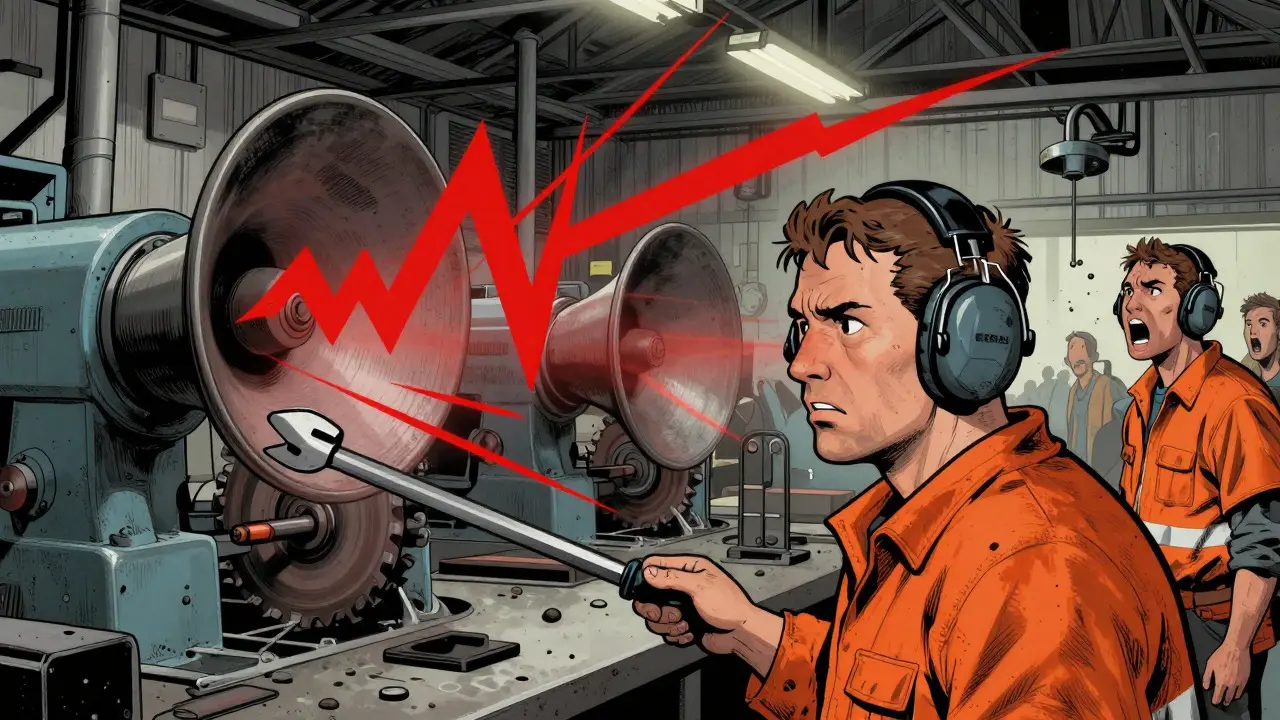
Imagine walking into a factory floor where the hum of machinery is so loud you can’t hear your coworker shouting right next to you. For millions of workers, this isn’t a hypothetical scenario-it’s their daily reality. Noise-induced hearing loss (NIHL) affects approximately 22 million American workers annually, making it one of the most common work-related illnesses in the United States. Unlike other occupational injuries, hearing damage is permanent and cumulative. Once those hair cells in your inner ear are gone, they don’t grow back. This is why hearing conservation programs aren’t just paperwork; they are critical safety nets designed to preserve your ability to communicate, enjoy music, and navigate the world safely.
If you manage a workplace with noisy equipment or work in an industry like construction, manufacturing, or aviation, understanding these programs is non-negotiable. The Occupational Safety and Health Administration (OSHA) mandates specific protocols under regulation 29 CFR 1910.95 to protect employees from the insidious effects of chronic noise exposure. But what exactly does compliance look like? How do you know if your current setup meets federal standards? And more importantly, how do you ensure that the testing actually protects people rather than just checking a box?
The Trigger Point: When Does Your Workplace Need a Program?
Not every job site requires a formal Hearing Conservation Program (HCP). The law draws a clear line based on decibel levels. You need to implement an HCP whenever employee noise exposures equal or exceed an 8-hour time-weighted average (TWA) of 85 decibels measured on the A-scale (slow response). This metric is known as the "action level."
To understand this, think of the TWA as a budget. If you’re exposed to higher noise for shorter periods, the math balances out. However, if you spend eight hours in an environment averaging 85 dBA, you’ve hit the trigger. Common sources that easily surpass this include:
- Jackhammers and pile drivers (often exceeding 100 dBA)
- Heavy truck engines and forklifts (85-95 dBA)
- Metal stamping presses and grinding machines (90-100+ dBA)
- Airplane hangars during engine testing (exceeding 110 dBA)
It is crucial to measure this accurately using calibrated sound level meters or noise dosimeters. Guesswork doesn’t hold up in court, nor does it protect ears. Monitoring must be repeated whenever there are changes to processes, equipment, or controls that could increase noise exposure. If you buy a louder machine or remove sound-dampening barriers, you must re-measure.
The Five Pillars of a Compliant Hearing Conservation Program
OSHA Regulation 1910.95(c) specifies five primary components that make up a legally compliant HCP. Missing even one can result in significant citations. Let’s break down what each pillar entails.
- Noise Monitoring: As mentioned, this identifies areas where exposure hits the 85 dBA TWA threshold. Records of this monitoring must be kept for at least two years.
- Audiometric Testing: This is the core diagnostic tool. It tracks hearing changes over time.
- Hearing Protection: Employers must provide hearing protectors that attenuate noise exposure to at least 90 dBA as an 8-hour TWA. Workers should have a variety of options, such as ear muffs and different sizes of ear plugs, to ensure a proper fit.
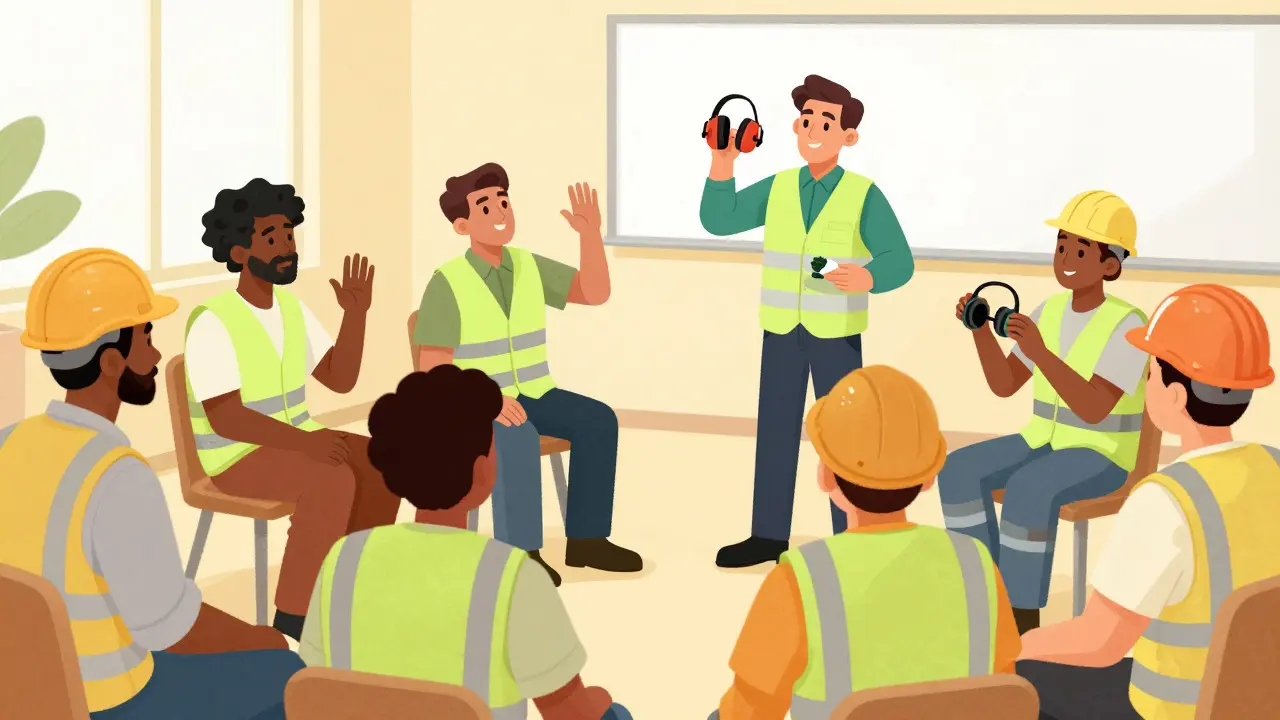
- Training: Annual training is mandatory. It must cover the effects of noise on hearing, the purpose and attenuation capabilities of hearing protectors, and the purpose of audiometric testing.
- Recordkeeping: Audiometric test results must be maintained for the duration of an employee's employment. This creates a lifelong health record for the worker.
| Component | Requirement Detail | Frequency/Duration |
|---|---|---|
| Noise Monitoring | Use calibrated meters/dosimeters to identify areas ≥85 dBA TWA | When changes occur; records kept 2 years |
| Audiometric Testing | Baseline within 6 months of first exposure; annual follow-ups | Annually; records kept for duration of employment |
| Hearing Protection | Provide devices reducing exposure to ≤90 dBA TWA; offer choices | Ongoing availability |
| Employee Training | Cover noise effects, protector use, and testing purpose | Annually |
| Recordkeeping | Maintain exposure data and audiograms securely | 2 years (noise); Lifetime (audiograms) |
Audiometric Testing: The Heart of Early Detection
Testing is where many companies stumble. According to OSHA enforcement data from 2021, 62% of hearing conservation program violations were related to inadequate audiometric testing procedures. Getting this right requires strict adherence to protocol.
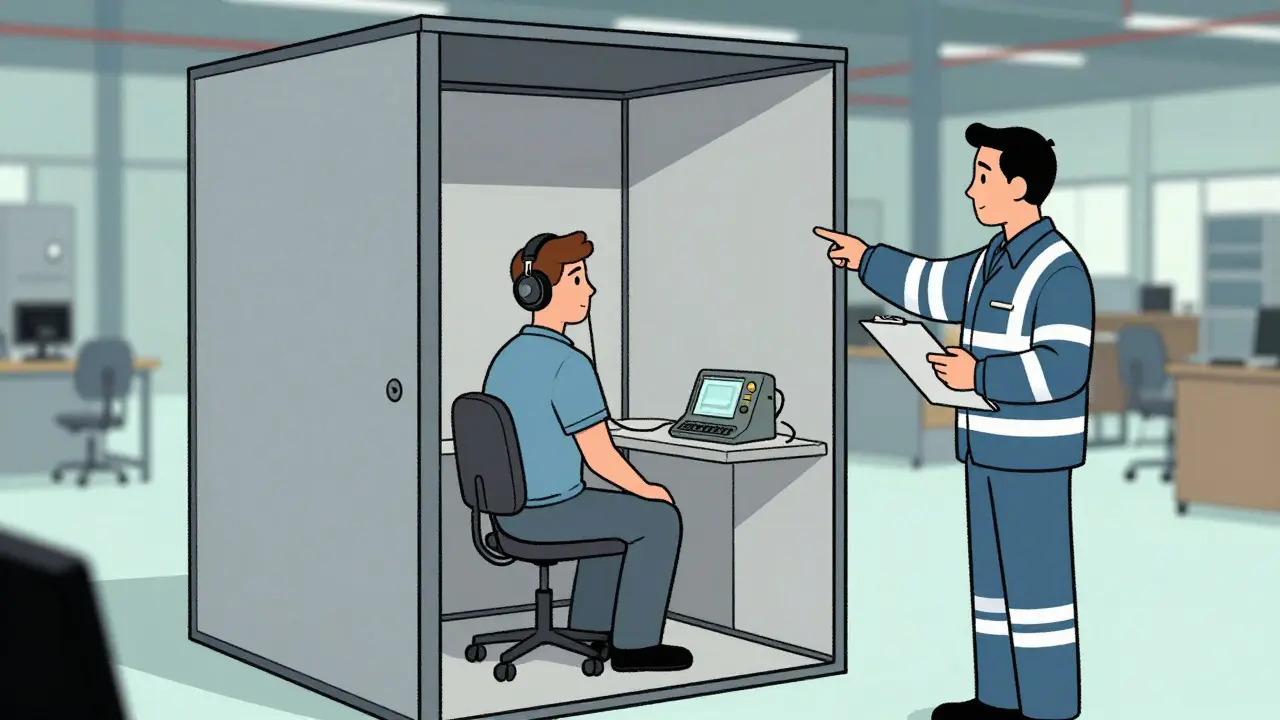
Baseline Audiogram is the initial hearing test that establishes a worker's starting point. This must be provided within six months of an employee's first exposure at or above the action level (85 dBA TWA). Crucially, the employee must be free from workplace noise for a minimum of 14 hours prior to this baseline test. If they come straight off the shift, temporary threshold shifts from that day’s noise will skew the results, creating a false baseline that hides early damage.
After the baseline, annual audiograms are required for all employees exposed at or above 85 dBA TWA. These tests must be conducted in rooms meeting specific background sound pressure levels as outlined in Appendix C of OSHA regulations. Using a standard office room with HVAC noise or traffic sounds outside will invalidate the test. The equipment itself must meet American National Standards Institute (ANSI) specifications-currently transitioning from SC-1969 to the newer ANSI S3.6-2018 standard.
The test frequencies typically include 500, 1000, 2000, and 3000 Hz, though proposed updates aim to expand this to include 4000 and 6000 Hz to catch high-frequency loss earlier. Dr. Thais C. Morata, a hearing loss prevention expert at NIOSH, noted in a 2022 presentation that early detection through annual testing combined with proper protection can prevent permanent hearing damage in 75% of at-risk workers.
Responding to Standard Threshold Shifts (STS)
What happens when the test shows a decline? A Standard Threshold Shift (STS) is defined as a change in hearing threshold relative to the baseline audiogram of an average of 10 dB or more at 2000, 3000, and 4000 Hz. Detecting an STS triggers a mandatory chain of actions within 30 days:
- Notify the Employee: Written notification must occur within 21 days of the determination.
- Refit and Retrain: The employee must be refitted with hearing protectors and retrained on their proper use. Often, the issue isn't the lack of protection, but poor insertion technique.
- Upgrade Protection: Provide hearing protectors offering greater attenuation if necessary. If the current plugs aren't enough, move to double-plugging or custom-molded solutions.
- Medical Referral: Refer the employee for a clinical audiological evaluation if additional testing is required or if a medical pathology of the ear is suspected.
If a professional supervisor of audiometry determines that the STS is persistent (confirmed by a follow-up test within 30 days), the baseline audiogram can be revised. This ensures that the same shift is not repeatedly identified year after year, allowing the program to focus on new changes.
Implementation Challenges and Costs
Running an effective HCP isn’t cheap, but the cost of inaction is higher. The average cost for a comprehensive HCP ranges from $250 to $400 per employee annually, with audiometric testing accounting for 45-55% of total costs. Small businesses with fewer than 50 employees face particular difficulties, showing a 37% non-compliance rate compared to 18% for larger companies.
Why do programs fail? A 2023 SHRM survey of 1,200 safety managers highlighted three major pain points:
- Inconsistent Participation: Reported by 68% of respondents. Workers often skip tests due to scheduling conflicts or fear of losing their jobs if their hearing is deemed "too bad" to continue.
- Poor Fit Testing: Cited by 52%. Providing plugs is easy; ensuring they seal correctly is hard. Without real-ear attenuation measurement (REAM) or fit-testing technology, employers are guessing about protection levels.
- Recordkeeping Errors: Noted by 47%. Losing track of baselines or failing to update records leads to immediate citation risks.
Successful programs often incorporate mobile audiometric testing units. Used by 73% of compliant companies, these units bring the booth to the shop floor, reducing employee downtime by 60% compared to sending staff to off-site clinics. This convenience alone can drastically improve participation rates.
The Economic and Legal Case for Compliance
Beyond ethics, there is a strong business case. OSHA’s publication OSHA3074 indicates that workplaces with effective hearing conservation programs demonstrate 5-10% higher worker productivity and a 15-20% lower incidence of absenteeism. Clear communication reduces errors and accidents. Conversely, regulatory enforcement has intensified. In fiscal year 2022, OSHA issued 1,842 citations for hearing conservation violations-a 17% increase from 2020. Average penalties ranged from $15,625 to $156,259 per violation depending on severity.
Furthermore, the market for hearing conservation services is growing, estimated at $1.5 billion, driven by the fact that 22 million U.S. workers are exposed to hazardous noise levels annually. With OSHA proposing modernizations to require stricter calibration standards and expanded frequency testing, staying ahead of the curve now will save money later.
Future Outlook: Stricter Standards Ahead
The landscape of hearing conservation is shifting. Recent developments include OSHA's initiative to modernize standards, which proposes requiring employers to use the most recent ANSI standard for audiometer calibration (ANSI S3.6-2018) instead of the decades-old SC-1969. The proposed rule also aims to mandate that employers provide hearing protection options with noise reduction ratings (NRR) appropriate for exposures exceeding 100 dBA, rather than the current blanket requirement of only reducing exposure to 90 dBA.
Industry analysts predict these changes will increase implementation costs by 8-12% but could prevent an additional 150,000 cases of occupational hearing loss annually. Current compliance rates remain suboptimal, with only 58% of manufacturing facilities and 42% of construction sites fully complying with all requirements. Closing this gap requires moving beyond checkbox compliance to genuine culture change around hearing health.
What is the difference between the action level and the permissible exposure limit (PEL)?
The action level is 85 dBA TWA. At this level, you must start a Hearing Conservation Program, including monitoring and testing. The PEL is 90 dBA TWA. Exposure above this level requires engineering controls and administrative measures to reduce noise, in addition to hearing protection. The action level is the trigger for protection; the PEL is the legal limit for exposure without severe penalty.
How long before a baseline audiogram must an employee avoid noise?
An employee must be free from workplace noise for a minimum of 14 hours prior to the baseline audiometric test. This ensures that any temporary threshold shift from previous work does not skew the baseline results, providing an accurate reference point for future comparisons.
What happens if an employee refuses to wear hearing protection?
Employers must document the refusal in writing. While OSHA focuses on employer compliance, refusing PPE can lead to disciplinary action depending on company policy. More importantly, it leaves the employee vulnerable to irreversible hearing loss. Retraining and offering different types of protectors (like custom molds vs. foam plugs) can often resolve resistance.
Are small businesses exempt from Hearing Conservation Programs?
No, size does not exempt a business from OSHA standards. However, small businesses with fewer than 50 employees often struggle with compliance due to limited resources, leading to a higher non-compliance rate (37%) compared to larger firms. They still must meet all five component requirements if noise levels exceed the action level.
How often must noise monitoring be repeated?
Noise monitoring must be repeated whenever there are changes to processes, equipment, or controls that could reasonably be expected to increase noise exposure. There is no fixed annual schedule unless conditions change, but regular verification is best practice to ensure ongoing compliance.