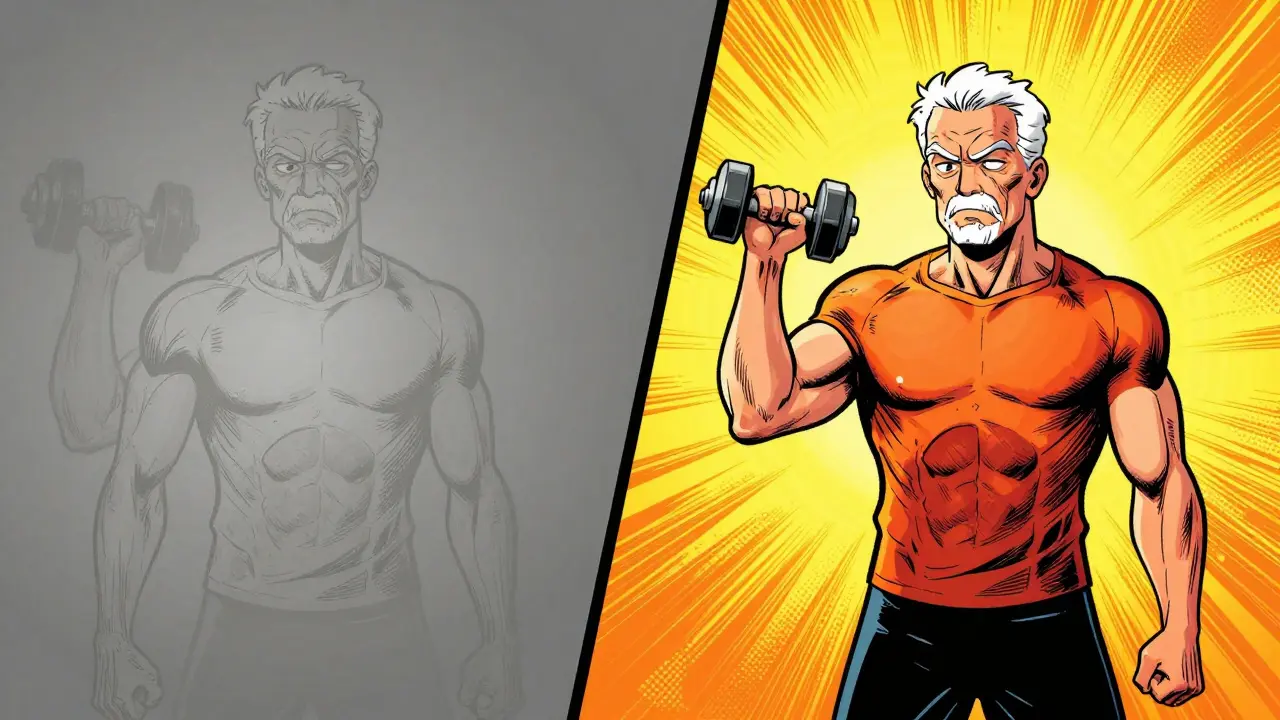
You might think losing muscle is just a natural part of getting older. You’re not entirely wrong, but you’re also missing the most important part of the story. Sarcopenia is the progressive, age-related decline in skeletal muscle mass, strength, and physical function. It isn't inevitable fate; it's a condition with specific biological markers that respond dramatically to one simple intervention: lifting things up.
We start losing muscle as early as our thirties. By the time we hit sixty-five, the rate accelerates. According to research by Dr. Jeremy D. Walston published in PMC (2012), typical individuals lose 1-2% of their muscle mass annually. That sounds small until you do the math over two decades. But here is the good news: your muscles remain highly adaptable well into old age. If you train them, they grow. If you don’t, they vanish. This article breaks down exactly how sarcopenia works, how to spot it before it becomes a crisis, and how to build a strength routine that actually sticks.
What Is Sarcopenia Really?
Let’s get specific about what is happening under your skin. Sarcopenia was first clinically recognized as a distinct condition in 1989 by Dr. Irwin Rosenberg. Since then, experts have refined the definition significantly. The European Working Group on Sarcopenia in Older People (EWGSOP is a group of international experts that establishes diagnostic criteria for sarcopenia) released its latest guidelines, EWGSOP3, in 2023. These guidelines are crucial because they moved beyond just measuring muscle size. Now, diagnosis requires evidence of both low muscle mass AND poor physical performance.
Why does this matter? Because you can have big arms and still be weak if your nervous system isn't firing efficiently. Sarcopenia involves a complex breakdown:
- Motor Neuron Loss: After age 60, you lose 3-5% of motor neurons per year (Circulation, 2023). Fewer nerves mean fewer signals to contract muscle fibers.
- Fiber Atrophy: Type II (fast-twitch) fibers shrink preferentially. By age 80, you may have lost 30-40% of these powerful fibers (German Journal of Sports Medicine, 2017).
- Regenerative Failure: Satellite cells, which repair muscle, drop in activity by 50-60% by age 70.
This isn't just about looking frail. It’s about function. Can you stand up from a chair without using your hands? Can you carry groceries? When sarcopenia sets in, the answer often becomes no. The financial impact is staggering too: sarcopenia costs the US healthcare system $18.5 billion annually (Journal of the American Medical Directors Association, 2021). Preventing it saves money and preserves independence.
How to Spot the Warning Signs
Most people ignore the early signs until a fall happens. Don’t wait for the fall. Use the EWGSOP3 thresholds to self-assess or ask your doctor to check these metrics:
| Metric | Men | Women |
|---|---|---|
| Handgrip Strength | Below 27 kg | Below 16 kg |
| Gait Speed | Below 0.8 m/s | Below 0.8 m/s |
| Appendicular Lean Mass (DXA) | Below 7.0 kg/m² | Below 5.5 kg/m² |
If your handgrip strength is below those numbers, or if you walk slower than 0.8 meters per second (which is roughly a very slow stroll), you are at risk. Note that sarcopenia is different from cachexia (muscle wasting due to severe illness like cancer) or dynapenia (loss of strength without loss of mass). Sarcopenia hits both mass and function. Also, watch out for "sarcopenic obesity," where high body fat masks low muscle mass. This affects 15-20% of older adults and is particularly dangerous for metabolic health.
Why Strength Training Is the Gold Standard
Diet helps, but it cannot stop sarcopenia on its own. You need mechanical tension. Dr. Jeremy D. Walston noted in his seminal review that resistance exercise increases muscle mass by 1-2 kg and strength by 25-30% in older adults within just 12-16 weeks. That is a massive return on investment.
The American College of Sports Medicine (ACSM) released a Position Stand in 2022 outlining the optimal parameters. Here is what the science says works best:
- Frequency: 2-3 sessions per week.
- Volume: 1-3 sets of 8-12 repetitions.
- Intensity: 60-80% of your one-repetition maximum (1RM).
- Recovery: 48 hours between sessions targeting the same muscle groups.
You don't need to look like a bodybuilder. You need to stimulate the muscle fibers enough to tell your body, "We need this tissue." Progressive overload is key. If you lift the same 5-pound weight every day for a year, you will see diminishing returns. You must gradually increase the weight, reps, or difficulty.
Building Your Routine: From Chair to Barbell
Starting strong when you are 70 feels daunting. It shouldn’t be. The CDC’s 2023 guidelines suggest a phased approach. Do not jump straight into heavy free weights. Build the foundation first.
Phase 1: Bodyweight Mastery (Weeks 1-4)
Focus on movement patterns, not load. Perform these exercises twice a week:
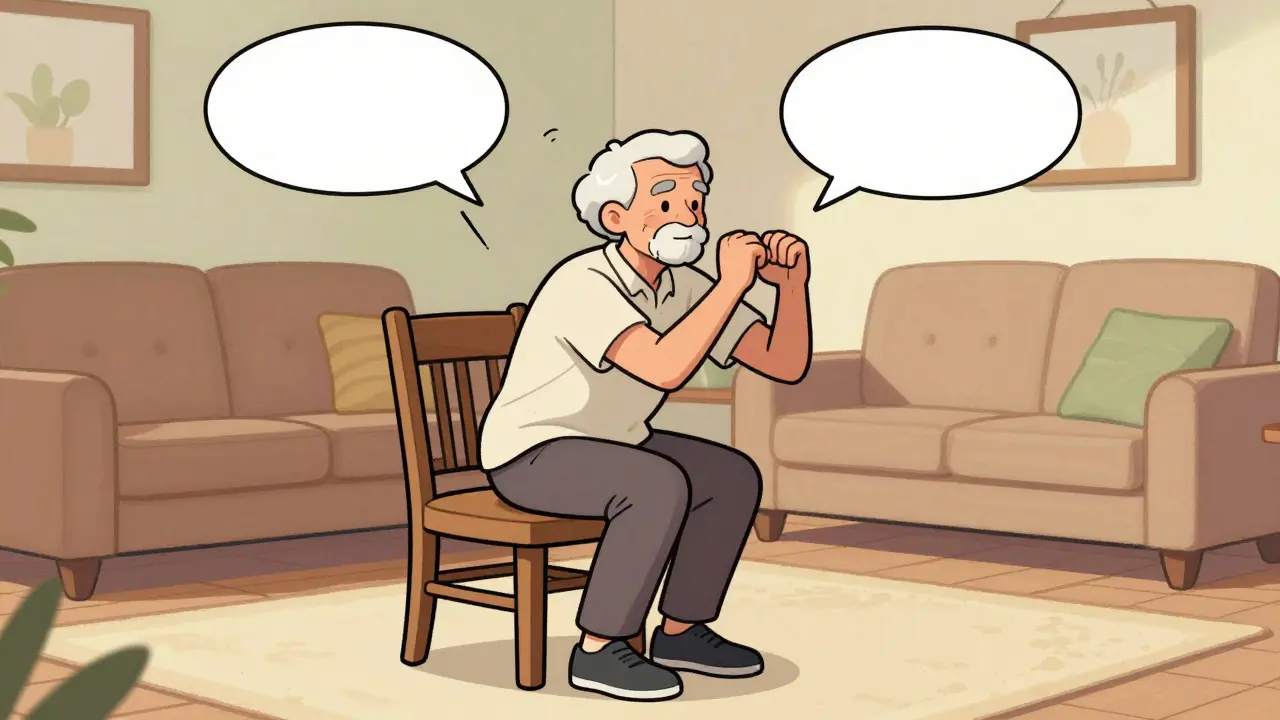
- Chair Squats: Sit down and stand up from a sturdy chair without using your hands. Keep your chest up.
- Wall Push-Ups: Stand arm-length from a wall and push away. This builds upper body pushing strength safely.
- Heel Raises: Hold onto a counter and rise onto your toes. This strengthens calves and aids balance.
Phase 2: Resistance Bands (Weeks 5-12)
Once bodyweight feels easy, add resistance bands (like TheraBand levels 1-5). Bands provide variable resistance, which is easier on joints than iron plates. Aim for 10-15 repetitions at 50-60% effort. Focus on controlled movements. Exhale during the exertion phase (pushing or pulling).
Phase 3: Weight Machines (Week 13+)
Machines offer stability. They guide your path of motion, reducing the balance requirement so you can focus purely on muscle contraction. Start with 60-70% 1RM for 8-12 reps. Common machines include leg presses, chest presses, and lat pulldowns.
Overcoming Real-World Barriers
Ideally, everyone would train perfectly. Reality is messier. A 2022 survey by the National Council on Aging found that while 75% of older adults who trained twice weekly maintained independence, many struggled to start. Here are the top hurdles and how to clear them:
Joint Pain: About 35-40% of seniors cite joint pain as a reason to avoid lifting. Solution: Reduce the range of motion by 20-30 degrees initially. Use machines rather than free weights to stabilize the joint. Consult a physical therapist to identify pain-free angles.
Cost and Access: Specialized senior programs can cost $50-$75/month. However, Medicare Advantage plans often cover SilverSneakers, used by 4.2 million seniors in 2022. Even basic gym memberships or home band workouts are far cheaper than the cost of a fall-related hospitalization.
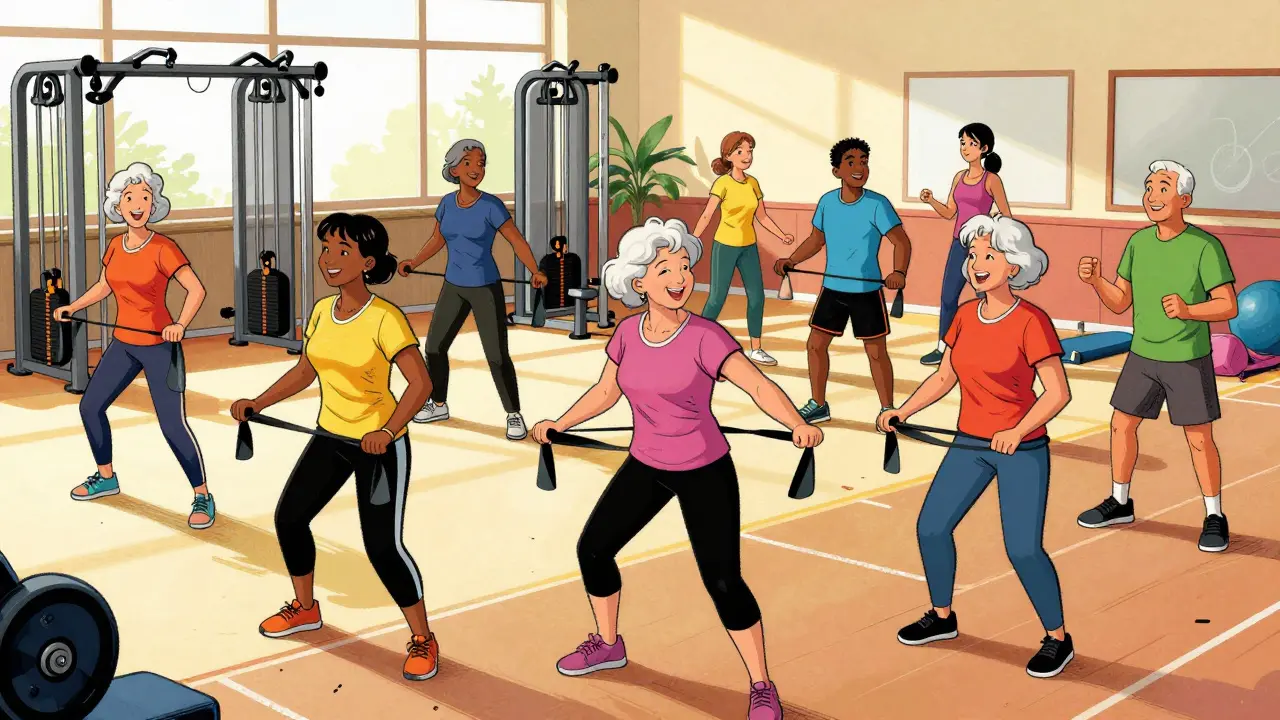
Motivation: Exercising alone is hard. Data from the National Institute on Aging (2022) shows that social exercise groups increase adherence by 35-40%. Find a buddy. Join a class. Accountability works.
Nutrition Timing: Exercise creates the stimulus; protein provides the bricks. The International Society of Sports Nutrition recommends consuming 20-30g of high-quality protein within 45 minutes post-exercise. This window is critical for triggering muscle protein synthesis, which declines with age.
The Future of Muscle Health
We are entering a new era of sarcopenia management. The global market for therapeutics reached $512.3 million in 2022. New drugs like RT001 (approved for trials in 2023) target mitochondrial dysfunction directly. AI-driven apps like Exer AI are showing 25% greater adherence rates by providing real-time feedback on form.
However, technology cannot replace the fundamental act of moving against resistance. Whether you use an app, a personal trainer, or a pair of water bottles, the mechanism remains the same. Load the muscle. Recover. Repeat. With 72.1 million Americans projected to be over 65 by 2030, preserving muscle is not just a fitness goal-it is a public health imperative.
Is it too late to start strength training if I am over 70?
Absolutely not. Research shows that older adults can gain significant muscle mass and strength even in their 80s and 90s. While the rate of growth may be slightly slower than in younger adults, the functional benefits-such as improved balance and reduced fall risk-are profound. Start with low-intensity bodyweight exercises and progress gradually under supervision if needed.
How much protein do I need to prevent sarcopenia?
Older adults generally require more protein than younger individuals to stimulate muscle protein synthesis. Current recommendations suggest 1.0 to 1.2 grams of protein per kilogram of body weight daily. Distribute this intake evenly across meals, aiming for 20-30g per meal, especially around workout times.
Can walking alone prevent muscle loss?
Walking is excellent for cardiovascular health and bone density, but it is not sufficient to prevent sarcopenia on its own. Walking does not provide the mechanical tension required to maintain or build muscle mass. You must incorporate resistance training, whether through weights, bands, or bodyweight exercises, to effectively combat age-related muscle decline.
What is the difference between sarcopenia and cachexia?
Sarcopenia is age-related muscle loss driven by hormonal changes, nerve degradation, and lifestyle factors. Cachexia is a complex syndrome associated with chronic illnesses like cancer, heart failure, or kidney disease, characterized by systemic inflammation and involuntary weight loss. While both involve muscle loss, cachexia is harder to reverse with exercise alone and requires medical treatment of the underlying condition.
Are there supplements that help with sarcopenia?
Vitamin D deficiency is common in older adults and linked to muscle weakness, so supplementation may help if you are deficient. Creatine monohydrate has strong evidence supporting its ability to improve strength and muscle mass in older adults when combined with resistance training. Always consult your doctor before starting new supplements, especially if you have kidney issues.