GLP-1 Dose & Meal Planner
Current Status
Recommendation
Calculating...
Suggested Daily Routine
-
1Morning Injection Inject upon waking. Wait 30-60 mins before eating.
-
2Breakfast (300 cal) High protein, low fat. e.g., Egg whites + toast.
-
3Mid-Morning Snack Hydrate heavily here. Sip water slowly.
-
4Lunch (350 cal) Lean protein + steamed veggies. No heavy starches.
-
5Afternoon Snack Greek yogurt or cottage cheese. Limit fluids during meal.
-
6Early Dinner (300 cal) Eat 3-4 hours before bed. White fish/tofu + greens.
Enter your current status to generate a personalized titration and meal plan.
Starting a GLP-1 receptor agonist is a class of medication used for type 2 diabetes and weight loss that mimics the incretin hormone glucagon-like peptide-1 often feels like a gamble with your stomach. You want the metabolic benefits, but you’re bracing for the nausea, vomiting, or constipation that comes with slowing down your digestion. It’s not just an inconvenience; it’s the number one reason people quit these drugs. About 40% to 70% of users report gastrointestinal issues, and roughly 22% stop treatment within six months because they can’t handle the side effects.
But here’s the thing: most of this discomfort isn’t inevitable. It’s manageable. The secret isn’t just toughing it out. It’s about how you eat and how slowly you raise your dose. If you treat your stomach like a delicate engine that needs warm-up time, you can stay on the medication long enough to see the results. Let’s look at exactly how to adjust your meals and your dosing schedule to keep your gut happy.
Why Your Gut Reacts This Way
To manage the problem, you have to understand what’s happening inside you. Semaglutide is a weekly injectable medication sold under brand names Ozempic and Wegovy that stimulates insulin secretion and suppresses glucagon release, along with other drugs in its class like Liraglutide is a daily injectable medication sold as Victoza for diabetes and Saxenda for weight loss and Dulaglutide is a weekly injectable medication known as Trulicity used primarily for type 2 diabetes management, works by mimicking a natural hormone called glucagon-like peptide-1. This hormone tells your pancreas to release insulin and tells your brain you’re full. But it also tells your stomach to slow down.
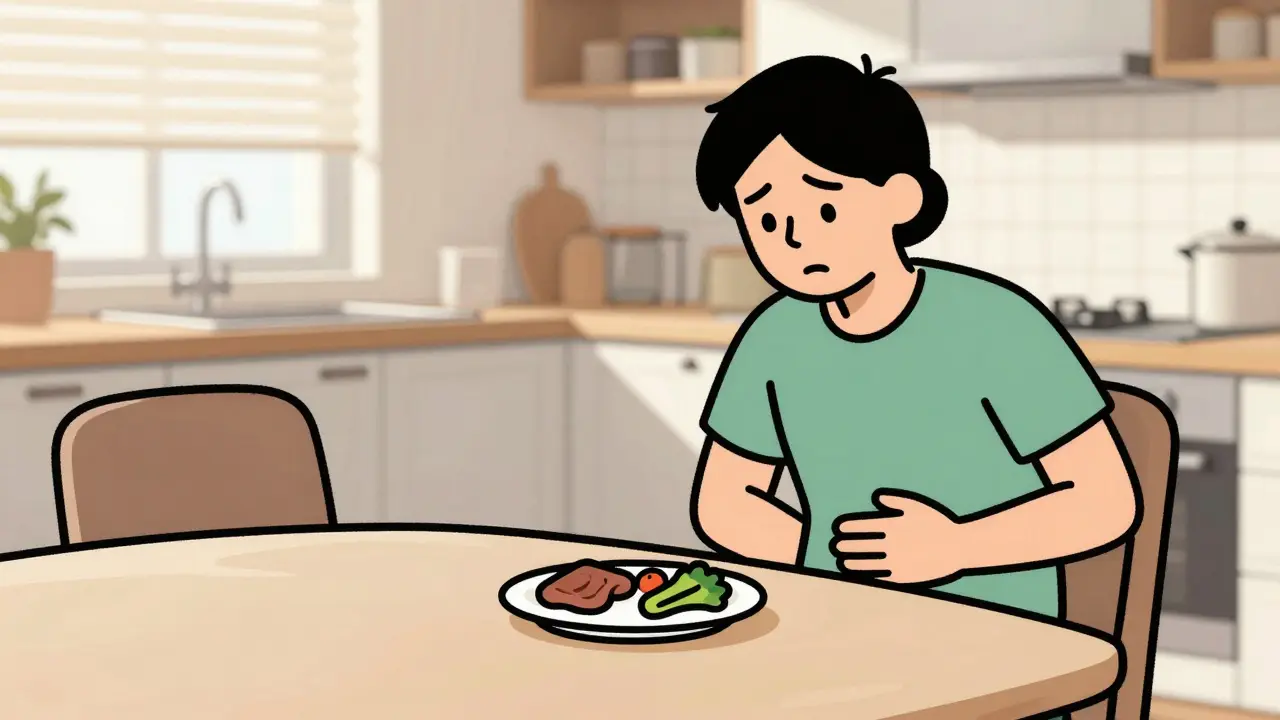
This process is called delayed gastric emptying. Normally, food moves through your stomach in a few hours. With GLP-1s, that process stretches out. Food sits there longer. If you eat a big, heavy meal, it doesn’t digest quickly. Instead, it sloshes around, triggering nausea. The drug also affects the area postrema in your brain, which is your vomiting center. So, you get hit from both ends: physical fullness and chemical signals to vomit. Understanding this mechanism changes how you approach eating. You aren’t just "dieting"; you are accommodating a slowed digestive system.
The Art of Slow Dose Titration
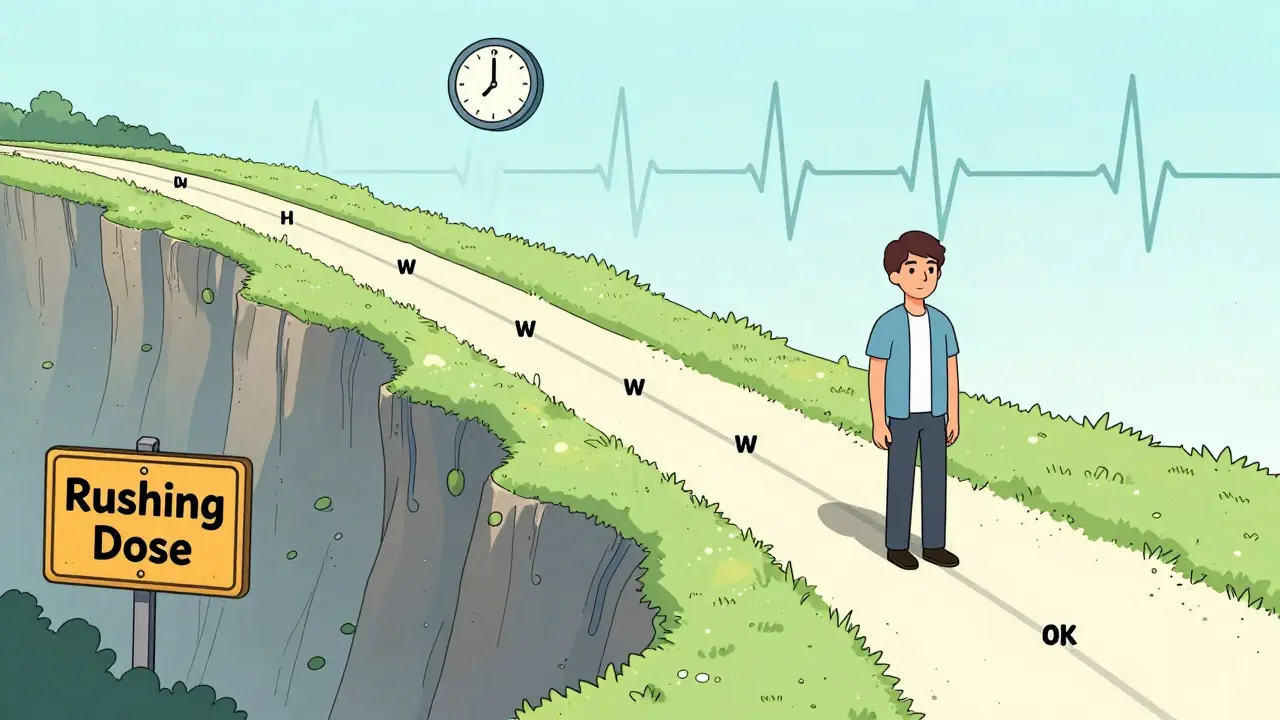
Rushing your dose increase is the fastest way to ruin your experience. Standard protocols for Wegovy suggest reaching the maintenance dose of 2.4 mg over 16 to 20 weeks. That sounds fast when you think about years of dieting, but for your gut, it’s a sprint. Many experts now argue for going slower.
Data from clinical studies shows that patients who follow a slower titration schedule-taking 20 to 24 weeks to reach their target dose-have a 35% lower chance of quitting the medication. Here is a practical rule of thumb: do not increase your dose until your symptoms have completely resolved for at least seven consecutive days. If you still feel mild nausea after two weeks on a specific dose, stay there. There is no penalty for waiting. In fact, waiting is the strategy.
| Feature | Standard Protocol (FDA) | Symptom-Guided Protocol |
|---|---|---|
| Time to Max Dose | 16-20 weeks | 20-24+ weeks |
| Dose Increase Trigger | Fixed calendar date | Symptom-free for 7+ days |
| Discontinuation Risk | Higher (baseline) | 35-40% lower |
| Best For | Patient with no prior GI issues | Patient with history of nausea/sensitive stomach |
If you experience moderate nausea, hold your dose for another 2 to 4 weeks. If you are vomiting more than twice a week, pause entirely for 7 to 10 days, then restart at the previous, lower dose. This "step-back" method saves treatments. Internal data from major clinics shows that stepping back down temporarily allows 68% of patients who were about to quit to eventually succeed on the therapy.
Meal Planning for a Slowed Stomach
Your meal plan needs to change fundamentally during the titration phase. The goal is low volume and high nutrient density. You cannot eat "normal" portions while your stomach is processing food at half speed. Trying to fit a 600-calorie dinner into a stomach that only wants 300 calories is a recipe for disaster.
Focus on small, frequent meals. Aim for five or six mini-meals a day rather than three large ones. Each meal should be between 300 and 400 calories. Keep the fat content low-under 15 grams per meal. Fat takes the longest to digest, so high-fat foods sit in your stomach even longer, increasing the risk of reflux and nausea. Simple carbohydrates should also be limited to under 20 grams per sitting to avoid blood sugar spikes and subsequent crashes that worsen nausea.
Protein is your best friend here. Try to get 25 to 30 grams of protein in each mini-meal. Protein digests relatively efficiently and helps preserve muscle mass while you lose weight. Good options include egg whites, white fish, chicken breast, tofu, and Greek yogurt. Avoid fried foods, creamy sauces, and fatty cuts of meat. These are the triggers that turn mild fullness into severe distress.
Fluid Timing and Hydration Strategy
How you drink is just as important as what you eat. One of the biggest mistakes people make is drinking large amounts of water with their meals. When you drink 500ml of fluid with food, you fill up your stomach space instantly. Since your stomach is already full of undigested food from earlier, adding liquid creates pressure. That pressure leads to nausea and vomiting.
Follow this simple rule: limit fluids to 120 to 180 milliliters (about half a cup) during your actual meal. Sip slowly. Do not gulp. Then, wait at least 30 minutes after finishing your food before drinking more water. Hydrate heavily between meals, not during them. Also, avoid carbonated beverages completely during the titration phase. The bubbles expand in your stomach, adding gas pressure to an already sluggish system. Stick to still water, herbal teas, or electrolyte drinks if you’ve been vomiting.
Practical Daily Routine for Success
Creating a consistent routine helps your body adapt. Here is a sample schedule that aligns with pharmacokinetic principles and patient success stories:
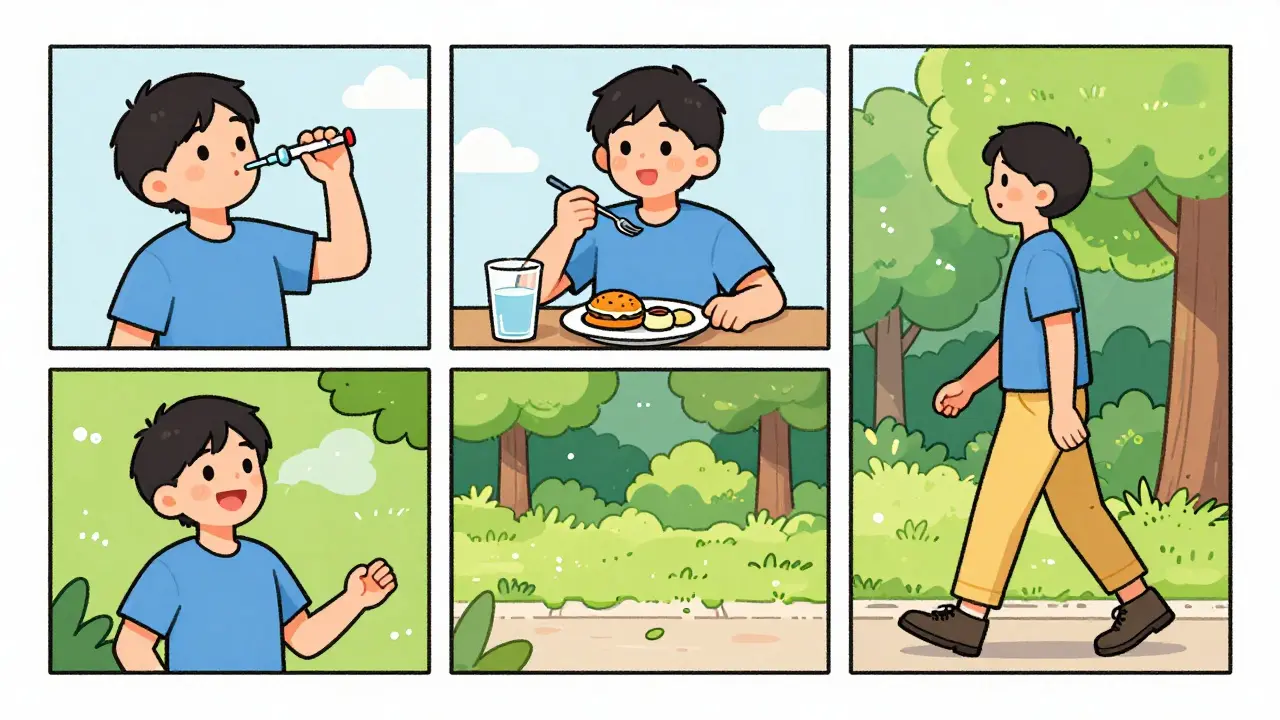
- Morning: Take your injection upon waking with only a small sip of water. Wait 30 to 60 minutes before eating anything. This gives the medication time to enter your bloodstream without competing with food digestion immediately.
- First Meal (30-60 mins later): A high-protein breakfast. Example: Two egg whites, a slice of whole-grain toast, and a piece of fruit. Keep it under 300 calories.
- Mid-Morning Snack: A small handful of almonds or a protein shake. Focus on hydration here.
- Lunch: Lean protein (chicken breast) with steamed vegetables. No heavy starches like rice or potatoes yet. Keep fat low.
- Afternoon Snack: Greek yogurt or cottage cheese. Again, prioritize protein.
- Dinner: White fish or tofu with leafy greens. Eat this early, at least 3 to 4 hours before bed. Never eat late at night. Lying down with a full, slow-emptying stomach guarantees acid reflux and nausea.
If you feel nausea starting, switch to clear liquids for 24 to 48 hours. Broth, water, and gelatin are easy to tolerate. Once the nausea subsides, move to bland solids like bananas, rice, applesauce, and toast (the BRAT diet) for a couple of days before reintroducing normal proteins. This gentle re-introduction prevents shocking your system.
When to Seek Medical Help
While most GI side effects are manageable, some symptoms are red flags. Severe abdominal pain that radiates to your back could indicate pancreatitis, a rare but serious complication. Inability to keep any fluids down for more than 24 hours risks dehydration and requires medical attention. Persistent vomiting that doesn’t improve with dose reduction or dietary changes needs evaluation.
Also, be aware of gastroparesis, a condition where the stomach stops emptying properly. While true gastroparesis is rare (occurring in less than 1% of users), symptoms like feeling full after just a few bites, bloating, and early satiety that lasts for weeks despite dose adjustments warrant a doctor’s visit. The FDA updated warnings in 2024 to highlight these risks, so don’t ignore persistent, severe symptoms.
Long-Term Outlook
The good news is that for most people, these side effects are temporary. Nausea typically peaks around week 4 of treatment, drops significantly by week 8, and continues to decline as your body adapts. By week 56, only about 5.5% of patients still report significant nausea. The key is surviving the first few months. By combining slow dose titration with strategic meal planning, you give your body the time it needs to adjust. You aren’t fighting the drug; you are working with it. And once you get past the initial hump, the metabolic benefits-better blood sugar control, weight loss, and improved cardiovascular health-are well worth the effort.
How long does GLP-1 nausea last?
Nausea typically peaks around the fourth week of treatment and gradually decreases. Most patients see a significant reduction by week 8, and by week 56, only about 5.5% of users still experience notable nausea. The duration depends heavily on how quickly you titrate your dose; slower increases generally lead to shorter and less severe symptoms.
What should I eat if I’m nauseous on Ozempic?
Stick to bland, low-fat, and easily digestible foods. The BRAT diet (Bananas, Rice, Applesauce, Toast) is effective. Clear broths, gelatin, and plain crackers are also good options. Avoid spicy, fatty, or fried foods, as these take longer to digest and worsen nausea. Small, frequent meals are better than large ones.
Can I drink water with my meals on GLP-1s?
You should limit fluids during meals to 120-180ml (half a cup). Drinking large amounts of water with food fills your stomach quickly, which can trigger nausea since gastric emptying is slowed. It is better to hydrate heavily between meals, waiting at least 30 minutes after eating before drinking more water.
Is it safe to skip a dose if I feel sick?
If you are experiencing severe side effects like vomiting more than twice a week, it is recommended to hold the dose for 7-10 days and consult your healthcare provider. Do not simply skip doses arbitrarily without a plan, as this can affect blood sugar levels. Always discuss dose adjustments with your doctor to ensure safety.
Does exercise help with GLP-1 side effects?
Light exercise like walking can aid digestion and reduce bloating. However, intense workouts immediately after eating may worsen nausea due to reduced blood flow to the stomach. It is best to wait at least 1-2 hours after eating before engaging in vigorous activity. Listen to your body and scale back intensity if you feel unwell.



Brian Irwin on 5 June 2026, AT 17:07 PM
man this is gold. i was about to quit because the nausea was killing me but reading about the slow titration makes so much sense now. im gonna hold my dose for another week like you said instead of rushing it. thanks for sharing this info